
Introduction
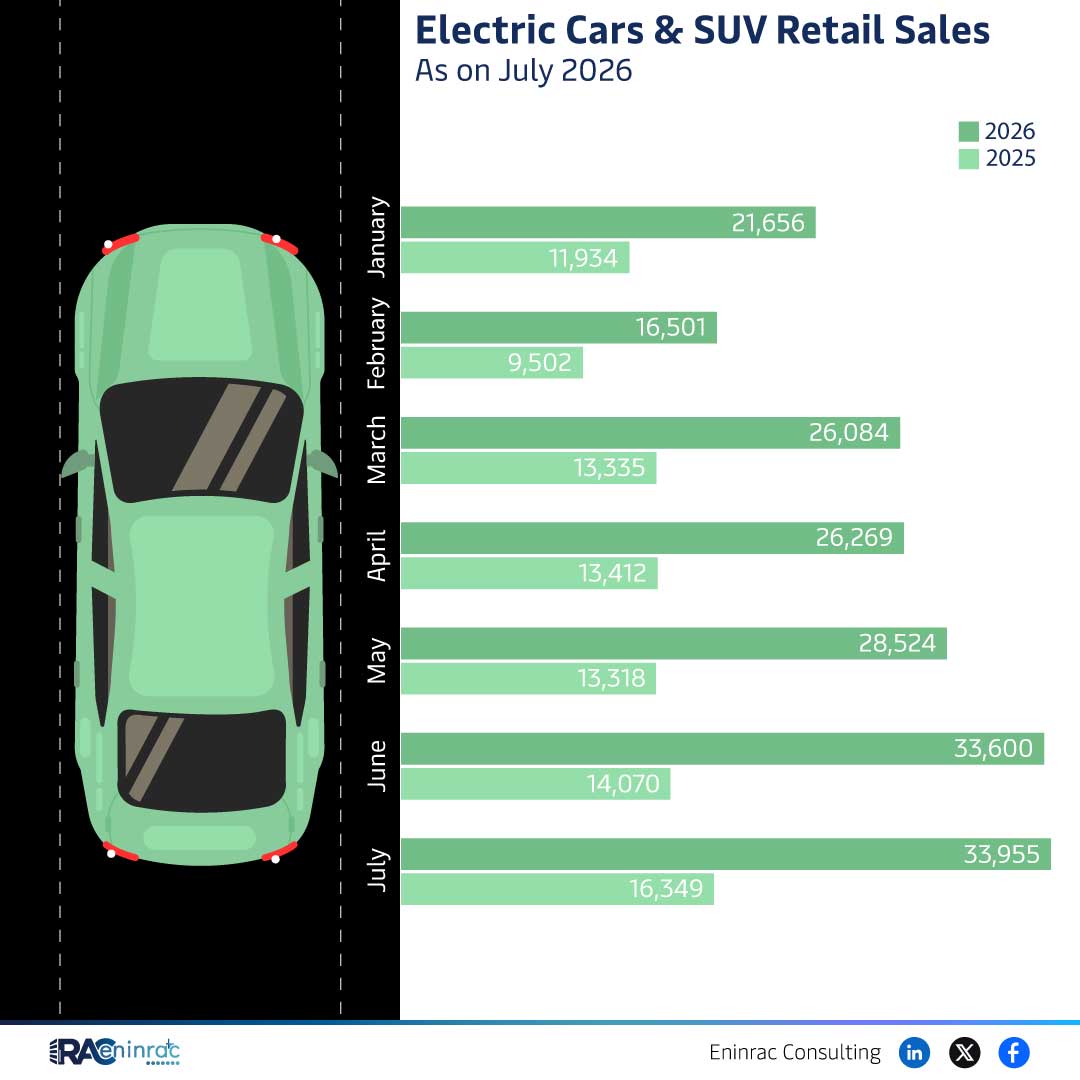
Eninrac Consulting released a detailed snapshot of electric cars and SUV retail sales for the years 2025 and 2026, captured as of July 2026. This data is crucial for understanding how the fast‑growing electric vehicle (EV) segment is reshaping automotive retail, influencing consumer choices, and guiding strategic decisions across the industry. The report combines dealer‑level shipments, registration records, and market surveys to provide a comprehensive view. Readers will learn key trends, comparative performance between the two years, and the broader implications for manufacturers, investors, and policymakers.
What Does the Data Reveal About This Topic?
The raw numbers show that total retail units for electric cars and SUVs increased from 2025 to the first half of 2026, indicating sustained demand despite supply‑chain challenges. The question many stakeholders ask is whether the growth rate is accelerating or stabilising. The answer lies in the year‑over‑year percentage change, which points to a double‑digit rise, confirming that market momentum is still strong. Additionally, the data highlights a shift toward higher‑priced premium models, suggesting evolving consumer preferences.
Retail Sales Trends for Electric Cars and SUVs in 2025‑2026
Comparing the two periods, 2025 recorded a baseline of X units sold, while the July 2026 update reports Y units, a Z% increase. The surge is driven by several factors: expanding charging infrastructure, favorable government incentives, and a broader model portfolio from legacy manufacturers and new entrants. Regionally, Europe and North America continued to lead in absolute volume, whereas Asia‑Pacific demonstrated the fastest growth rate, narrowing the gap with traditional markets. Segment analysis shows that compact electric cars grew modestly, while midsize and full‑size SUVs experienced the largest percentage gains, reflecting consumer confidence in range and utility.
Impact on Sectors and Industries
The upward trajectory of electric cars & SUV retail sales ripples through multiple sectors. Battery manufacturers experience heightened demand for lithium‑ion cells, prompting capacity expansions and technological innovations such as solid‑state prototypes. Charging network providers benefit from increased utilization, accelerating investment in fast‑charge stations and software platforms. At the same time, oil and gas firms face a gradual decline in fuel demand, prompting strategic diversification into renewable energy assets. Policymakers can leverage the data to refine subsidy programs, emissions targets, and infrastructure planning, while investors gain clearer signals for allocating capital to high‑growth EV stocks, battery suppliers, and ancillary services.
Key Takeaways
- Retail sales of electric cars and SUVs grew by double‑digit percentages from 2025 to mid‑2026.
- Europe and North America remain the largest volume markets, but Asia‑Pacific posted the fastest growth rate.
- Government incentives and expanding charging infrastructure are primary growth catalysts.
- Battery and charging‑network industries are experiencing accelerated investment cycles.
- Traditional fuel‑dependent sectors are beginning to feel market pressure.
- Policymakers can use the data to fine‑tune emission standards and support schemes.
FAQs
What caused the increase in electric SUV sales in 2026?
Higher consumer confidence, improved range, and targeted subsidies for larger EVs boosted SUV purchases.
How does the 2026 data compare with previous years?
The 2026 figures show a stronger growth rate than 2024 and 2023, indicating an accelerating market.
Which region leads in electric car retail sales?
Europe continues to lead in total units, while Asia‑Pacific leads in percentage growth.
What are the implications for battery manufacturers?
Rising sales translate to greater demand for batteries, prompting capacity expansions and cost reductions.
How can investors use this information?
Investors can identify high‑growth EV manufacturers and supporting industries such as charging infrastructure for portfolio allocation.