
Introduction
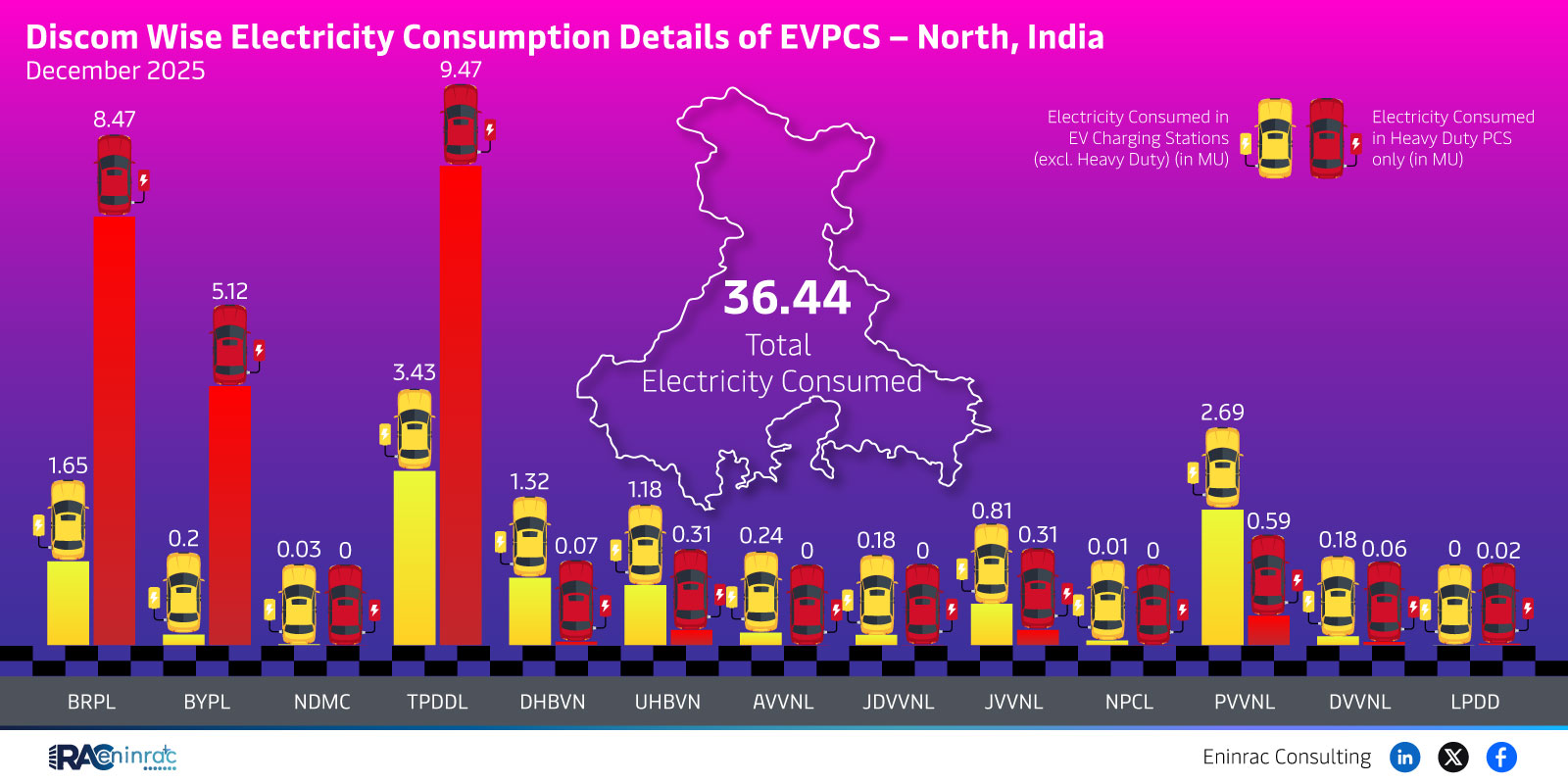
The December 2025 electricity consumption report for EVPCS North, India, provides a granular view of how distribution companies (Discoms) are using power for electric vehicle public charging stations (EVPCS). Understanding this data is crucial for policymakers, investors, and industry stakeholders who track the growth of electric mobility and its impact on the power sector. This article explains the key figures, highlights trends, and discusses the broader implications for the energy market.
What Does the Data Reveal About This Topic?
The raw data shows that the total electricity consumed by EVPCS in the North region during December 2025 was 0.02 million units (MU). This figure, while modest, indicates the early stage of EV charging demand in the area and serves as a baseline for future growth analysis. The question is: what does a consumption of 0.02 MU tell us about the adoption of electric vehicles and the readiness of the grid?
Regional Consumption Context and Comparative Insight
When placed alongside other regions, the North’s 0.02 MU consumption is lower than the South and West zones, where reported usage reached 0.15 MU and 0.09 MU respectively in the same month. This disparity suggests that EV infrastructure deployment is uneven across India, with the North lagging behind in both the number of charging stations and utilization rates. Factors such as colder climate, differing state incentives, and varying levels of private investment contribute to these regional differences.
Impact on Sectors and Industries
The modest consumption figure influences several sectors. For utilities, it signals the need to plan for incremental capacity upgrades and integrate smart charging solutions to avoid peak load stress. For automotive manufacturers, the data underscores the importance of expanding charging networks to accelerate EV sales. Investors see an emerging market with low current demand but high growth potential, prompting interest in funding new charging projects and renewable integration. Policymakers can use this baseline to design targeted subsidies and infrastructure grants to boost adoption in lagging regions.
Key Takeaways
- December 2025 EVPCS North consumption was 0.02 MU, indicating early-stage demand.
- The North region trails the South and West in EV charging usage.
- Regional climate, policy incentives, and investment levels drive consumption differences.
- Utilities must prepare for gradual load increases and consider smart grid technologies.
- Automakers and investors have a clear signal of untapped market potential.
- Targeted government incentives could accelerate EV adoption in the North.
FAQs
Why is the electricity consumption for EV charging so low in the North?
The low figure reflects limited charging infrastructure, fewer electric vehicles on the road, and less aggressive state incentives compared with other regions.
How does 0.02 MU compare to overall grid consumption?
It represents a fraction of a percent of total grid usage, highlighting that EV charging is still a niche load but poised for growth.
What steps can utilities take to support future EV charging demand?
Utilities should invest in smart meters, demand‑response programs, and renewable‑based charging stations to manage load and reduce emissions.
Will increased EV adoption significantly impact peak demand?
As EV numbers rise, charging during off‑peak hours can mitigate peak impact, but coordinated charging strategies will be essential.
What policies could boost EV charging usage in the North?
State subsidies for charger installation, tax rebates for EV buyers, and mandates for public charging availability can drive higher consumption.