
Introduction
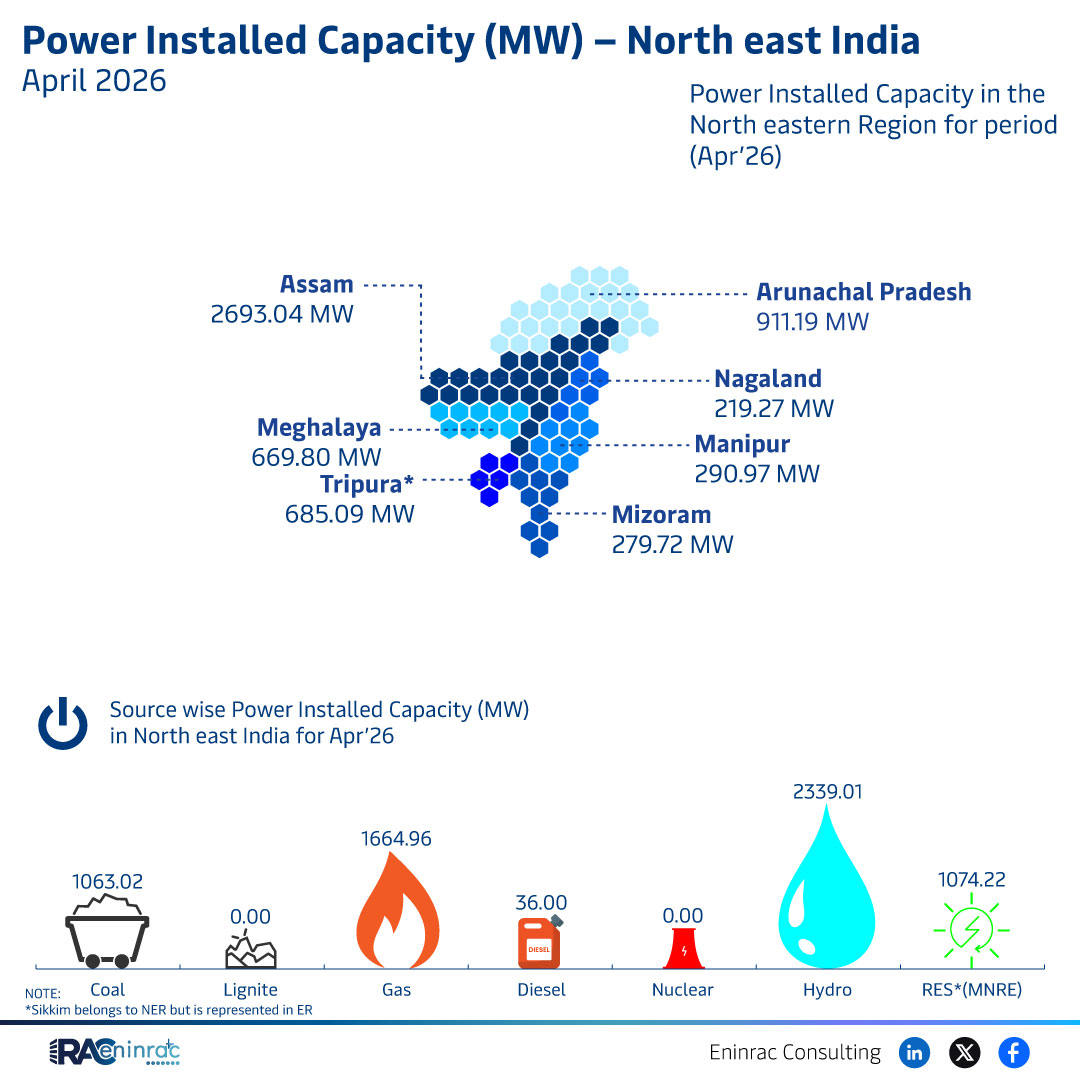
The April 2026 power installed capacity report for North East India provides a detailed snapshot of the region’s energy landscape. Understanding the installed capacity by state and source helps policymakers, investors, and industry stakeholders gauge growth trends, identify gaps, and plan future projects. This article breaks down the data, highlights key insights, and explains the implications for the power sector.
What Does the Data Reveal About This Topic?
The data shows that Assam leads the region with 2,693.04 MW of installed capacity, while smaller states like Nagaland and Sikkim contribute modest amounts. Hydro and renewable sources dominate the mix, with coal, lignite, gas, diesel, nuclear and other conventional sources contributing little or none. The question is: how does this distribution affect regional energy security and development?
State‑wise Capacity Comparison in North East India
Assam’s 2,693.04 MW far exceeds the capacities of its neighbours. Arunachal Pradesh follows with 911.19 MW, and Meghalaya records 669.80 MW. Tripura, Mizoram, Manipur and Nagaland each hold between 219 and 290 MW. Sikkim, although part of the North Eastern Region, is listed separately and shows zero installed capacity in this dataset. The stark contrast underscores Assam’s role as the primary power hub, while the other states rely heavily on hydro and renewable projects to meet local demand.
Impact on Sectors and Industries
The concentration of capacity in Assam supports industrial growth, improves grid reliability, and attracts investment in ancillary services such as transmission and distribution. For the renewable sector, the high share of hydro and other RES sources signals strong policy support and favorable geography. Investors looking at clean energy can target under‑served states like Nagaland and Sikkim for new hydro or solar projects. Policymakers must address the imbalance by encouraging inter‑state power exchange and expanding transmission networks.
Key Takeaways
- Assam dominates North East India with over 2,600 MW installed capacity.
- Hydro and renewable energy sources account for the majority of the region’s capacity.
- Conventional sources such as coal, gas, diesel and nuclear are virtually absent.
- Smaller states show limited capacity, highlighting opportunities for renewable expansion.
- Inter‑state grid connectivity is essential to balance supply and demand.
- Investors can focus on under‑penetrated markets for clean energy growth.
FAQs
Which state has the highest power installed capacity in North East India?
Assam leads with 2,693.04 MW of installed capacity as of April 2026.
What are the main sources of power in the region?
Hydro and other renewable energy sources dominate, while coal, gas, diesel, nuclear and lignite contribute little or none.
Why does Sikkim show zero capacity in this report?
Sikkim is part of the North Eastern Region but is listed separately and had no reported installed capacity in the April 2026 dataset.
How can smaller states improve their power capacity?
By investing in hydro, solar and wind projects, and enhancing transmission links to share surplus power from larger states.
What does this data mean for renewable energy investors?
The data highlights significant growth potential in under‑served states, making them attractive targets for clean energy investments.