
Introduction
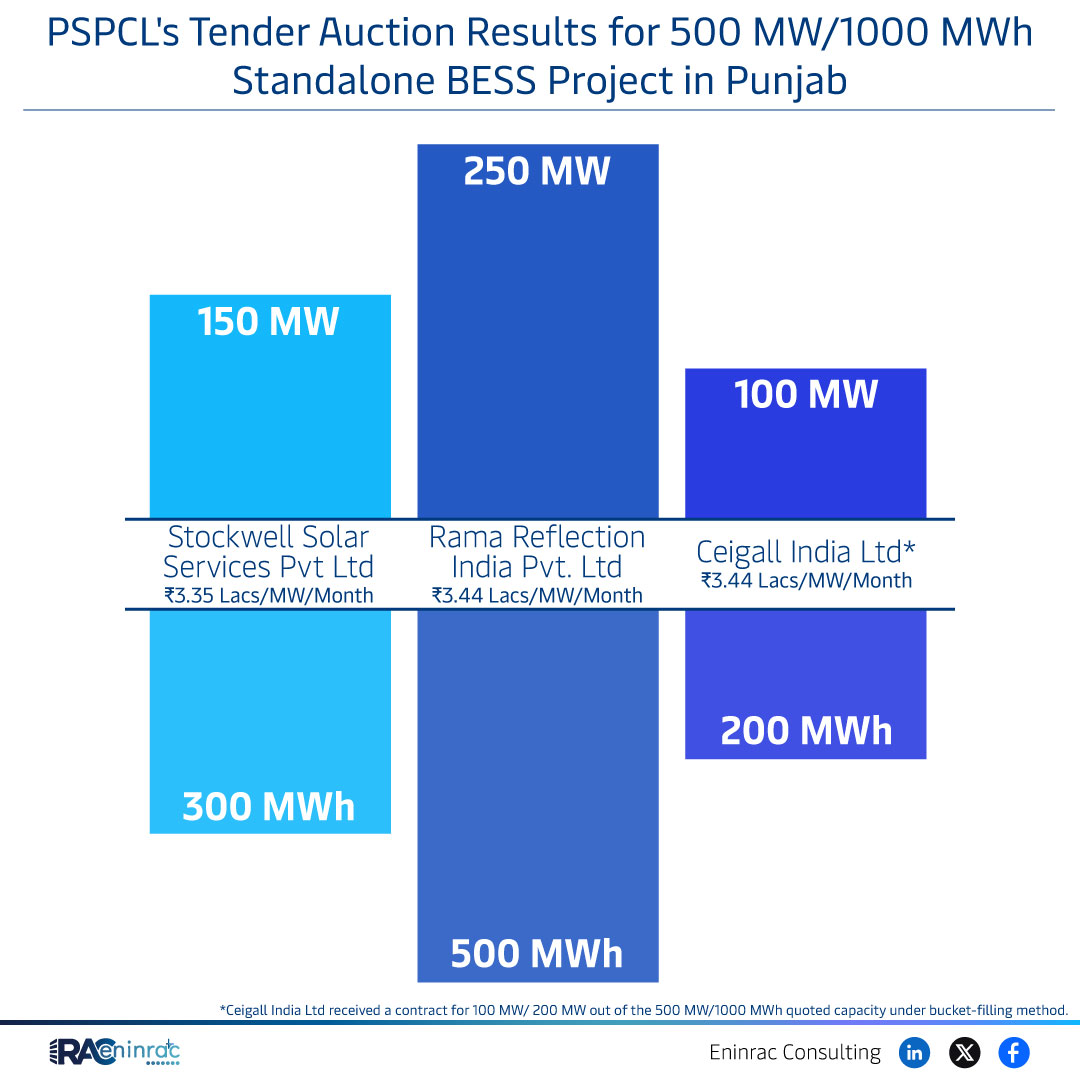
The Punjab State Power Corporation Limited (PSPCL) recently released tender auction results for a 500 MW/1000 MWh standalone battery energy storage system (BESS) project in Punjab. Understanding these results is crucial for investors, developers, and policymakers interested in India's new energies market, as they reveal allocation methods, pricing trends, and the role of key players such as Ceigall India Ltd.
What Does the Data Reveal About This Topic?
What insight does the auction data provide? The results show that Ceigall India Ltd secured contracts for 100 MW and 200 MW under a bucket‑filling method, indicating a competitive bidding environment and a preference for phased capacity awards. Pricing varied significantly, with rates ranging from 3.44 Lacs/MW/Month to 44 Lacs/MW/Month, highlighting cost disparities across bidders.
Comparative Pricing and Allocation Analysis
When comparing the quoted rates, the lowest price of 3.44 Lacs/MW/Month suggests aggressive cost optimization, while the highest at 44 Lacs/MW/Month reflects higher operational or financing costs. The allocation of 300 MW to Ceigall out of the total 500 MW indicates that the remaining capacity may be distributed among other participants, potentially diversifying the market and encouraging competition.
Impact on Sectors and Industries
The BESS auction influences several sectors. For the power generation industry, large‑scale storage enhances grid stability and enables greater renewable integration. Investors see new revenue streams through ancillary services. Policymakers gain data to refine auction designs and support India's clean energy targets. Consumers ultimately benefit from more reliable electricity supply and potential cost reductions.
Key Takeaways
- Ceigall India Ltd won 300 MW of the 500 MW BESS tender.
- Pricing ranged from 3.44 Lacs to 44 Lacs per MW per month, showing wide cost variation.
- The bucket‑filling method allowed phased capacity awards, promoting fairness.
- Standalone BESS projects are critical for renewable integration in Punjab.
- Auction results provide a benchmark for future new‑energy tenders.
- Stakeholders across generation, investment, and policy will monitor performance outcomes.
FAQs
What is the total capacity offered in the PSPCL BESS tender?
The tender offered 500 MW of storage capacity, equivalent to 1000 MWh of energy.
Which company secured the largest share of the award?
Ceigall India Ltd secured the largest share, winning contracts for 100 MW and 200 MW.
How were the contracts allocated?
Contracts were allocated using a bucket‑filling method, which awards capacity in stages based on bid competitiveness.
Why do the prices vary so widely?
Price variation reflects differences in project financing, technology choices, and operational cost assumptions among bidders.
What benefits does a standalone BESS provide?
A standalone BESS improves grid reliability, balances supply and demand, and supports higher penetration of renewable energy sources.