
Introduction
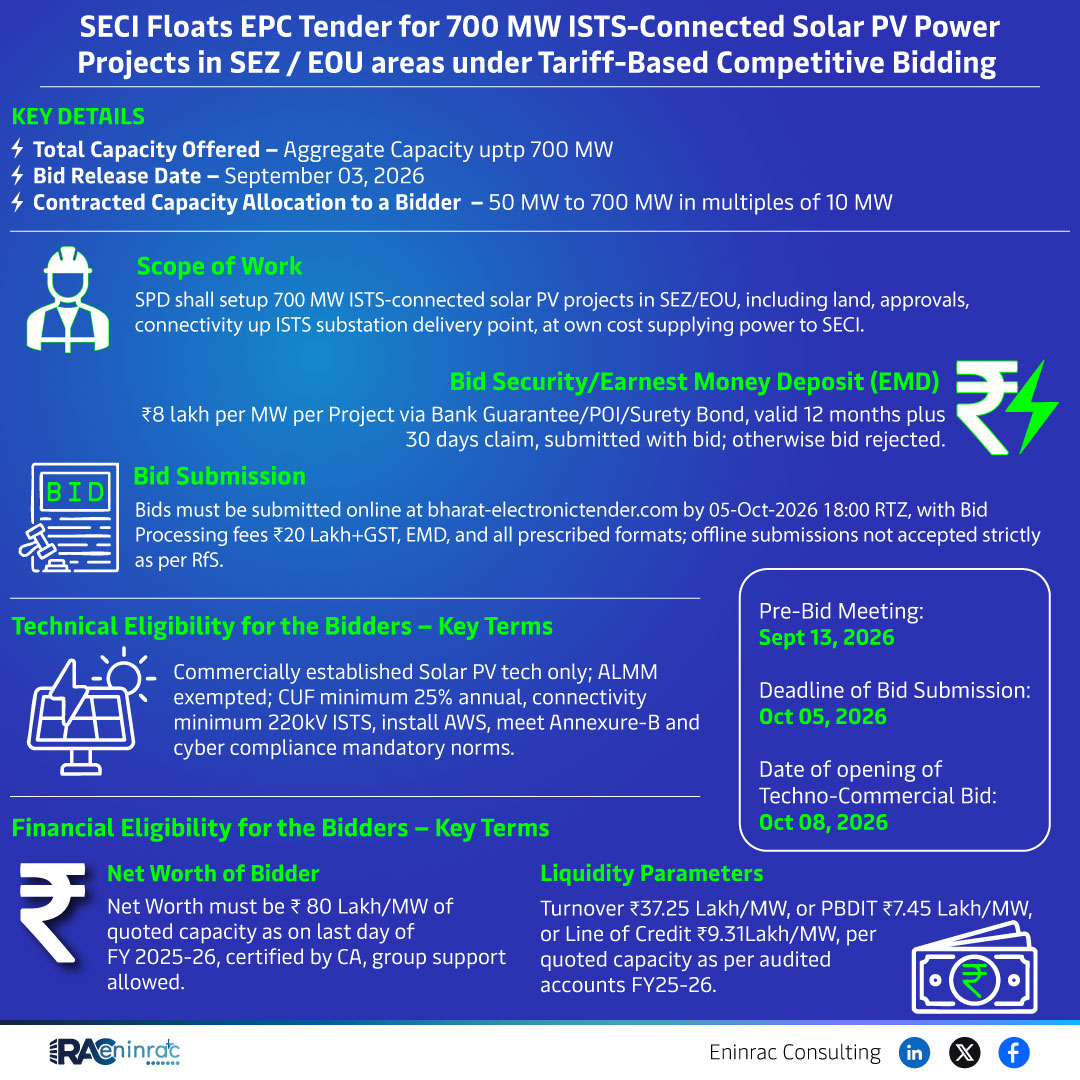
The Solar Energy Corporation of India (SECI) has floated a competitive 700 MW ISTS‑connected solar PV tender for projects located in Special Economic Zones (SEZ) and Export Oriented Units (EOU). This tender represents a significant push to expand solar generation capacity within India’s industrial corridors, leveraging the Integrated Solar Transmission System (ISTS) to ensure efficient power delivery. Stakeholders, including developers, financiers, and policy makers, will find critical details on capacity allocation, bid security, eligibility criteria, and timelines that shape the submission process.
What Does the Data Reveal About This Topic?
What key information does the tender document disclose? It outlines a total offered capacity of up to 700 MW, with individual bidders eligible to secure blocks ranging from 50 MW to 700 MW in multiples of 10 MW. The bid security is set at eight lakh rupees per megawatt, payable via bank guarantee, performance‑bond, or surety. The submission deadline is 5 October 2026, and all bids must be lodged online through the official portal. The data also specifies stringent financial eligibility thresholds, including net‑worth and turnover multiples, ensuring that only financially robust entities can participate.
Bid Structure, Capacity Allocation and Financial Requirements
The tender mandates that successful bidders will develop ISTS‑connected solar PV projects at their own expense, covering land acquisition, regulatory approvals and connection to the ISTS sub‑station delivery point. Capacity can be booked in 10 MW increments, allowing flexibility for both large conglomerates and mid‑size developers. Financial eligibility requires a net‑worth of at least 80 lakh rupees per megawatt of referenced turnover, with additional parameters such as PBDIT, line of credit, and audited accounts for FY 2025‑26. The bid security of eight lakh rupees per MW must remain valid for twelve months plus a thirty‑day claim period, otherwise the bid will be rejected.
Impact on Sectors and Industries
This 700 MW ISTS‑connected solar PV tender is poised to influence several sectors. The renewable energy industry will see a boost in installed capacity, fostering growth in solar panel manufacturing, EPC services, and O&M contracts. Financial institutions will encounter new lending opportunities tied to project financing, while the logistics and land‑development sectors stand to benefit from increased demand in SEZ and EOU locales. Policymakers can leverage the tender’s outcomes to assess the effectiveness of ISTS integration and to fine‑tune future incentive structures for large‑scale solar deployments.
Key Takeaways
- The SECI tender offers up to 700 MW of ISTS‑connected solar PV capacity in SEZ/EOU areas.
- Bid blocks are available in multiples of 10 MW, ranging from 50 MW to the full 700 MW.
- Bid security is fixed at eight lakh rupees per MW, required as a bank guarantee or surety bond.
- Financial eligibility demands a net‑worth of 80 lakh rupees per MW of turnover and audited FY 2025‑26 accounts.
- All bids must be submitted online by 5 October 2026; offline submissions are not accepted.
- Successful bidders will bear the full cost of land, approvals and connectivity to the ISTS sub‑station.
FAQs
What is the total capacity offered in this SECI tender?
The tender offers a cumulative capacity of up to 700 MW of ISTS‑connected solar PV projects.
How much bid security is required per megawatt?
Bid security is set at eight lakh rupees per megawatt, payable through a bank guarantee, performance‑bond or surety.
When is the final date for online bid submission?
The online submission deadline is 5 October 2026 at 18:00 IST.
What are the financial eligibility criteria for bidders?
Bidders must demonstrate a net‑worth of at least 80 lakh rupees per MW of turnover, meet turnover, PBDIT and line‑of‑credit thresholds, and provide audited FY 2025‑26 accounts certified by a chartered accountant.
Can a bidder secure the entire 700 MW capacity?
Yes, a single bidder can request the full 700 MW, provided the request is in multiples of 10 MW and meets all financial and security requirements.