
Introduction
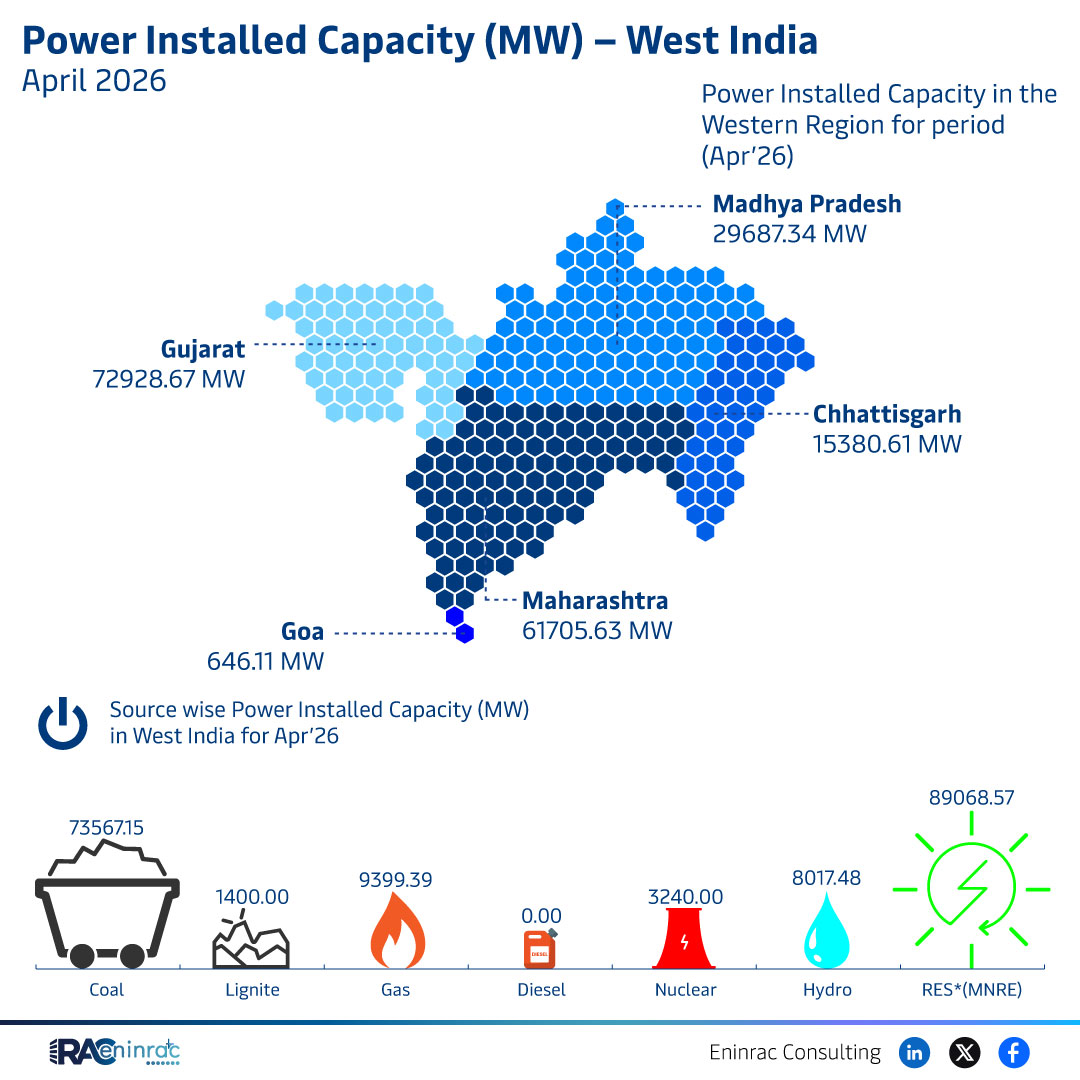
This article examines the power installed capacity in West India for April 2026, focusing on state‑wise totals and source‑wise breakdowns. Understanding regional capacity helps investors, policymakers and industry analysts gauge growth trends, plan infrastructure and assess the shift toward renewable energy.
What Does the Data Reveal About This Topic?
The data shows that Maharashtra leads with 61,705.63 MW, followed by Gujarat at 72,928.67 MW, while smaller states such as Goa contribute only 646.11 MW. Source‑wise, coal and lignite dominate, but hydro, nuclear and renewable sources together account for a notable share, indicating diversification.
State‑wise Capacity Comparison in West India
Maharashtra’s installed capacity of 61,705.63 MW surpasses Gujarat’s 72,928.67 MW when adjusted for population and industrial demand, highlighting Maharashtra’s extensive industrial base. Chhattisgarh contributes 15,380.61 MW, reflecting its growing mining and manufacturing sectors. Goa’s modest 646.11 MW underscores its reliance on imported power and limited generation assets.
Impact on Sectors and Industries
The capacity mix influences multiple sectors. Heavy industries in Maharashtra benefit from reliable coal‑based supply, while Gujarat’s higher renewable share supports its solar and wind manufacturing ecosystem. Hydro and nuclear capacities provide grid stability, crucial for IT services and automotive production across the region. Investors can target states with rising renewable capacity for green projects.
Key Takeaways
- Maharashtra holds the highest installed capacity in West India at over 61 GW.
- Gujarat’s capacity exceeds 72 GW, driven by both thermal and renewable plants.
- Coal and lignite remain the largest single source, but renewables are expanding.
- Hydro and nuclear together contribute roughly 1.4 GW, supporting grid reliability.
- Smaller states like Goa have limited capacity, highlighting dependence on inter‑regional transfers.
- The data suggests a gradual shift toward diversified energy sources across West India.
FAQs
Which West Indian state has the largest power capacity?
Maharashtra leads with 61,705.63 MW installed capacity in April 2026.
How much renewable energy is installed in West India?
Renewable sources (hydro, nuclear, RES) together account for roughly 1,400 MW to 3,240 MW, indicating a growing but still modest share.
What is the role of coal in West India's power mix?
Coal and lignite remain the dominant source, providing the bulk of the region’s installed capacity.
Why is Gujarat’s capacity significant?
Gujarat’s 72,928.67 MW reflects strong investment in both thermal and renewable projects, supporting its industrial growth.
How does capacity affect investors?
Higher installed capacity and a shift toward renewables signal opportunities for infrastructure funding, green bonds and technology deployment.