
Introduction
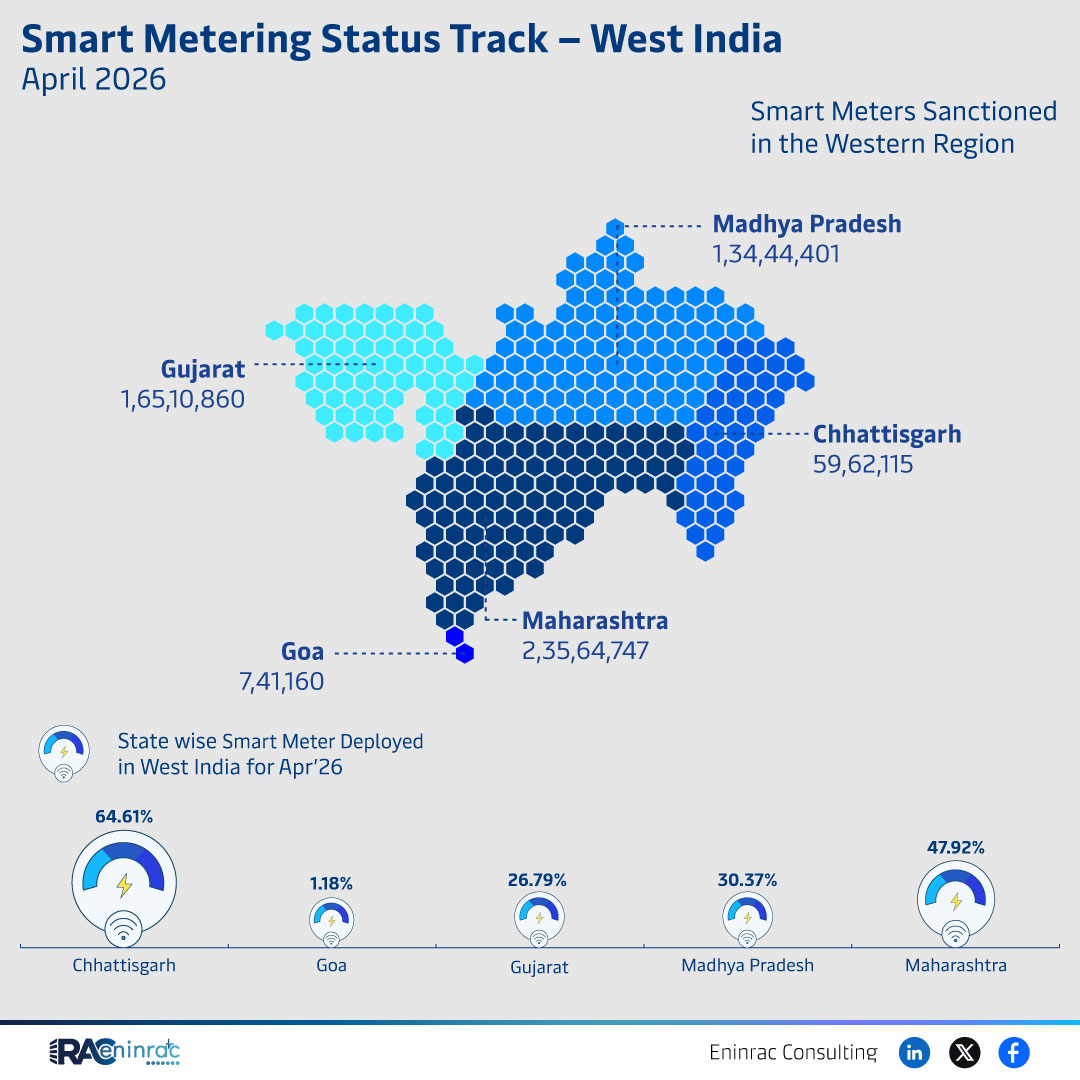
In April 2026 the western region of India reported a significant surge in smart meter installations across key states. Understanding this rollout is essential for utilities, policymakers, and investors who track grid modernization and energy efficiency trends. This article breaks down the numbers, highlights leading states, and explains the broader impact on the power sector.
What Does the Data Reveal About This Topic?
The data shows that Gujarat leads with 1,34,44,401 smart meters sanctioned, followed by Maharashtra with 2,35,64,747 meters and Madhya Pradesh with 1,65,10,860 meters. Smaller contributions come from Chhattisgarh (59,62,115) and other western states. The question is: why does Gujarat dominate the deployment and what does this mean for regional grid reliability?
State‑wise Smart Meter Deployment Trends
Gujarat’s deployment of over 13.4 million meters reflects aggressive state policies and strong utility partnerships. Maharashtra, despite a larger population, shows a higher absolute number of meters but a lower per‑capita penetration compared with Gujarat. Madhya Pradesh’s figures indicate rapid catch‑up, while Chhattisgarh’s modest numbers suggest early‑stage adoption. The trend points to Gujarat setting the benchmark for smart grid readiness in western India.
Impact on Sectors and Industries
Smart meter rollout influences several sectors. Utilities gain real‑time consumption data, enabling demand‑side management and reduced losses. Equipment manufacturers see increased demand for meters, communication modules, and data analytics platforms. Investors view the expansion as a signal of stable, long‑term revenue streams, while policymakers can leverage the data to design targeted energy‑saving programs. Consumers benefit from accurate billing and enhanced outage detection.
Key Takeaways
- Gujarat leads western India with over 13.4 million smart meters sanctioned.
- Maharashtra follows with the highest absolute count but lower per‑capita penetration.
- Madhya Pradesh shows rapid growth, closing the gap with leading states.
- Smart meter adoption is uneven, highlighting varied state policy effectiveness.
- Utility operations are becoming more data‑driven, improving grid reliability.
- The rollout creates new market opportunities for technology providers and investors.
FAQs
Which western state has the highest number of smart meters?
Gujarat, with 1,34,44,401 meters sanctioned, tops the list.
What benefits do smart meters bring to consumers?
Accurate billing, real‑time usage insights, and quicker outage detection.
How does smart meter data help utilities?
It enables demand response, loss reduction, and better asset management.
Are there investment opportunities in the smart meter market?
Yes, manufacturers, communication service providers, and data analytics firms see growing demand.
What challenges remain for full smart meter penetration?
Funding constraints, legacy infrastructure integration, and varying state policy support.