
Introduction
The April 2026 power generation report for India provides a detailed snapshot of thermal and nuclear electricity output across the country’s major regions. Understanding this data is crucial for policymakers, investors, and energy analysts who track supply trends, regional performance, and the balance between programmed targets and actual generation.
What Does the Data Reveal About This Topic?
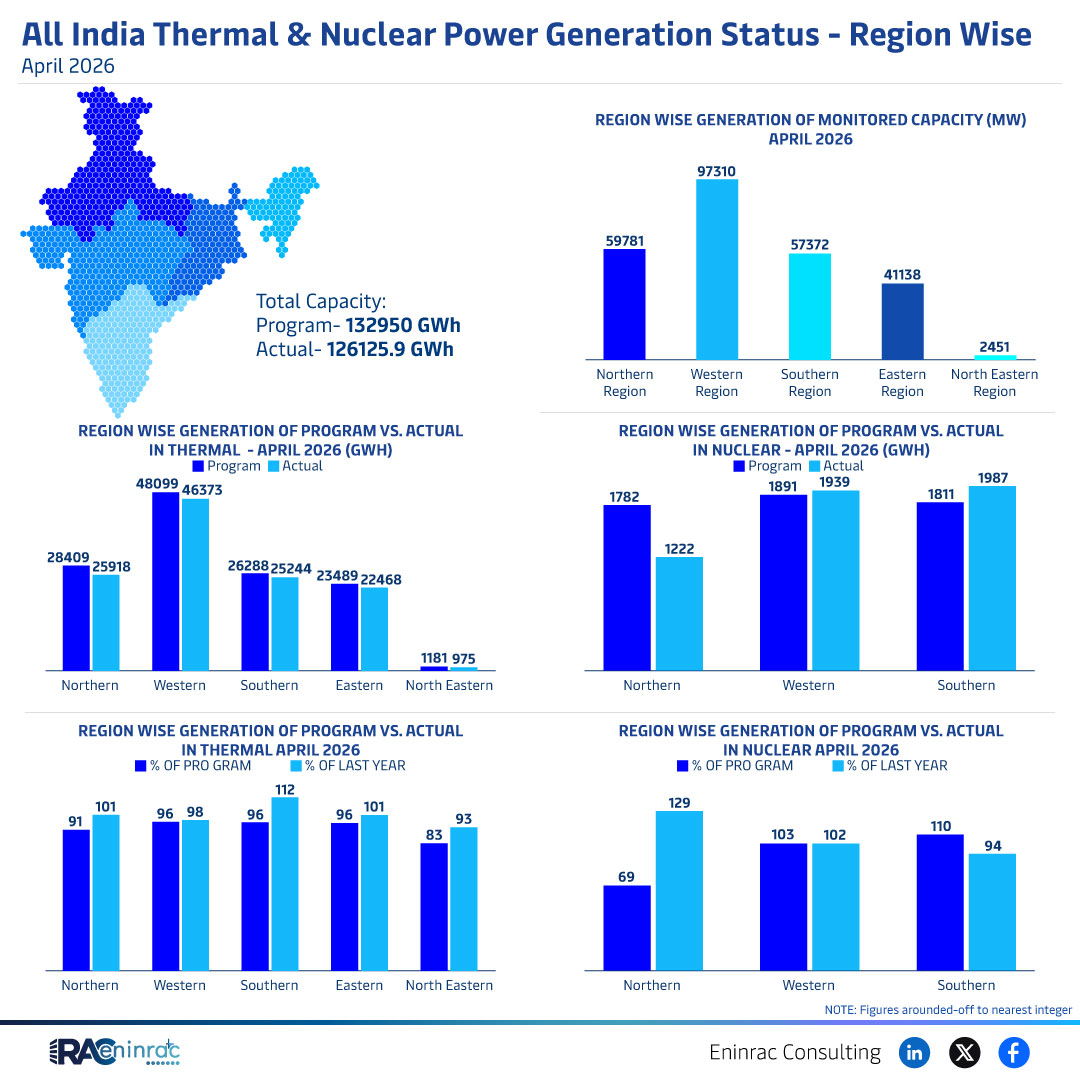
Does the April 2026 generation data show that India met its programmed power output? The figures indicate that total programmed generation was 132,950 GWh, while actual generation reached 126,125.9 GWh, meaning the country achieved roughly 95 % of its target. Thermal generation contributed the bulk of the output, with nuclear providing a smaller but growing share.
Regional Performance Highlights for Thermal and Nuclear Power
Thermal generation was strongest in the Northern and Western regions, where programmed capacity reached 97,310 MW and actual output was close to the target. The Southern region lagged behind, showing a noticeable gap between programmed and actual figures. In nuclear generation, the Northern region again led with the highest programmed and actual GWh, while the Eastern and North‑Eastern zones contributed modestly. These variations reflect differences in plant availability, fuel supply, and regional demand patterns.
Impact on Sectors and Industries
Accurate generation data influences several sectors. Utilities use the information to plan load dispatch and maintenance schedules. Investors assess the reliability of power supply when evaluating renewable and conventional projects. Policymakers rely on the gap between programmed and actual output to refine capacity addition targets and to prioritize grid upgrades. Consumers benefit indirectly through more stable electricity pricing and reduced outage risk.
Key Takeaways
- India generated 126,125.9 GWh in April 2026, achieving about 95 % of its programmed target.
- Thermal power remains the dominant source, with the Northern and Western regions delivering the highest output.
- Nuclear generation, though smaller, showed strong performance in the Northern region.
- Regional disparities highlight the need for targeted infrastructure investments in the Southern and Eastern zones.
- The shortfall between programmed and actual generation underscores the importance of plant reliability and fuel logistics.
- Stakeholders can use these insights to guide investment, policy, and operational decisions for the upcoming fiscal year.
FAQs
What was the total programmed power generation for India in April 2026?
The programmed total was 132,950 GWh.
How much actual power was generated in April 2026?
Actual generation reached 126,125.9 GWh.
Which region led thermal power generation?
The Northern region recorded the highest thermal output.
Did nuclear generation meet its programmed target?
Nuclear generation slightly exceeded the programmed figure in the Northern region, but overall remained below the national target.
What are the implications of the generation gap?
The gap signals a need for improved plant availability, better fuel supply chains, and focused grid enhancements in lagging regions.