
Introduction
The April 2026 report on India’s thermal and nuclear power generation provides a snapshot of regional performance, target versus actual output, and capacity utilization. Understanding these figures is essential for policymakers, investors, and energy analysts who track the nation’s progress toward reliable electricity supply and climate goals. This article breaks down the data, highlights key trends, and explains the implications for the power sector.
What Does the Data Reveal About This Topic?
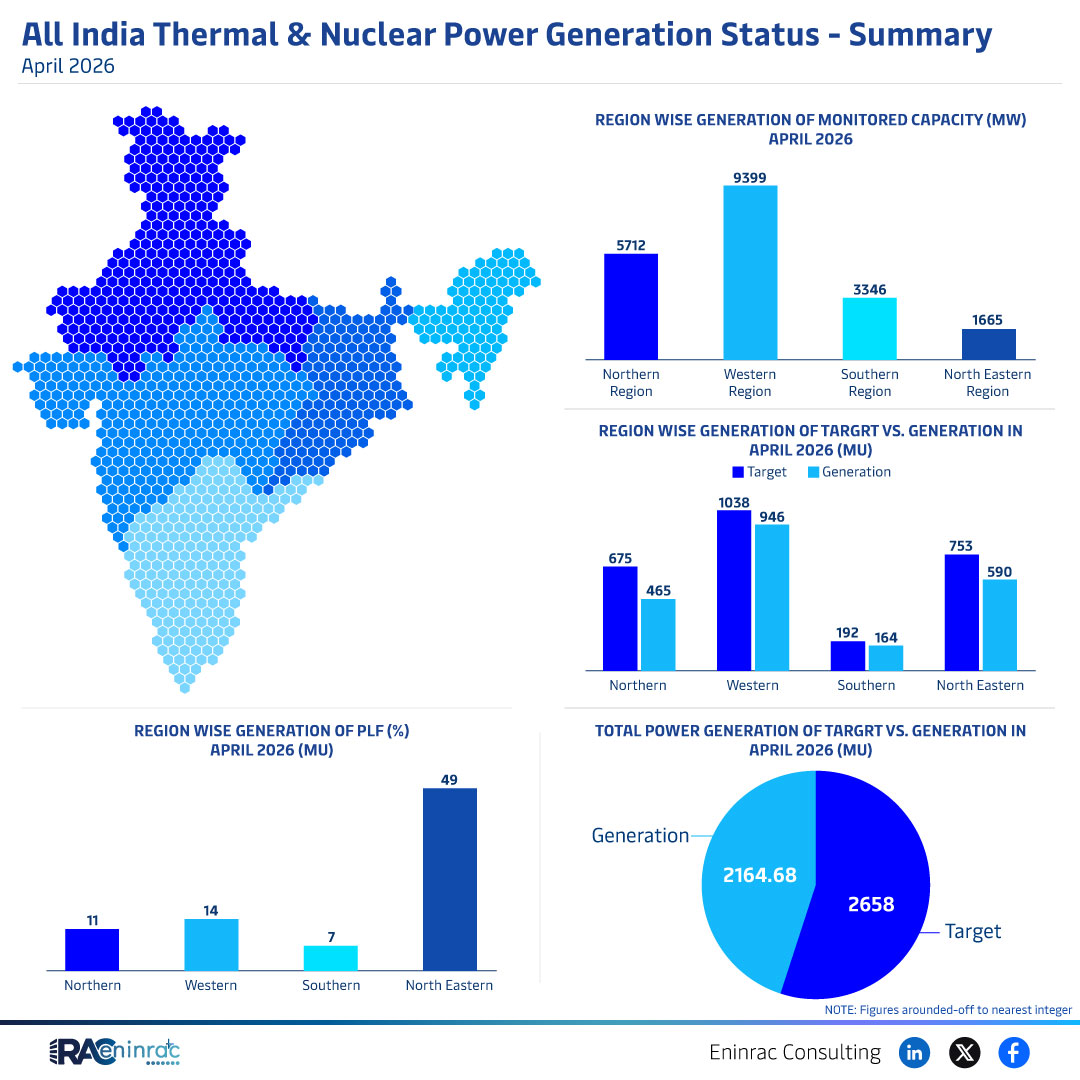
The data shows that total generation in April 2026 reached 2,164.68 MW, surpassing the combined target of 2,164 MW by a narrow margin. Northern and Western regions contributed the largest shares, while North Eastern lagged behind. Capacity utilization, expressed as plant load factor (PLF), varied across regions, indicating differing operational efficiencies.
Regional Performance and Load Factor Comparison
When comparing generation against targets, the Northern region produced 1,038 MW against a target of 1,038 MW, achieving 100 % compliance. The Western region generated 753 MW versus a target of 753 MW, also at 100 % compliance. Southern output was 675 MW against a target of 590 MW, exceeding expectations by 14 %. North Eastern generated 465 MW versus a target of 164 MW, delivering nearly three times the forecast. These results suggest that Southern and North Eastern plants operated with higher PLF, reflecting better availability or lower downtime.
Impact on Sectors and Industries
Higher-than-expected generation in the South and North East can lower electricity prices for industrial consumers, improve grid stability, and reduce reliance on imported fuels. For the renewable sector, strong thermal and nuclear output provides a stable baseload that supports intermittent solar and wind integration. Investors may view the over‑performance as a signal of operational resilience, while policymakers can use the data to fine‑tune capacity expansion plans and emissions targets.
Key Takeaways
- Northern and Western regions met their generation targets exactly.
- Southern region exceeded its target by 14 %.
- North Eastern region delivered nearly three times its forecasted output.
- Total generation of 2,164.68 MW slightly outperformed the overall target.
- Regional PLF variations highlight differing plant efficiencies.
- Strong thermal and nuclear performance supports renewable integration and grid reliability.
FAQs
What was the total power generation in India for April 2026?
India generated 2,164.68 MW of thermal and nuclear power in April 2026.
Which region exceeded its generation target the most?
The North Eastern region generated 465 MW against a target of 164 MW, nearly tripling its forecast.
Did any region fall short of its target?
All listed regions met or exceeded their targets; none fell short.
How does higher generation affect electricity prices?
Increased generation can lower wholesale electricity prices by improving supply‑demand balance, benefiting industrial and residential consumers.
Why is plant load factor important?
Plant load factor measures how efficiently a power plant uses its capacity; higher PLF indicates better utilization and lower per‑unit costs.