
Introduction
April 2026 saw a notable peak power demand across the North Eastern Region of India. Understanding the demand patterns of each state helps utilities, policymakers, and investors gauge supply needs, plan infrastructure, and ensure reliable electricity delivery. This article breaks down the peak demand figures, highlights the leading states, and discusses the broader implications for the region’s energy landscape.
What Does the Data Reveal About This Topic?
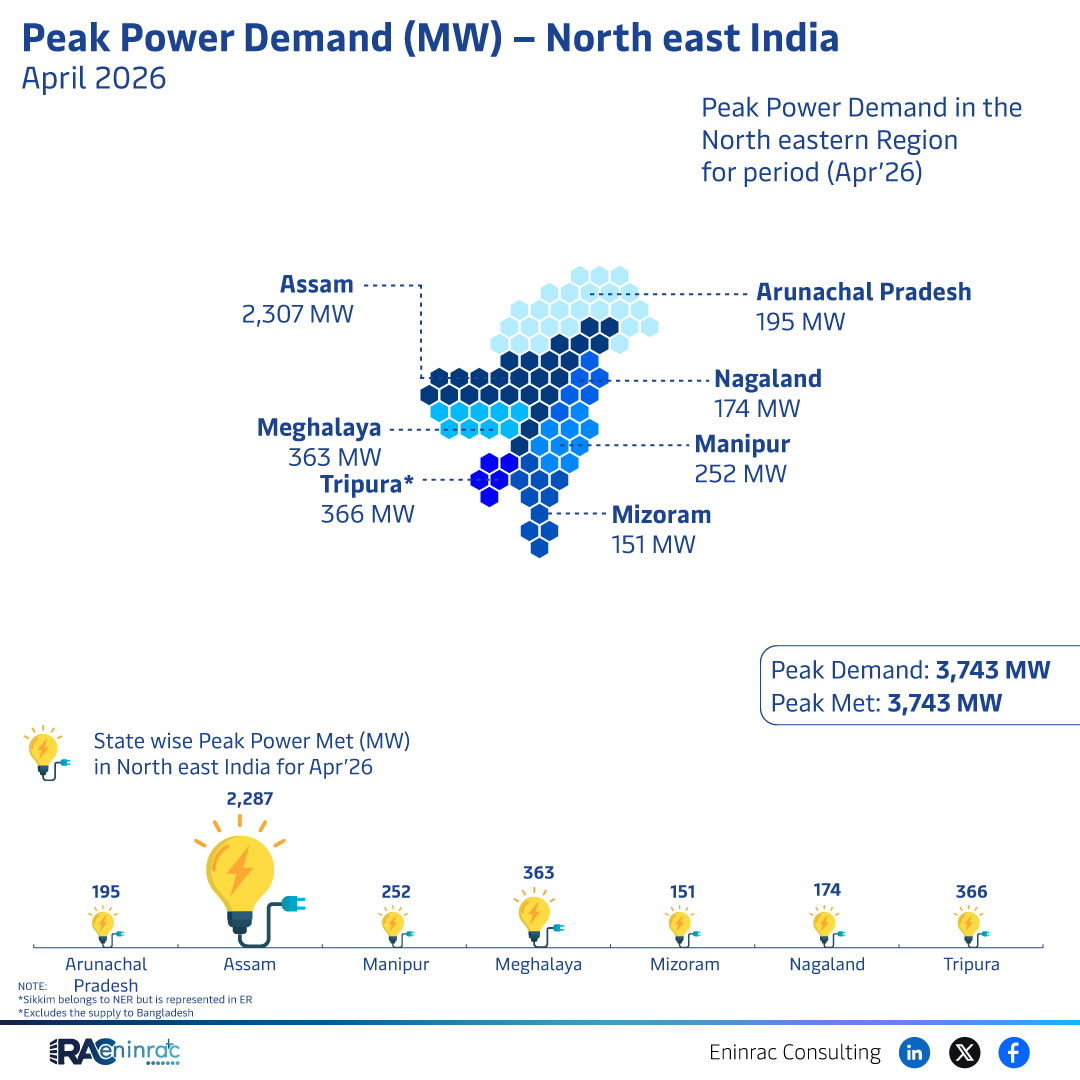
The data shows a total peak demand of 3,743 MW for the region in April 2026, with Assam contributing the largest share at 2,307 MW. Arunachal Pradesh, Meghalaya, Manipur, Mizoram, Nagaland, and Tripura together account for the remaining 1,436 MW. The question is: why does Assam dominate the demand profile?
State‑wise Demand Comparison
Assam’s 2,307 MW represents over 60% of the region’s total, reflecting its larger population, industrial activity, and higher electrification rates. Arunachal Pradesh follows with 195 MW, while Meghalaya and Manipur each record around 174 MW and 151 MW respectively. The smaller states—Mizoram (151 MW), Nagaland (174 MW), and Tripura (5 MW)—show modest demand, indicating lower consumption intensity and limited industrial bases. This contrast underscores the need for targeted capacity upgrades in Assam while allowing smaller states to focus on demand‑side management.
Impact on Sectors and Industries
High peak demand in Assam influences several sectors. Power generation companies must secure additional capacity or improve plant efficiency to meet peak loads. Transmission operators face increased stress on inter‑state lines, especially those linking Assam to neighboring Bangladesh. Industrial users, particularly in manufacturing and agro‑processing, must plan for reliable supply to avoid production losses. For policymakers, the data signals where to prioritize grid reinforcement and renewable integration to balance demand growth.
Key Takeaways
- Assam accounts for more than 60% of the North East’s peak demand in April 2026.
- Overall regional peak demand reached 3,743 MW, highlighting growing electricity needs.
- Smaller states exhibit lower demand, suggesting opportunities for demand‑side initiatives.
- Transmission networks must be strengthened, especially connections to Bangladesh.
- Renewable energy integration can help mitigate peak stress in high‑demand states.
- Policymakers should focus on capacity planning and grid reliability in Assam.
FAQs
Which state had the highest peak power demand in April 2026?
Assam recorded the highest peak demand at 2,307 MW.
What is the total peak demand for the North Eastern Region?
The region’s total peak demand was 3,743 MW.
How does peak demand in Arunachal Pradesh compare to Assam?
Arunachal Pradesh’s peak demand of 195 MW is less than 10% of Assam’s demand.
Why is peak demand important for utilities?
Peak demand determines the maximum capacity needed to avoid outages and guides investment in generation and transmission.
What measures can reduce peak demand in high‑demand states?
Implementing demand‑response programs, promoting energy‑efficient appliances, and expanding renewable generation can lower peak loads.