
Introduction
The April 2026 peak power demand data for North India provides a snapshot of electricity consumption across key states during a critical summer period. Understanding which regions experience the highest load helps grid operators, policymakers, and investors plan for reliability, infrastructure upgrades, and future energy mix decisions. This article breaks down the numbers, highlights trends, and explains the implications for the power sector.
What Does the Data Reveal About This Topic?
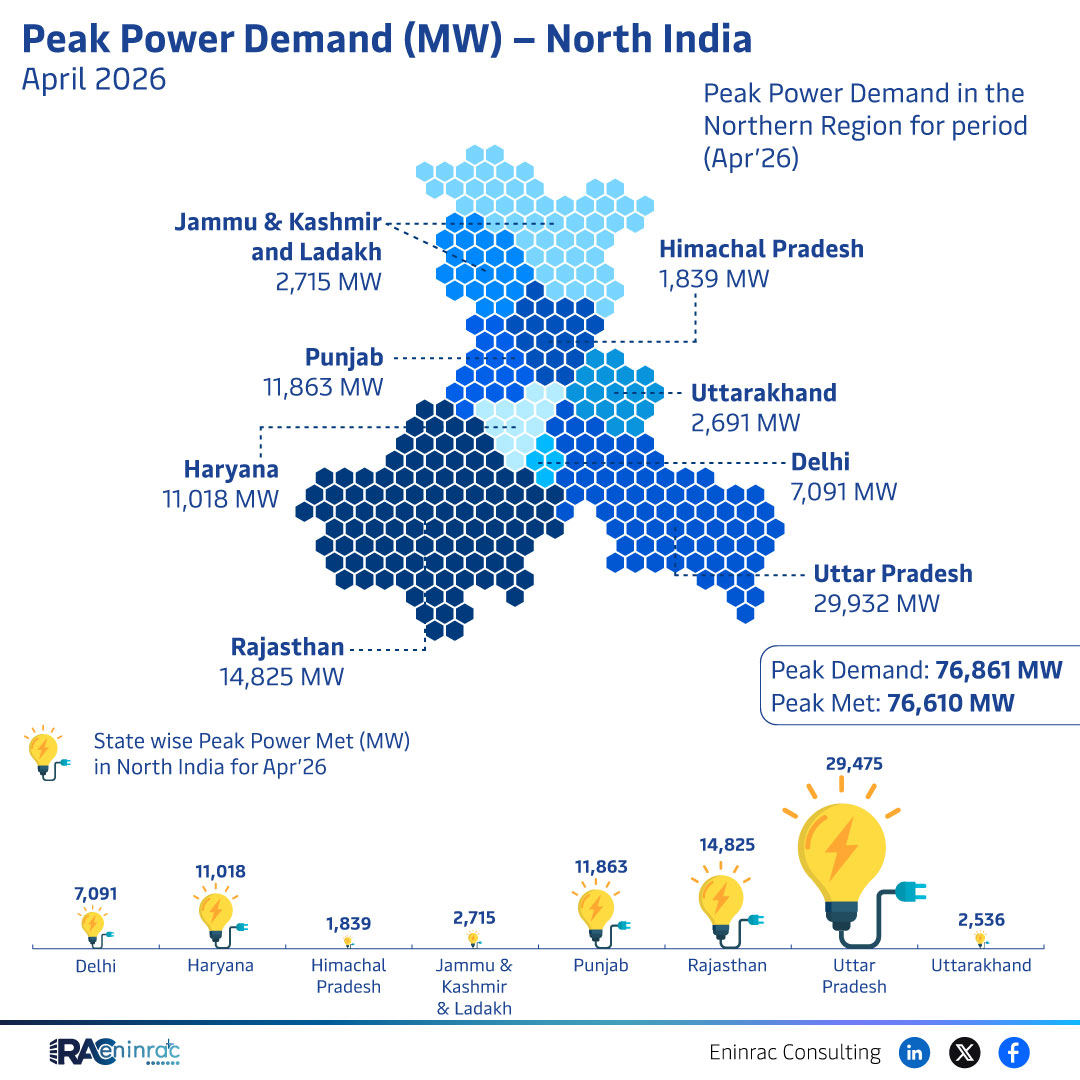
Which states recorded the highest peak demand in April 2026? The data shows Rajasthan leading with 14,825 MW, followed closely by Punjab at 11,863 MW and Haryana at 11,018 MW. Uttar Pradesh topped the overall North India total with 29,932 MW, contributing significantly to the regional peak of 76,861 MW. The figures illustrate a clear concentration of demand in the western and central‑north states.
State‑wise Comparison of Peak Power Demand
When comparing the states, Rajasthan’s demand of 14,825 MW stands out as the highest single‑state figure, reflecting its large industrial base and growing residential load. Punjab and Haryana each exceed 11,000 MW, driven by agricultural pumping and manufacturing activities. Delhi’s 7,091 MW, while lower than its neighbours, still represents a major urban load centre. Himachal Pradesh and Jammu & Kashmir‑Ladakh report the lowest peaks at 1,839 MW and 2,715 MW respectively, indicating limited industrialisation and lower population density.
Impact on Sectors and Industries
High peak demand influences several sectors. Power generation companies must dispatch additional capacity, often turning to gas‑fired plants or renewable peaking resources to meet short‑term spikes. Transmission operators face increased stress on inter‑state lines, prompting upgrades to avoid congestion. Industries such as steel, cement, and agro‑processing in Rajasthan, Punjab, and Haryana may encounter higher electricity tariffs during peak periods, affecting production costs. Conversely, low‑demand states can attract renewable projects that supply excess generation to the wider grid.
Key Takeaways
- Rajasthan recorded the highest state‑level peak demand at 14,825 MW.
- Uttar Pradesh contributed the largest share to the North India total, driving the regional peak of 76,861 MW.
- Delhi’s urban load reached 7,091 MW, highlighting the importance of city‑level demand management.
- Himachal Pradesh and Jammu & Kashmir‑Ladakh showed the lowest peaks, suggesting opportunities for renewable integration.
- High‑demand states will likely need transmission upgrades and additional peaking generation.
- Policymakers should consider demand‑side management programs to flatten peak curves across the region.
FAQs
What was the total peak power demand for North India in April 2026?
The region reached a peak of 76,861 MW, with 76,610 MW actually met.
Which state had the lowest peak demand?
Jammu & Kashmir‑Ladakh recorded the lowest peak at 2,715 MW.
How does peak demand affect electricity pricing?
Higher peaks often trigger higher tariffs for consumers and industries because utilities must procure costlier peaking power.
What role does renewable energy play during peak periods?
Renewables can provide quick response through solar‑plus‑storage or wind farms, reducing reliance on fossil‑fuel peakers.
Are there plans to upgrade transmission in high‑demand states?
Grid authorities are evaluating reinforcement projects in Rajasthan, Punjab, and Haryana to handle future load growth.