
Introduction
The April 2026 peak power demand data for East India provides a clear snapshot of electricity consumption across the region’s key states. Understanding these figures is essential for utilities, policymakers, investors, and consumers who need to anticipate supply requirements, plan infrastructure upgrades, and assess market dynamics. This article breaks down the state‑wise demand, highlights the leading contributors, and explains the broader implications for the power sector.
What Does the Data Reveal About This Topic?
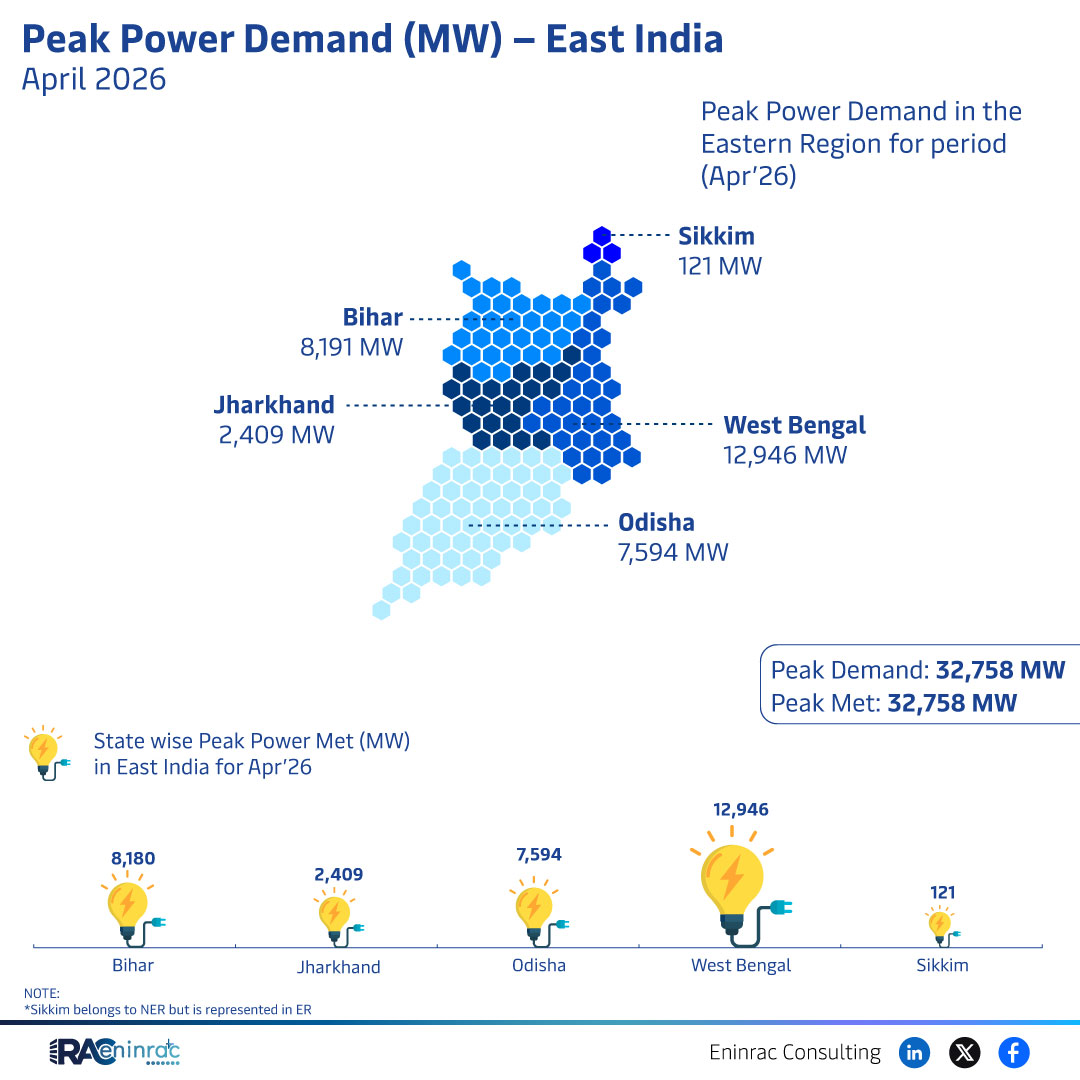
The data shows that the total peak demand for East India in April 2026 reached 32,758 MW, with West Bengal accounting for the largest share at 12,946 MW, followed by Bihar at 8,191 MW, Odisha at 7,594 MW, Jharkhand at 2,409 MW, and Sikkim at 121 MW. The question is: why does West Bengal dominate the demand profile, and what does this mean for regional power planning?
State‑Wise Demand Comparison
West Bengal’s demand of nearly 13 GW reflects its dense industrial base, high population, and extensive commercial activity. Bihar, while less industrialised, shows strong demand growth due to agricultural processing and urban expansion. Odisha’s demand is driven by heavy industries such as steel and aluminium, whereas Jharkhand’s moderate demand aligns with its mining sector. Sikkim’s minimal demand underscores its smaller population and limited industrial footprint, even though it is technically part of North‑East India.
Impact on Sectors and Industries
High peak demand in West Bengal and Bihar pressures the transmission network, requiring upgrades to avoid bottlenecks. Industries in these states may face higher electricity tariffs during peak periods, influencing production costs and investment decisions. In Odisha, the demand supports large‑scale manufacturing but also necessitates reliable supply to prevent downtime. Jharkhand’s mining operations depend on stable power, making demand forecasting critical for operational continuity. For Sikkim, the low demand presents opportunities for renewable integration without over‑loading the grid.
Key Takeaways
- East India’s total peak demand in April 2026 was 32,758 MW.
- West Bengal contributed the highest demand at 12,946 MW.
- Bihar and Odisha together accounted for over 15,000 MW of the total.
- Jharkhand’s demand was 2,409 MW, reflecting its mining‑focused economy.
- Sikkim’s demand was only 121 MW, highlighting its limited industrial activity.
- The data underscores the need for targeted grid reinforcement in high‑demand states.
FAQs
What was the total peak power demand for East India in April 2026?
The total peak demand reached 32,758 MW across the region.
Which state had the highest peak demand?
West Bengal recorded the highest peak demand at 12,946 MW.
How does Bihar’s demand compare to Odisha’s?
Bihar’s demand was 8,191 MW, slightly higher than Odisha’s 7,594 MW.
Why is Sikkim’s demand so low?
Sikkim’s low demand reflects its small population and limited industrial activity.
What are the implications of high peak demand for utilities?
Utilities must invest in transmission upgrades, demand‑side management, and possibly additional generation capacity to ensure reliability during peak periods.