
Introduction
The April 2026 peak power demand report for West India provides a detailed snapshot of electricity consumption across key states. Understanding these figures is essential for grid operators, policymakers, investors, and businesses that rely on reliable power supply. This article breaks down the data, highlights the highest‑demand regions, and explains the implications for the energy sector.
What Does the Data Reveal About This Topic?
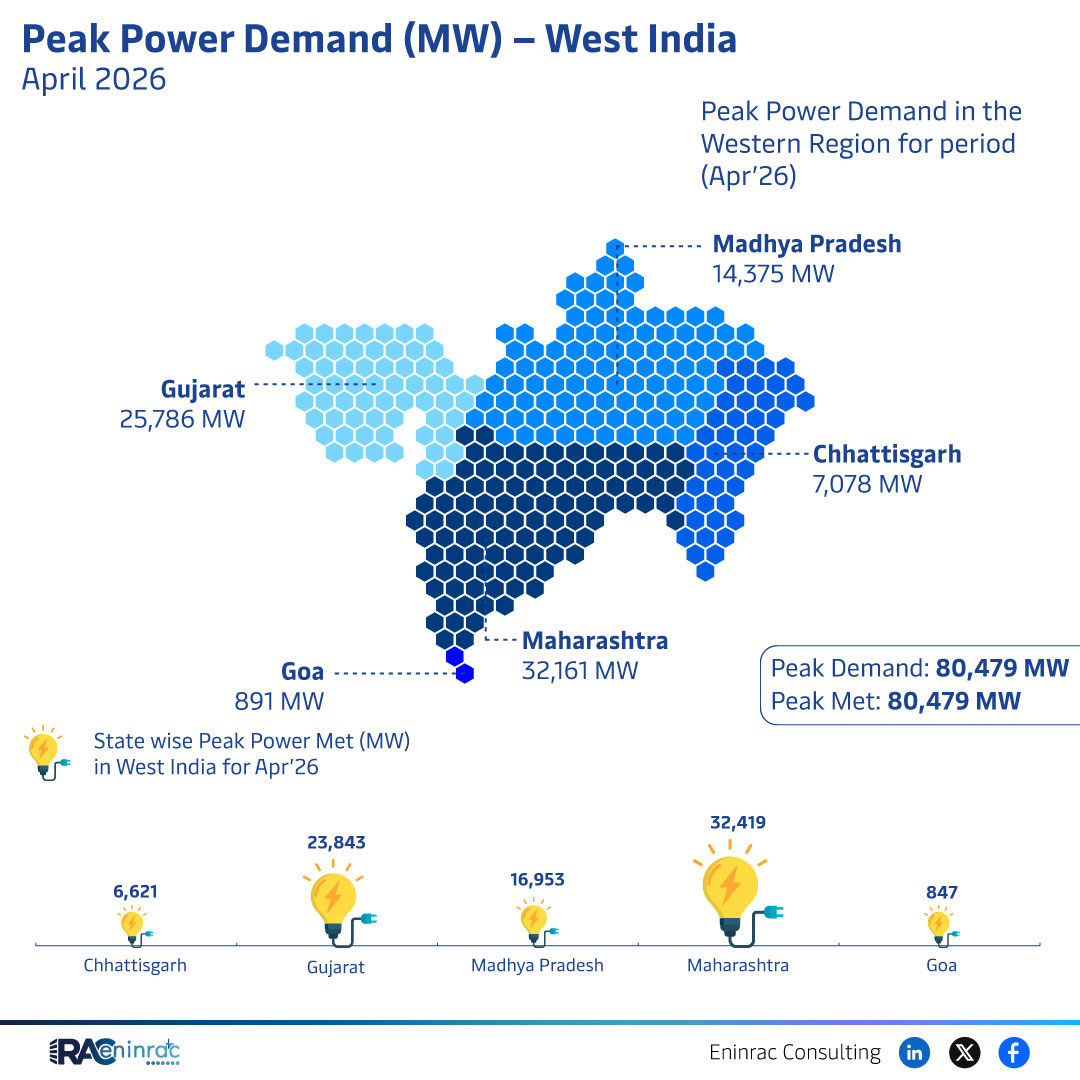
The data shows that the total peak demand for the Western region reached 80,479 MW in April 2026, with Gujarat leading at 25,786 MW, followed by Maharashtra at 32,161 MW and Madhya Pradesh at 14,375 MW. The question is: why do these states dominate the demand curve? Factors include industrial activity, population density, and seasonal temperature spikes that increase cooling load.
State‑Level Comparison of Peak Demand
When comparing states, Gujarat records the highest individual peak at 25,786 MW, reflecting its strong manufacturing base and extensive commercial load. Maharashtra follows closely with 32,161 MW, driven by its metropolitan hubs and heavy industry. Madhya Pradesh contributes 14,375 MW, while smaller contributors like Chhattisgarh (7,078 MW) and Goa (891 MW) show lower demand due to smaller industrial footprints and population.
Impact on Sectors and Industries
High peak demand influences several sectors. Power generators must ensure sufficient capacity and reserve margins, prompting investments in both conventional and renewable plants. Transmission operators face increased stress on inter‑state lines, requiring upgrades to avoid bottlenecks. Industries such as steel, chemicals, and IT services must plan for demand‑response strategies to mitigate cost spikes during peak periods. Policymakers can use this data to prioritize grid resilience projects and incentivize demand‑side management.
Key Takeaways
- Western India’s total peak demand in April 2026 was 80,479 MW.
- Gujarat led with 25,786 MW, highlighting its industrial intensity.
- Maharashtra’s demand of 32,161 MW underscores the load from major urban centers.
- Madhya Pradesh contributed 14,375 MW, showing significant but lower demand.
- Smaller states like Chhattisgarh and Goa recorded modest peaks, reflecting limited industrial activity.
- The data signals a need for grid upgrades and increased generation capacity to meet future peaks.
FAQs
What was the total peak power demand for West India in April 2026?
The region recorded a total peak demand of 80,479 MW.
Which state had the highest peak demand?
Gujarat topped the list with 25,786 MW.
How does Maharashtra’s demand compare to Gujarat’s?
Maharashtra reported 32,161 MW, slightly higher than Gujarat’s figure.
Why is peak demand important for energy planning?
Peak demand determines the maximum capacity needed to avoid outages and guides investment in generation and transmission infrastructure.
What sectors are most affected by high peak demand?
Heavy industry, manufacturing, data centers, and large commercial complexes are most sensitive to peak load conditions.