
Introduction
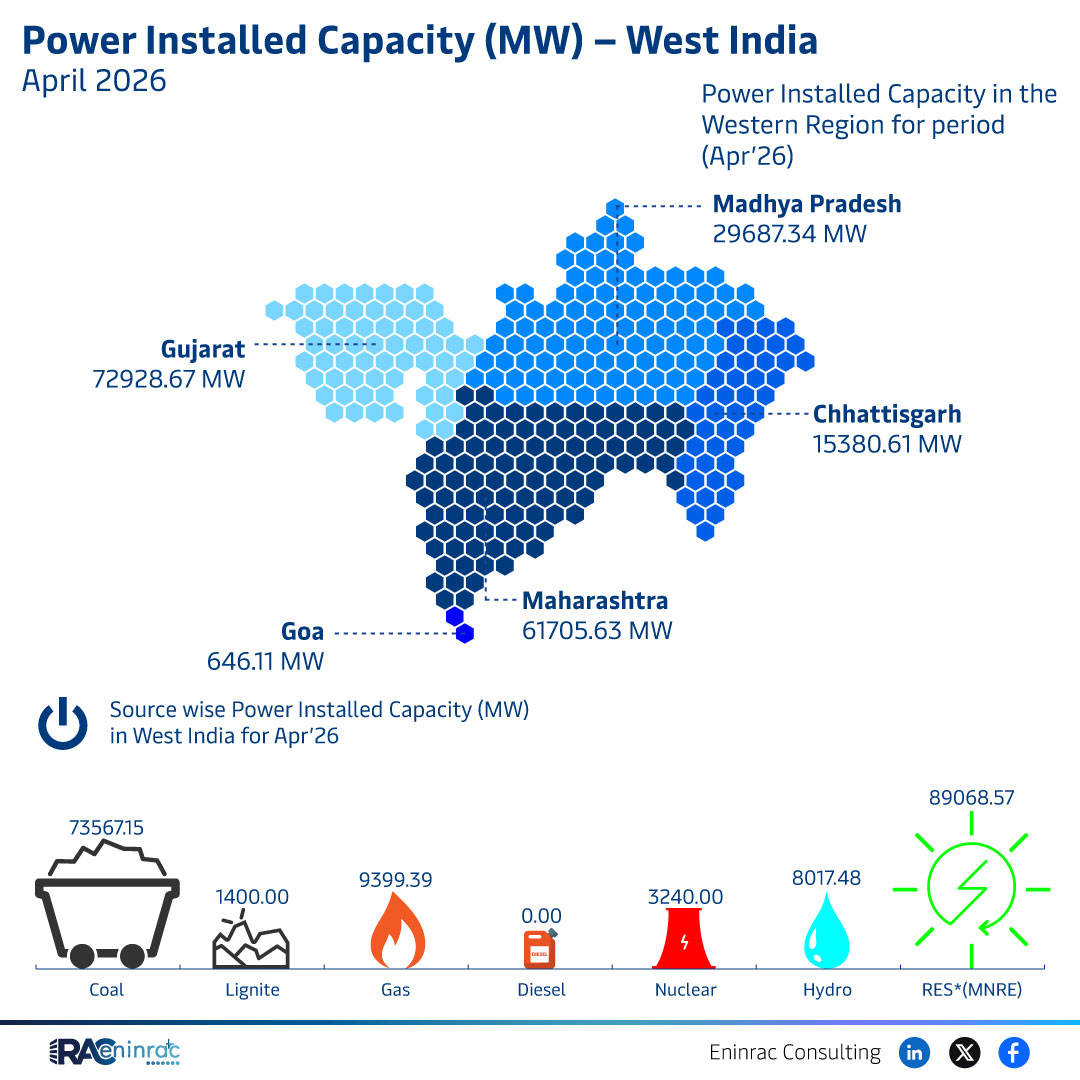
The Western Region of India recorded its power installed capacity for April 2026, revealing the distribution of generation assets across key states and fuel types. Understanding this data helps policymakers, investors, and industry analysts gauge regional energy strength, plan future expansions, and assess the balance between conventional and renewable sources.
What Does the Data Reveal About This Topic?
Which states lead the Western region in installed capacity and how are different fuel sources represented? The data shows Gujarat as the dominant state with 72,928.67 MW, followed by Maharashtra (61,705.63 MW) and Madhya Pradesh (29,687.34 MW). Coal and lignite together account for the largest share, while renewable energy (RES) contributes a modest but growing portion.
State‑wise Capacity Comparison in West India
Gujarat’s capacity of nearly 73 GW surpasses Maharashtra’s 61.7 GW, highlighting Gujarat’s aggressive expansion in both thermal and renewable projects. Madhya Pradesh, though traditionally central, appears in the western tally with 29.7 GW, indicating cross‑regional grid integration. Smaller contributors like Chhattisgarh (15.38 GW) and Goa (0.65 GW) illustrate the varied scale of power assets across the region.
Impact on Sectors and Industries
The capacity mix influences multiple sectors. Heavy industry and manufacturing in Gujarat benefit from reliable coal‑based generation, while the growing share of hydro and RES supports green initiatives and reduces carbon intensity. Investors can target states with higher renewable footprints for clean‑energy funds, whereas policymakers may focus on diversifying fuel sources to enhance grid resilience.
Key Takeaways
- Gujarat leads West India with 72,928.67 MW installed capacity.
- Maharashtra follows with 61,705.63 MW, showing strong thermal generation.
- Coal and lignite dominate the fuel mix, but renewable sources are present.
- Madhya Pradesh contributes 29,687.34 MW, reflecting inter‑regional grid links.
- Chhattisgarh and Goa have relatively small capacities, highlighting regional disparities.
- The data underscores the need for balanced growth between conventional and renewable energy.
FAQs
Which state has the highest power capacity in West India?
Gujarat, with approximately 72,928.67 MW, holds the top position.
What is the total installed capacity for Maharashtra?
Maharashtra reports about 61,705.63 MW of installed capacity.
How much capacity does renewable energy contribute?
Renewable energy (RES) accounts for a smaller share, with figures such as 9,399.39 MW for hydro and additional megawatts for other renewables.
Why is coal still dominant in the West India mix?
Coal and lignite provide reliable baseload power, supporting industrial demand and grid stability.
What opportunities exist for investors?
Investors can explore Gujarat’s expanding renewable projects and Maharashtra’s thermal assets, while also monitoring emerging renewable capacity in smaller states.