
Introduction
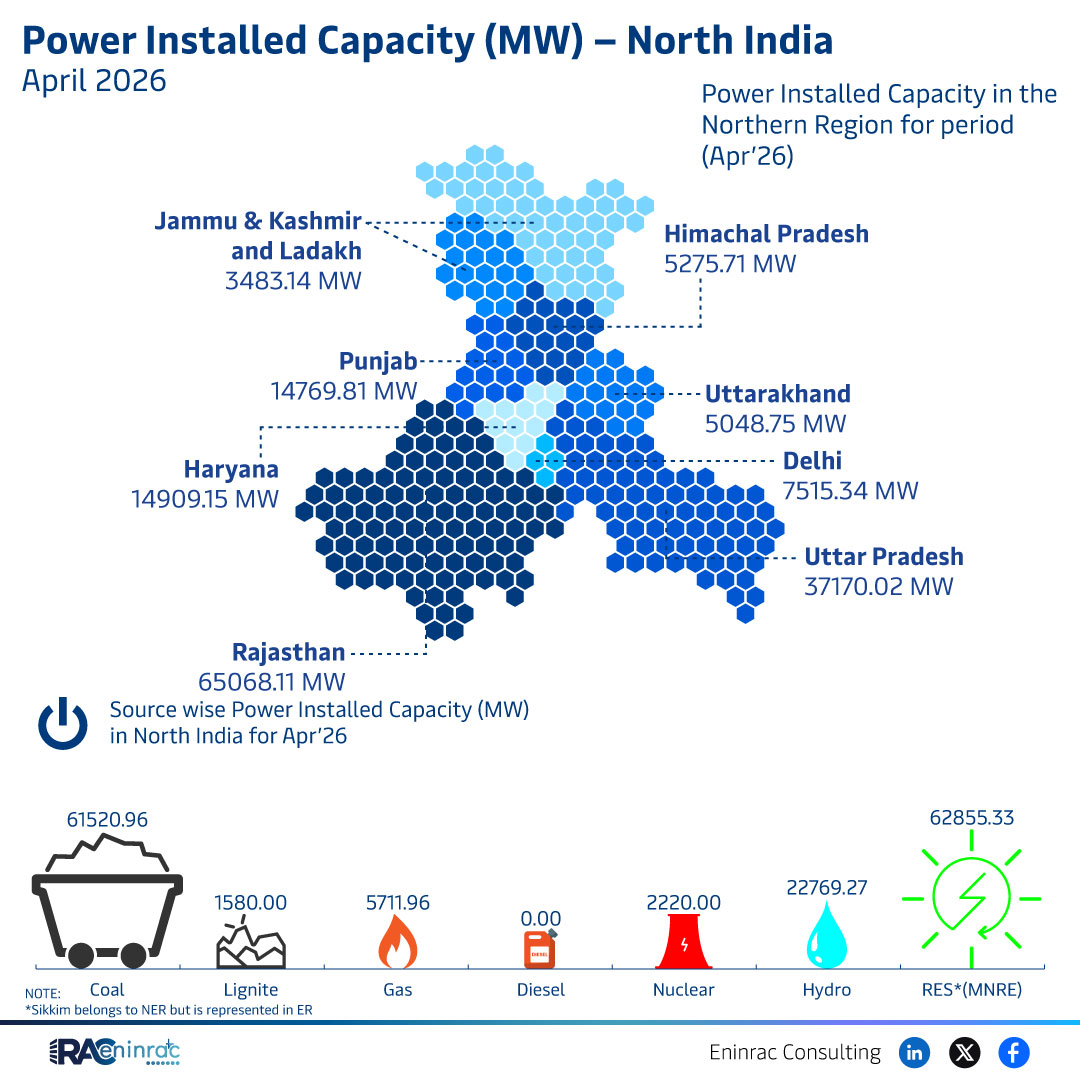
This article examines the power installed capacity across North Indian states for April 2026. Understanding regional capacity helps policymakers, investors, and industry stakeholders gauge supply potential, plan infrastructure, and assess renewable integration.
What Does the Data Reveal About This Topic?
The data shows that Rajasthan leads with 65,068.11 MW, followed by Uttar Pradesh at 37,170.02 MW and Punjab at 14,769.81 MW. The mix of coal, gas, hydro, and renewable sources varies widely, indicating differing state strategies.
State‑wise Capacity Comparison in North India
Rajasthan’s capacity of over 65 GW dwarfs smaller states such as Himachal Pradesh and Ladakh, which together contribute just 3.48 GW. Delhi’s 7.5 GW reflects its urban demand, while Haryana reports an unusually high figure of 14,909.15 MW, suggesting recent expansions. Hydro and renewable energy (RES) together account for a modest share, with coal and lignite still dominating the generation mix.
Impact on Sectors and Industries
Higher installed capacity supports industrial growth, improves grid reliability, and attracts renewable investment. States with larger coal‑based capacity face pressure to transition toward cleaner sources, influencing emissions regulations and financing conditions. Consumers benefit from reduced load‑shedding risk, while utilities must balance base‑load and intermittent renewable output.
Key Takeaways
- Rajasthan holds the highest installed capacity in North India at 65,068.11 MW.
- Coal and lignite remain the dominant sources across most states.
- Renewable energy capacity is growing but still represents a small fraction of total capacity.
- Delhi and Haryana show significant urban‑centric capacity growth.
- Capacity data highlights the need for accelerated renewable integration to meet climate goals.
- Policymakers can use these figures to prioritize transmission upgrades and storage solutions.
FAQs
Which North Indian state has the largest power capacity?
Rajasthan, with 65,068.11 MW, leads the region.
What is the primary source of power in North India?
Coal and lignite together account for the majority of installed capacity.
How much renewable energy is installed in the region?
Renewable energy (RES) contributes a relatively small share, with figures such as 5,711.96 MW for hydro and 2,220.00 MW for other renewables.
Why does Haryana show a high capacity figure?
Recent expansions in both thermal and renewable projects have boosted Haryana’s capacity to 14,909.15 MW.
What implications does this data have for investors?
Investors can identify growth opportunities in renewable projects and grid modernization in states with high coal dependence.