
Introduction
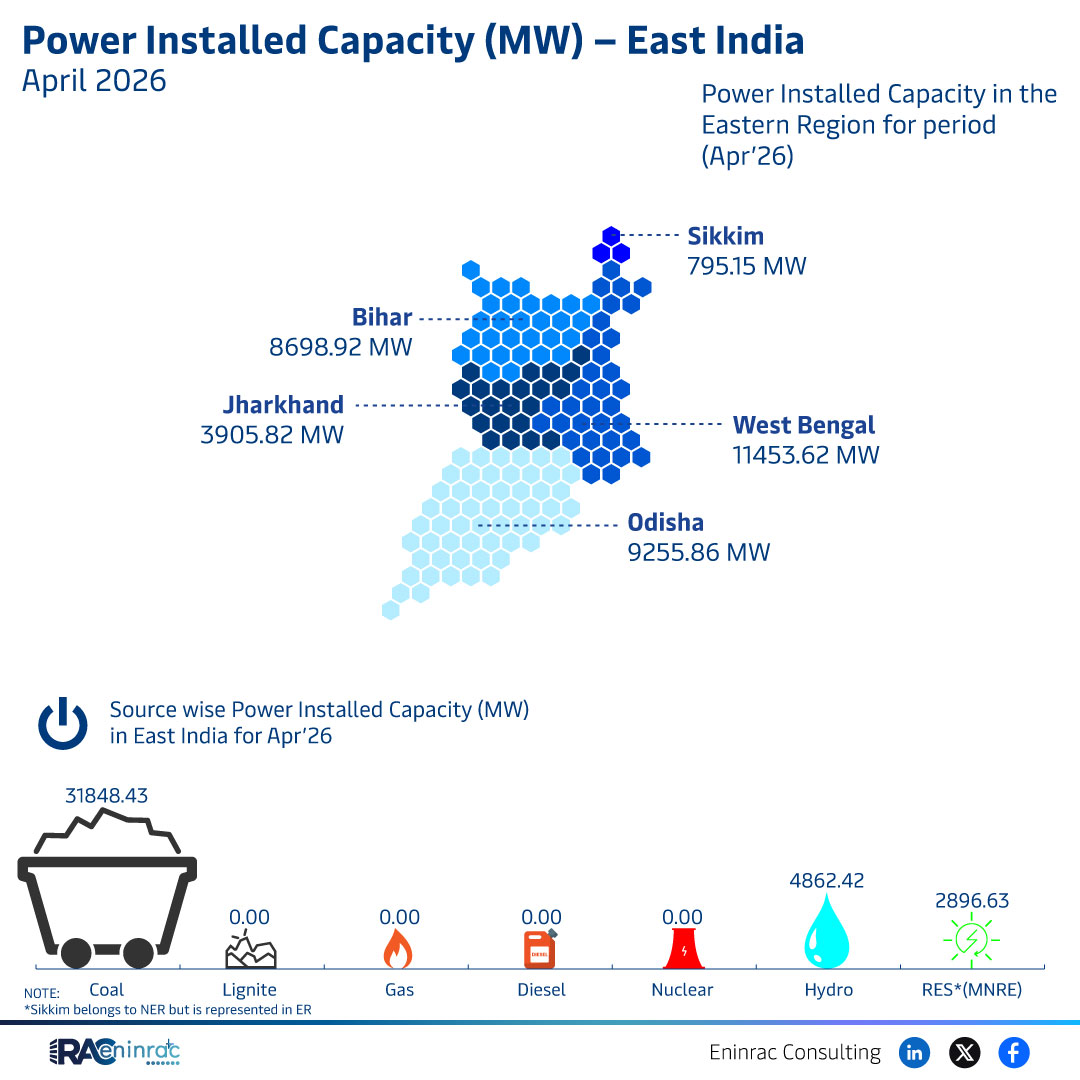
The Eastern region of India recorded its power installed capacity for April 2026, offering a snapshot of how each state contributes to the overall energy mix. Understanding this data helps policymakers, investors, and industry stakeholders gauge regional growth, identify gaps, and plan future infrastructure.
What Does the Data Reveal About This Topic?
Which states lead in installed capacity and how does the source mix shape the region’s energy landscape? The figures show West Bengal at the top with 11,453.62 MW, followed by Odisha (9,255.86 MW) and Bihar (8,698.92 MW). The total capacity across the listed states reaches 31,848.43 MW, reflecting a diverse blend of coal, hydro, renewable and other sources.
State‑wise Capacity Comparison
When comparing the numbers, West Bengal’s capacity surpasses the next highest state by more than 2,000 MW, indicating a strong generation base. Odisha and Bihar also hold significant shares, while Jharkhand’s 300.82 MW is modest. Sikkim, though part of the North‑Eastern region, is included here with 795.15 MW, highlighting its contribution despite a smaller footprint.
Impact on Sectors and Industries
The capacity distribution influences several sectors. Power‑intensive industries such as steel, cement, and chemicals benefit from the robust supply in West Bengal and Odisha. Renewable energy developers can target states with lower existing capacity, like Jharkhand and Sikkim, to accelerate clean‑energy projects. Investors monitor these figures to assess risk and opportunity in generation assets, while policymakers use them to balance regional development and grid stability.
Key Takeaways
- West Bengal leads the Eastern region with over 11,400 MW installed capacity.
- Odisha and Bihar each exceed 9,000 MW, reinforcing their roles as major power hubs.
- Jharkhand’s capacity remains under 1,000 MW, indicating growth potential.
- Sikkim, though part of NER, is reported in the Eastern dataset with 795 MW.
- The total regional capacity stands at 31,848.43 MW for April 2026.
- Source diversification includes coal, hydro, gas, diesel, nuclear and renewable energy.
FAQs
What is the total installed capacity in East India for April 2026?
The combined installed capacity of the listed Eastern states equals 31,848.43 MW.
Which state has the highest power capacity in the region?
West Bengal tops the list with 11,453.62 MW.
How does Jharkhand’s capacity compare to other states?
Jharkhand’s 300.82 MW is the lowest among the states mentioned, suggesting room for expansion.
Why is Sikkim included in the Eastern region data?
Sikkim belongs to the North‑Eastern region but is represented here for comparative purposes.
What are the main energy sources contributing to this capacity?
The capacity comprises coal, lignite, gas, diesel, nuclear, hydro and renewable sources as indicated by the source‑wise breakdown.