
Introduction
The April 2026 power installed capacity report for East India provides a snapshot of the region's electricity generation potential across states and fuel sources. Understanding this data is essential for policymakers, investors, and industry analysts who track energy trends, plan infrastructure, and assess market opportunities.
What Does the Data Reveal About This Topic?
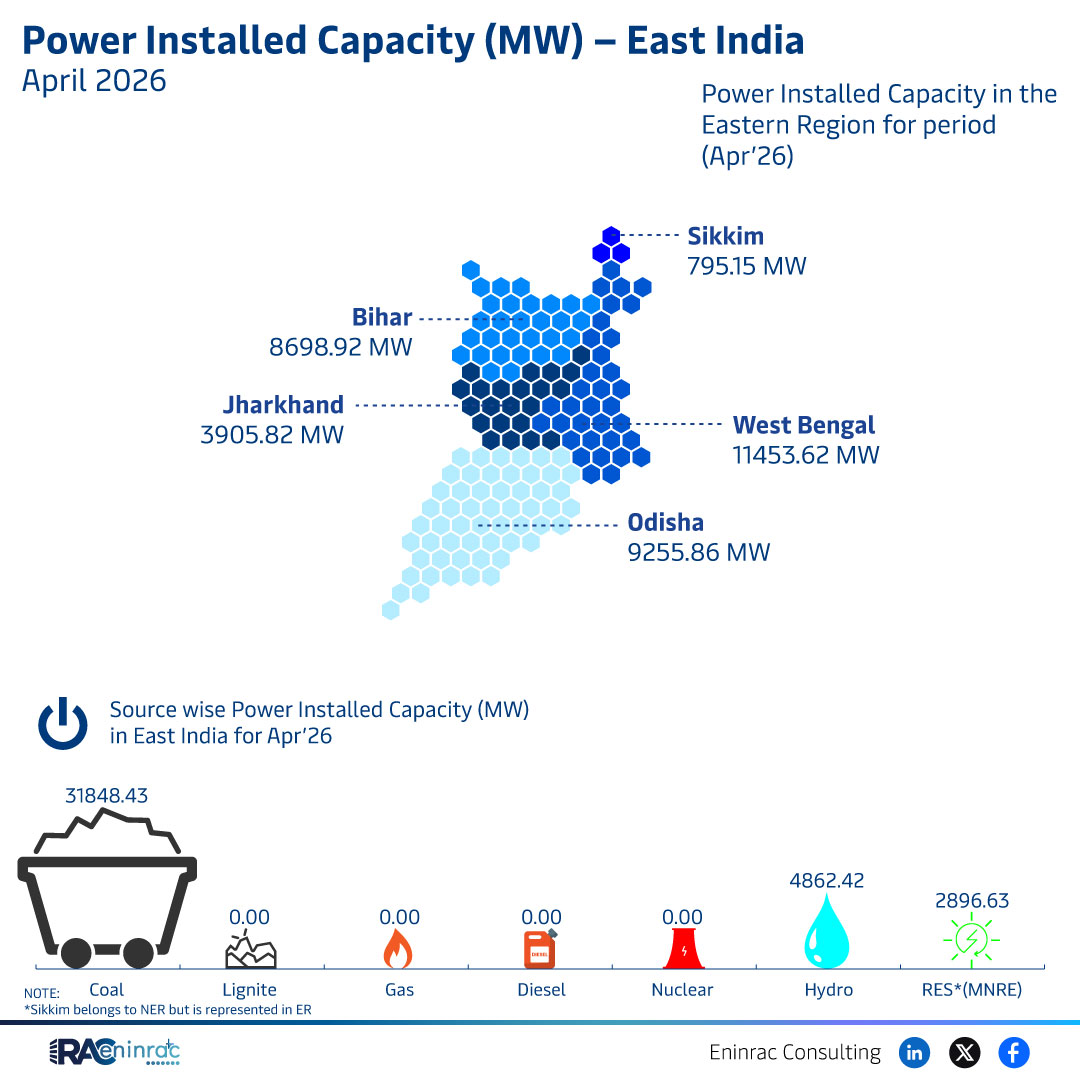
The data shows that West Bengal leads the region with 11,453.62 MW of installed capacity, followed by Odisha at 9,255.86 MW and Bihar at 8,698.92 MW. Smaller contributors include Jharkhand with 300.82 MW and Sikkim with 795.15 MW. The source‑wise breakdown indicates a total regional capacity of 31,848.43 MW, dominated by coal, gas, and hydro resources, while renewable categories such as solar and wind are currently reported as zero.
State‑wise Capacity Comparison in East India
When comparing states, West Bengal’s capacity exceeds the combined total of Bihar and Jharkhand, highlighting its strategic importance in the regional grid. Odisha’s strong hydro and coal mix positions it as a key supplier for neighboring states. Bihar’s sizable capacity reflects ongoing expansion of thermal plants, whereas Sikkim, though part of the North‑East, is listed here with modest capacity that primarily supports local demand.
Impact on Sectors and Industries
Higher installed capacity influences several sectors. Power generation companies can leverage the data to prioritize new projects in high‑growth states. Investors use the figures to gauge risk and return in thermal versus renewable segments. Policymakers rely on the breakdown to design incentives for under‑represented renewable sources, aiming to balance the energy mix and meet national climate targets. Consumers benefit from improved reliability as capacity expands.
Key Takeaways
- West Bengal holds the largest installed capacity in East India at 11,453.62 MW.
- Coal, gas, and hydro dominate the regional generation mix, with renewables reported at zero.
- Odisha and Bihar are the next major contributors, together accounting for over 17,000 MW.
- Jharkhand’s capacity is minimal, indicating potential for future development.
- Sikkim’s inclusion reflects cross‑regional reporting practices.
- The total regional capacity reaches 31,848.43 MW, underscoring significant generation potential.
FAQs
Which East Indian state has the highest power installed capacity?
West Bengal leads with 11,453.62 MW of installed capacity as of April 2026.
What are the primary fuel sources for East India’s power generation?
Coal, gas, and hydro are the dominant sources, while renewable categories such as solar and wind are currently reported as zero.
How does Bihar’s capacity compare to Odisha’s?
Bihar has 8,698.92 MW, slightly lower than Odisha’s 9,255.86 MW.
Why is Sikkim listed under East India?
Sikkim belongs to the North‑East region but is represented in this East India dataset for reporting consistency.
What opportunities exist for renewable energy in East India?
The zero values for renewable sources highlight a clear opportunity for solar and wind development to diversify the energy mix.