
Introduction
This page presents the April 2026 power installed capacity figures for the northern Indian states and union territories. Understanding regional capacity helps policymakers, investors and industry analysts gauge growth trends, plan infrastructure and assess the balance between conventional and renewable sources.
What Does the Data Reveal About This Topic?
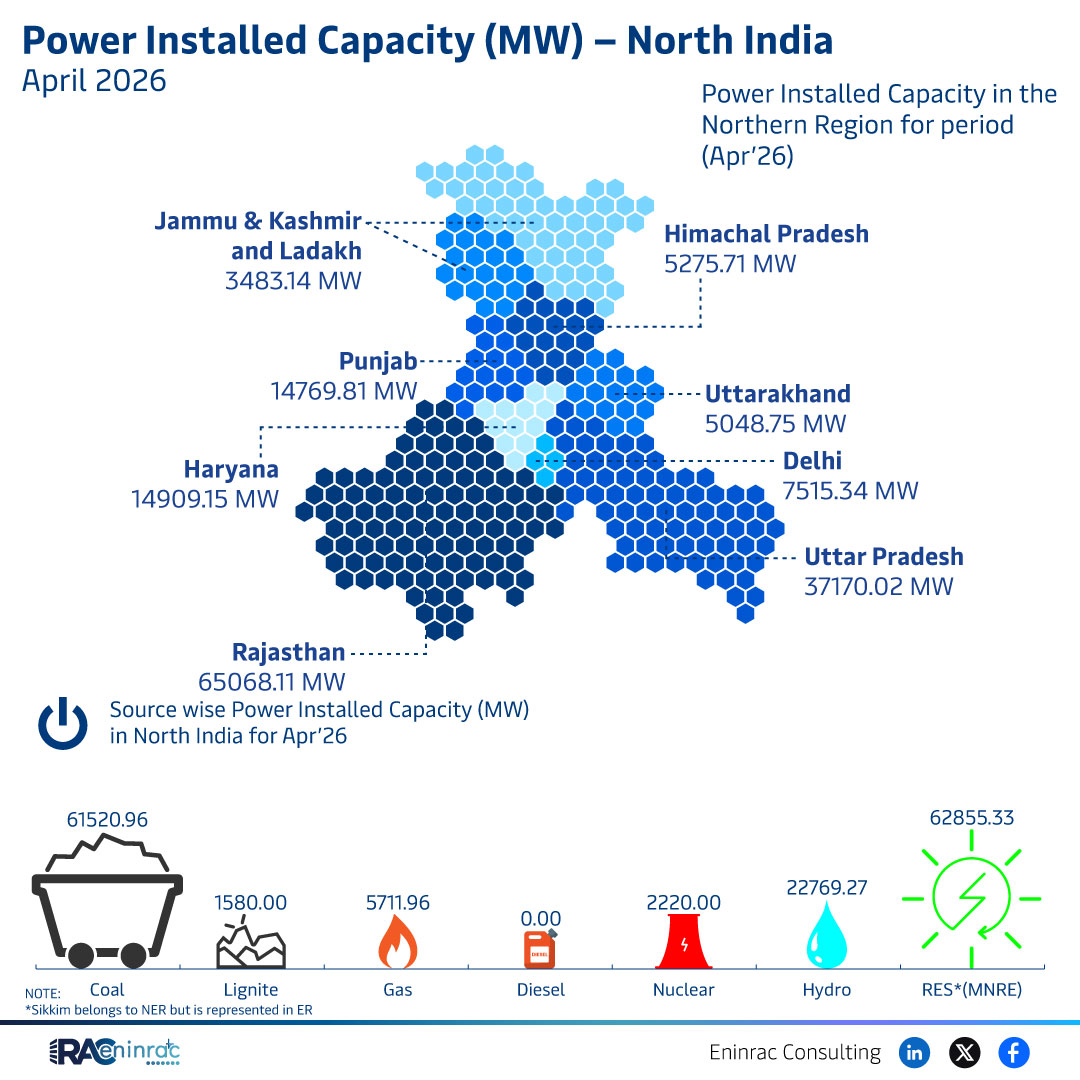
The data shows that Rajasthan leads with 65,068.11 MW, followed by Uttar Pradesh at 37,170.02 MW and Punjab at 14,769.81 MW. Smaller regions such as Himachal Pradesh, Ladakh and Sikkim contribute modestly, while Delhi and Haryana report 7,515.34 MW and 14,909.15 MW respectively. The mix of coal, gas, hydro and renewable sources highlights a gradual shift toward cleaner energy.
Regional Capacity Comparison
When comparing states, Rajasthan’s capacity exceeds the combined total of Himachal Pradesh, Ladakh and Sikkim, underscoring its strategic importance for grid stability. Uttar Pradesh’s 37,170 MW places it as the second‑largest contributor, while Punjab’s 14,770 MW reflects a strong thermal base. Delhi’s modest 7,515 MW is notable given its urban demand, and Haryana’s 14,909 MW shows balanced growth across thermal and renewable assets.
Impact on Sectors and Industries
Higher installed capacity supports industrial expansion, reduces power shortages and attracts manufacturing investments. Renewable growth influences green financing, while continued reliance on coal and gas affects emissions targets. Grid operators must manage variability, and policymakers need to align capacity additions with the national renewable energy goals.
Key Takeaways
- Rajasthan holds the highest installed capacity in North India at over 65 GW.
- Uttar Pradesh and Punjab rank second and third, together contributing more than 50 GW.
- Renewable sources are increasing but coal, gas and diesel still dominate the mix.
- Smaller states and union territories contribute less than 5 GW each, highlighting regional disparities.
- Capacity growth supports industrial demand and influences investment decisions.
- Policymakers must balance expansion with environmental commitments.
FAQs
Which northern state has the largest power capacity?
Rajasthan leads with 65,068.11 MW of installed capacity.
How does Uttar Pradesh compare to Punjab?
Uttar Pradesh has 37,170.02 MW, nearly 2.5 times Punjab’s 14,769.81 MW.
Are renewable sources growing in North India?
Yes, renewable capacity is rising, but fossil‑fuel‑based generation still accounts for the majority of installed capacity.
What is the total installed capacity for Delhi?
Delhi reports 7,515.34 MW of installed power capacity.
Why is capacity data important for investors?
Capacity figures indicate market size, growth potential and the readiness of regions to support new projects, guiding investment decisions.