
Introduction
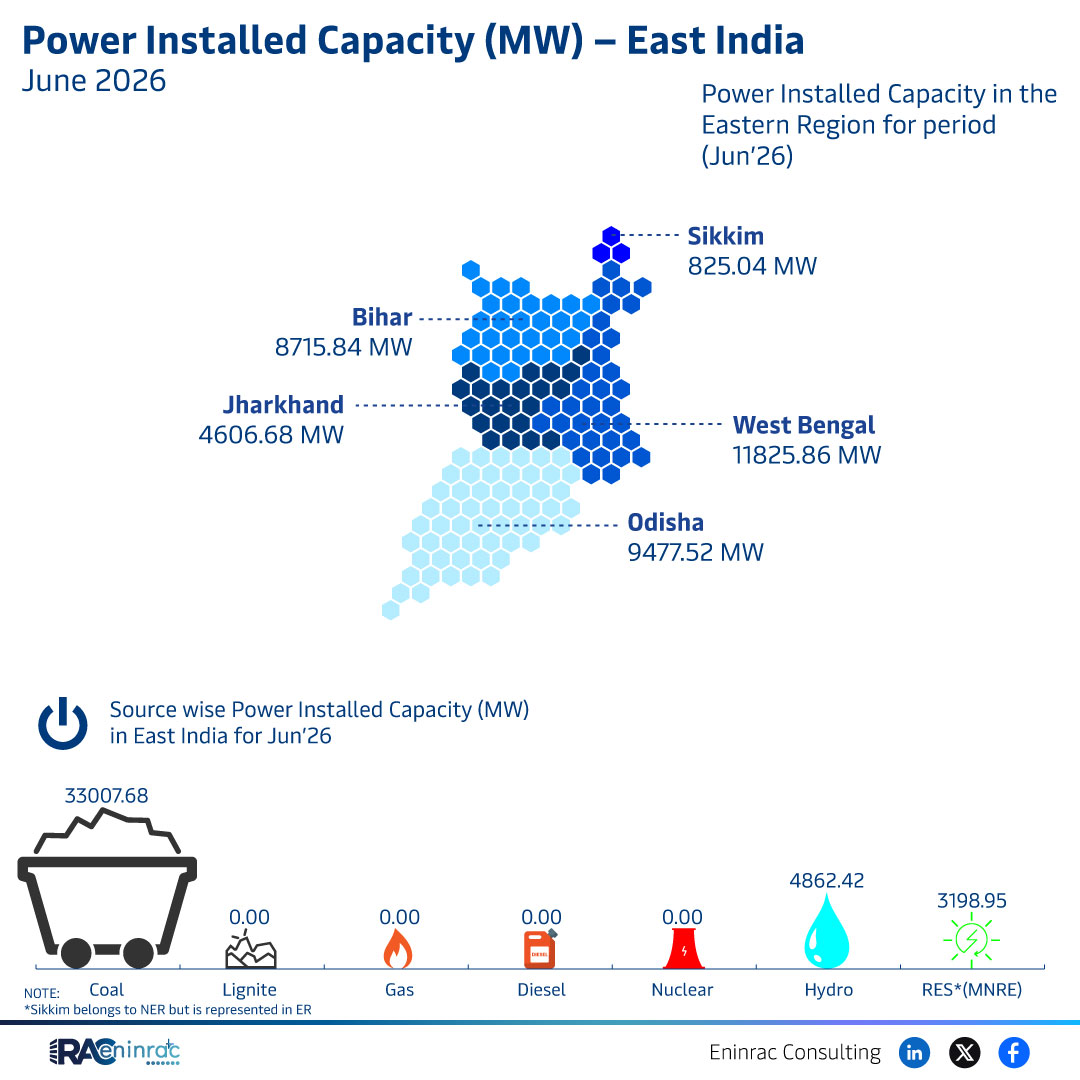
The power landscape of East India in June 2026 is highlighted by a total installed capacity of 33,007.68 MW. This figure aggregates the contributions of key states such as West Bengal, Odisha, Bihar, Sikkim and others. Understanding this capacity is crucial for energy planners, investors, and policymakers because it reflects the region’s ability to meet growing electricity demand, guides infrastructure investment, and informs decisions on renewable integration and fossil fuel reliance.
What Does the Data Reveal About This Topic?
The raw data reveals that East India’s power generation capacity is unevenly distributed, with West Bengal leading at 11,825.86 MW followed closely by Odisha at 9,477.52 MW. Bihar contributes 8,715.84 MW, while Sikkim adds a modest 825.04 MW. The total of 33,007.68 MW underscores a strong generation base, yet gaps remain in states like Jharkhand where specific figures are absent, indicating possible reporting delays or lower capacity levels.
State‑wise Capacity Comparison in East India
A comparative look shows West Bengal’s capacity surpasses the combined output of Bihar and Odisha, highlighting its strategic role as a power hub in the eastern corridor. Odisha, with its mix of coal and hydro resources, stands as the second‑largest contributor. Bihar’s capacity is driven largely by thermal plants, while Sikkim’s modest figure is predominantly renewable, reflecting its focus on hydro and small‑scale solar. The missing Jharkhand data suggests a need for further verification, but existing numbers indicate an overall trend toward diversification across coal, hydro, and renewable sources.
Impact on Sectors and Industries
The distribution of installed capacity influences several sectors. For utilities, the high capacity in West Bengal and Odisha facilitates reliable supply, reducing the need for costly imports from other regions. Renewable energy firms see opportunities in Sikkim’s hydro potential and the broader push for RES (Renewable Energy Sources) under MNRE guidelines. Coal‑dependent industries must monitor capacity shifts as hydro and renewable shares increase, potentially affecting fuel procurement strategies. Policymakers can leverage the data to shape incentives, grid upgrades, and regional energy security plans.
Key Takeaways
- East India’s total installed capacity reached 33,007.68 MW in June 2026.
- West Bengal holds the largest share with 11,825.86 MW.
- Odisha follows closely, contributing 9,477.52 MW.
- Bihar’s capacity stands at 8,715.84 MW, driven by thermal generation.
- Sikkim’s 825.04 MW reflects a renewable‑focused portfolio.
- Data gaps for Jharkhand highlight the need for updated reporting.
FAQs
What is the total power installed capacity of East India in June 2026?
It is 33,007.68 MW, encompassing all major states in the region.
Which state has the highest installed capacity?
West Bengal leads with 11,825.86 MW.
How does renewable energy feature in East India’s capacity mix?
Sikkim’s capacity is largely renewable, and RES (MNRE) contributions are noted across the region.
Why is Jharkhand’s capacity data missing?
The source did not provide a figure, indicating possible reporting delays or lower capacity.
What sectors benefit most from this capacity data?
Utilities, renewable developers, fossil‑fuel dependent industries, and policymakers use the data for planning and investment.