
Introduction
India's bio power generation sector is experiencing rapid expansion in 2026. With increasing attention on renewable energy sources, bio power offers a viable alternative to fossil fuels. This article reviews the latest capacity figures, highlights the states that are leading the charge, and explains why these trends matter to policymakers, investors, and industry stakeholders.
What Does the Data Reveal About This Topic?
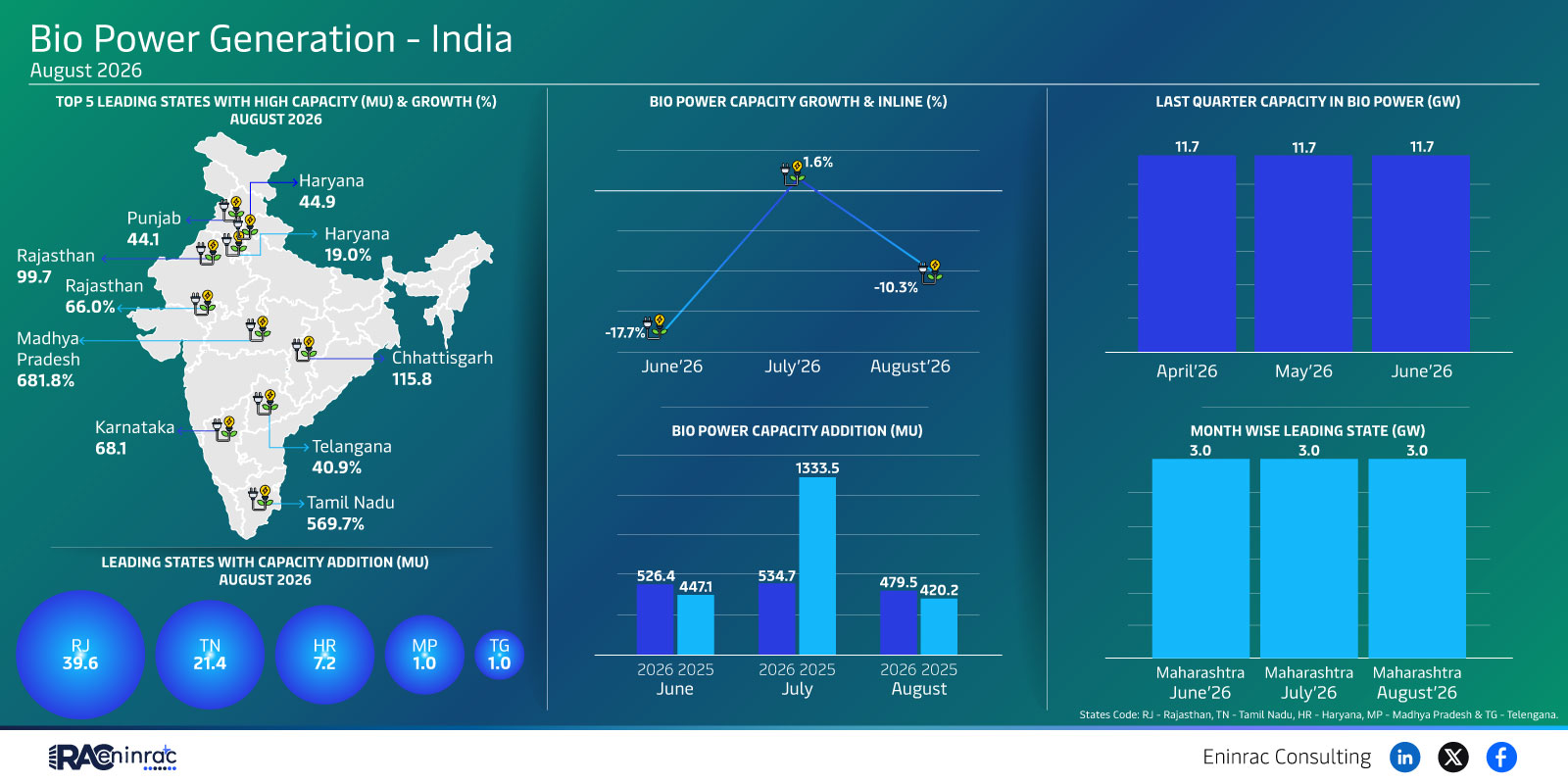
The data shows clear concentration of bio power capacity in a few key states. Haryana, Rajasthan, Madhya Pradesh, Karnataka, Tamil Nadu and Chhattisgarh together account for the bulk of the 2026 capacity additions. Monthly figures indicate Maharashtra consistently delivered the highest generation in June, July and August, suggesting strong operational performance in that region.
State‑wise Capacity Additions and Growth in 2026
Haryana recorded 44.9 MU of installed capacity, while Rajasthan led with 99.7 MU. Madhya Pradesh contributed roughly 66 MU and Karnataka added 68.1 MU. Tamil Nadu and Chhattisgarh reported significant capacities of 569.7 MU and 681.8 MU respectively, underscoring their strategic importance. The total bio power capacity addition across the country reached about 1 333.5 MU during the quarter, reflecting a robust growth trajectory.
Impact on Sectors and Industries
These capacity gains influence multiple sectors. The power generation industry benefits from diversified fuel sources, reducing reliance on coal. Agricultural waste management sees new revenue streams as feedstock for bio plants. Financial markets observe fresh investment opportunities, while state governments can meet renewable energy targets more readily. Overall, the expansion supports India's climate commitments and energy security objectives.
Key Takeaways
- Rajasthan and Tamil Nadu dominate bio power capacity with nearly 1 500 MU combined.
- Haryana and Karnataka show strong growth rates, adding over 40 MU each.
- Maharashtra leads monthly generation, delivering 3 GW consistently in Q2 2026.
- The quarter‑end capacity addition of 1 333.5 MU marks a significant upward shift.
- Increased bio power capacity reduces coal dependence and lowers emissions.
- Investors view the sector as a high‑potential segment of India's renewable energy landscape.
FAQs
Which Indian states have the highest bio power capacity in 2026?
Rajasthan, Tamil Nadu, Chhattisgarh, Madhya Pradesh, Karnataka and Haryana are the top contributors.
How much bio power capacity was added in the latest quarter?
The sector added roughly 1 333.5 MU of new capacity during the quarter.
Which state led monthly bio power generation in mid‑2026?
Maharashtra recorded the highest generation, maintaining about 3 GW each month.
What does the growth in bio power mean for renewable energy targets?
The surge helps India move closer to its national renewable energy goals and reduces reliance on fossil fuels.
Are there investment opportunities in India’s bio power sector?
Yes, the strong capacity additions and state‑level support create attractive prospects for investors.