
Introduction
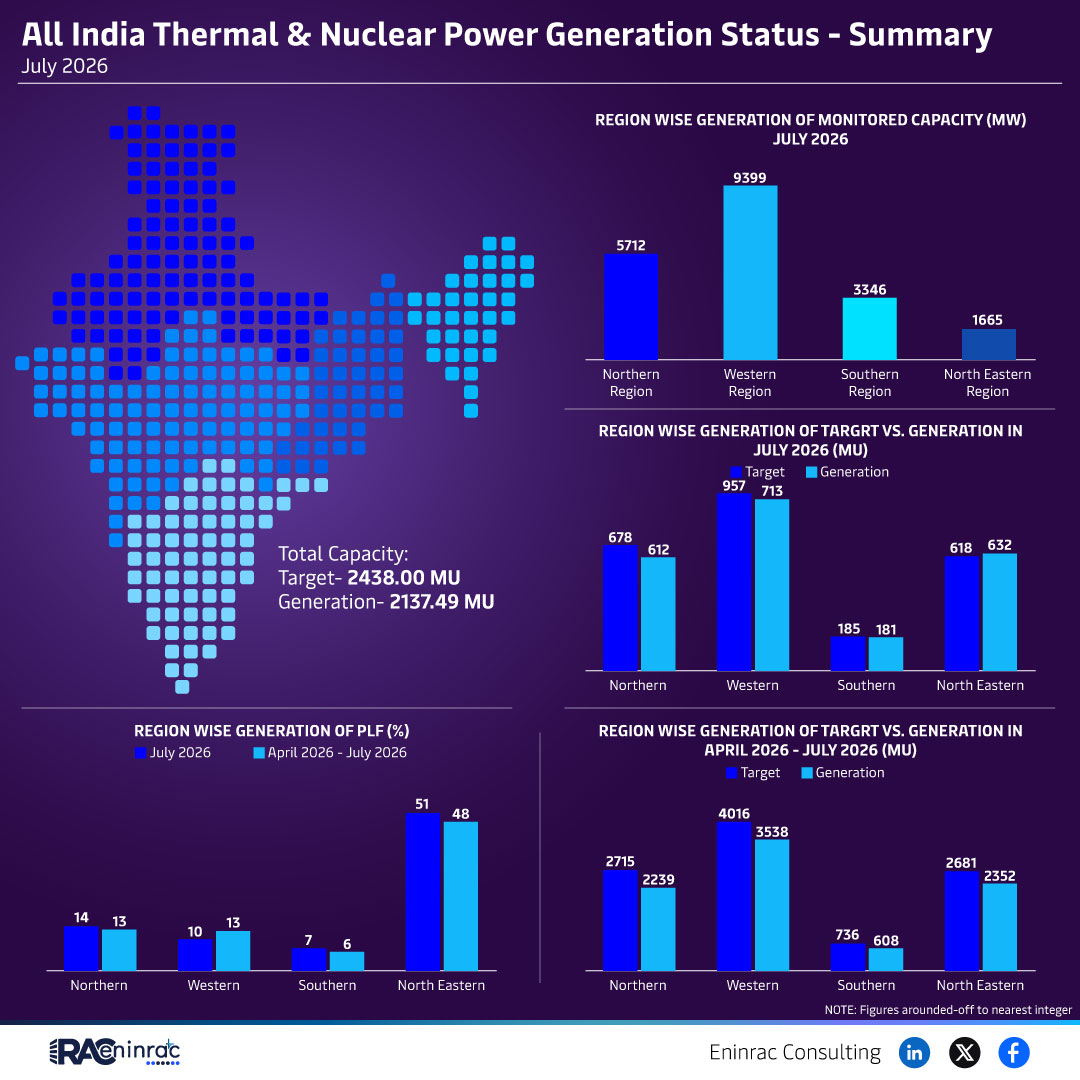
The July 2026 snapshot of India July 2026 thermal nuclear power generation provides a concise view of how the country’s core electricity assets performed across its five major regions. Understanding this data is essential for policymakers, investors, and energy analysts who track capacity utilization, target achievement, and regional disparities. This article breaks down the monitored capacity, compares target versus actual generation, highlights plant load factor trends, and explains why these figures matter for the broader Indian power sector.
What Does the Data Reveal About This Topic?
The raw numbers show that total monitored capacity across the nation reached roughly 1,665 MW, while the cumulative generation target for July 2026 was set at 2,438 MU. Actual generation fell short at about 2,137.49 MU, indicating a gap of roughly 300 MU. Regionally, the Northern zone contributed the highest monitored capacity, whereas the North‑Eastern region lagged behind both in capacity and generation. The plant load factor (PLF) figures for the period suggest varying efficiency levels, with some zones operating close to optimal levels and others showing notable shortfalls.
Regional Performance Overview for July 2026
In the Northern region, monitored capacity stood at approximately 9399 MW, outpacing the Western (3,346 MW) and Southern (2,715 MW) regions. The Northern zone also recorded a PLF that approached the target range, reflecting strong utilization of thermal and nuclear assets. The Western region, despite a lower capacity base, achieved a respectable generation share but still trailed the target by a modest margin. The Southern and North‑Eastern zones displayed the most pronounced gaps, with lower capacity footprints and PLF values that suggest operational constraints or maintenance downtime. These regional differences underline the importance of targeted investments and grid reinforcement in under‑performing areas.
Impact on Sectors and Industries
Shortfalls in generation relative to the set target can ripple through multiple sectors. Industrial consumers may face higher tariffs if shortfalls are compensated by more expensive peaking plants or imported power. Investors in thermal and nuclear projects watch these metrics closely to gauge project viability and return expectations. For policymakers, the data signals where regulatory support, fuel supply assurance, or infrastructure upgrades are most needed. Grid operators also use PLF trends to schedule maintenance and balance load, ensuring stability across the national network.
Key Takeaways
- India’s total monitored capacity in July 2026 was about 1,665 MW.
- Actual generation (2,137.49 MU) lagged behind the target of 2,438 MU.
- Northern region led in capacity and efficiency, while North‑Eastern lagged.
- Plant load factor varied significantly, indicating operational disparities.
- Generation gaps could affect industrial costs and investor confidence.
- Targeted infrastructure and policy measures are needed to close regional gaps.
FAQs
Why did India miss its generation target in July 2026?
Factors include lower plant load factors in some regions, scheduled maintenance, fuel supply constraints, and transient grid bottlenecks that limited full utilization of available capacity.
Which region contributed the most to power generation?
The Northern region, with the highest monitored capacity and a plant load factor close to the target, contributed the largest share of electricity in July 2026.
How does plant load factor affect electricity supply?
A higher PLF indicates better utilization of installed capacity, leading to more reliable supply and lower per‑unit costs, while a lower PLF can signal inefficiencies and potential supply shortfalls.
What implications do these figures have for investors?
Investors evaluate capacity utilization and target achievement to assess project risk; consistent shortfalls may signal the need for additional capital or policy support.
What steps can policymakers take to improve generation performance?
Policymakers can streamline fuel logistics, accelerate grid upgrades, provide incentives for high‑efficiency operation, and focus on under‑performing regions to boost overall generation.