
Introduction
India’s power sector continues to evolve rapidly, and the July 2026 data provides a clear snapshot of how thermal and nuclear generation are performing against expectations. Understanding these numbers helps policymakers, investors, and energy analysts gauge the health of the nation’s electricity supply and plan for future capacity needs.
What Does the Data Reveal About This Topic?
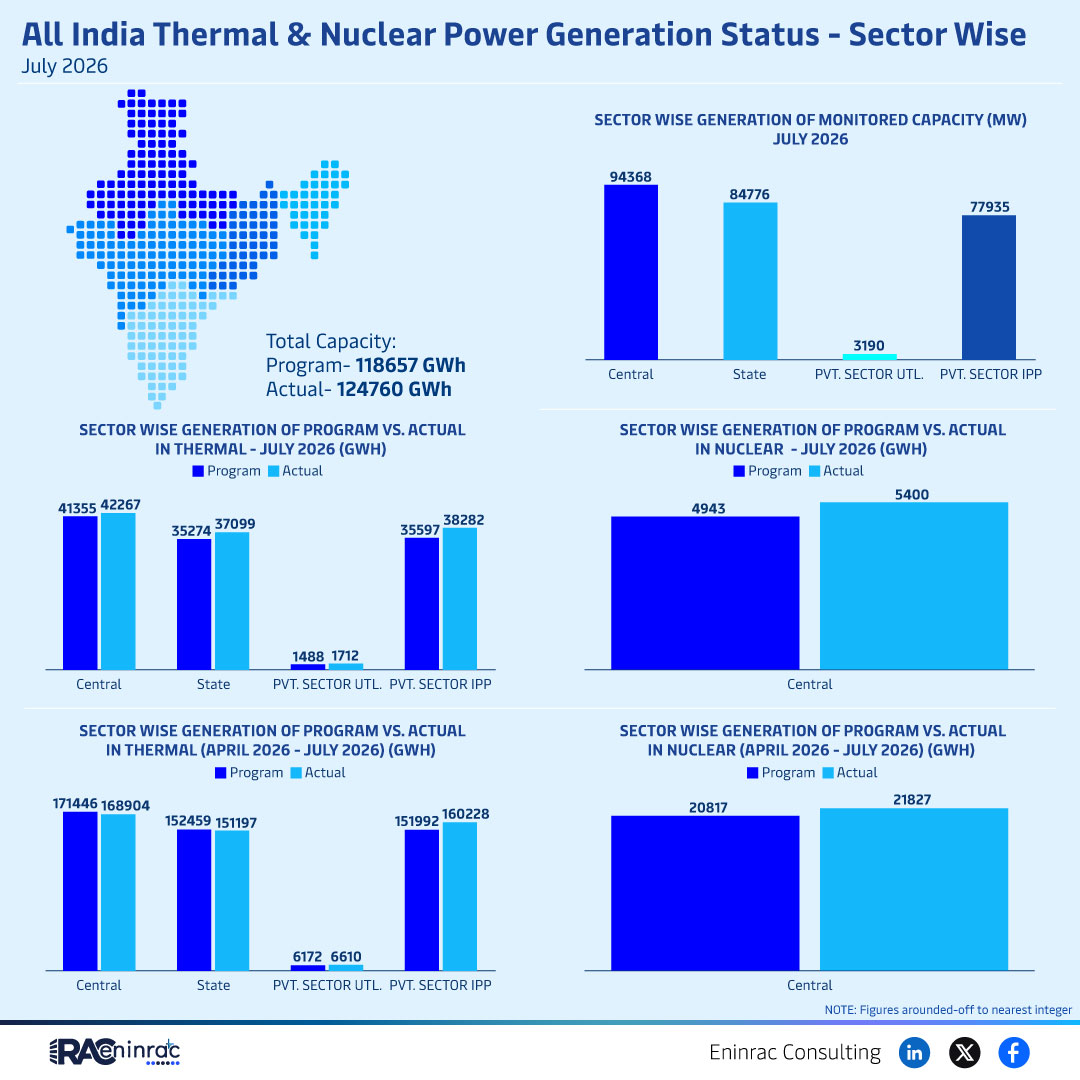
Why does the July 2026 generation data matter? The figures show that actual generation in both thermal and nuclear segments exceeded the programmed targets, indicating stronger than anticipated output and improved plant availability across the country.
Thermal vs Nuclear Generation Performance
In July 2026, total programmed capacity was 118,657 GWh, while actual generation reached 124,760 GWh, surpassing expectations by over 5 %. Thermal plants contributed the bulk of this surplus, with monitored capacity figures highlighting the dominance of central and state‑run assets. Nuclear generation, though smaller in volume, also delivered higher actual output than programmed, reflecting efficient operation of existing reactors.
Impact on Sectors and Industries
The higher-than‑planned generation strengthens the reliability of the grid, supports industrial growth, and reduces the need for costly imports of power. Investors see reduced risk in thermal assets, while policymakers can justify continued support for nuclear expansion as a low‑carbon baseload source. Consumers benefit from more stable electricity supply, which can translate into steadier tariffs.
Key Takeaways
- Actual generation in July 2026 outperformed programmed targets for both thermal and nuclear sectors.
- Thermal capacity remains the cornerstone of India’s electricity mix, delivering the largest share of surplus generation.
- Nuclear output, though modest, consistently exceeded its program, highlighting operational efficiency.
- Central and state‑run utilities dominate monitored capacity, underscoring the importance of public sector assets.
- Higher generation reduces reliance on power imports and supports industrial competitiveness.
- Positive performance trends bolster confidence for future investments in both thermal upgrades and nuclear projects.
FAQs
Did India’s thermal generation exceed its July 2026 target?
Yes, actual thermal generation was higher than the programmed figure, contributing to the overall surplus.
How did nuclear generation perform compared to its program?
Nuclear generation also beat its target, indicating reliable reactor performance.
Which sector holds the largest monitored capacity?
Central and state utilities together hold the majority of monitored capacity, reflecting strong public sector involvement.
What does this surplus mean for electricity consumers?
It can lead to more stable supply and potentially lower tariffs as excess generation eases grid pressure.
Are the July 2026 trends encouraging for future energy policy?
Absolutely; the data supports continued investment in both thermal efficiency improvements and nuclear expansion.