
Introduction
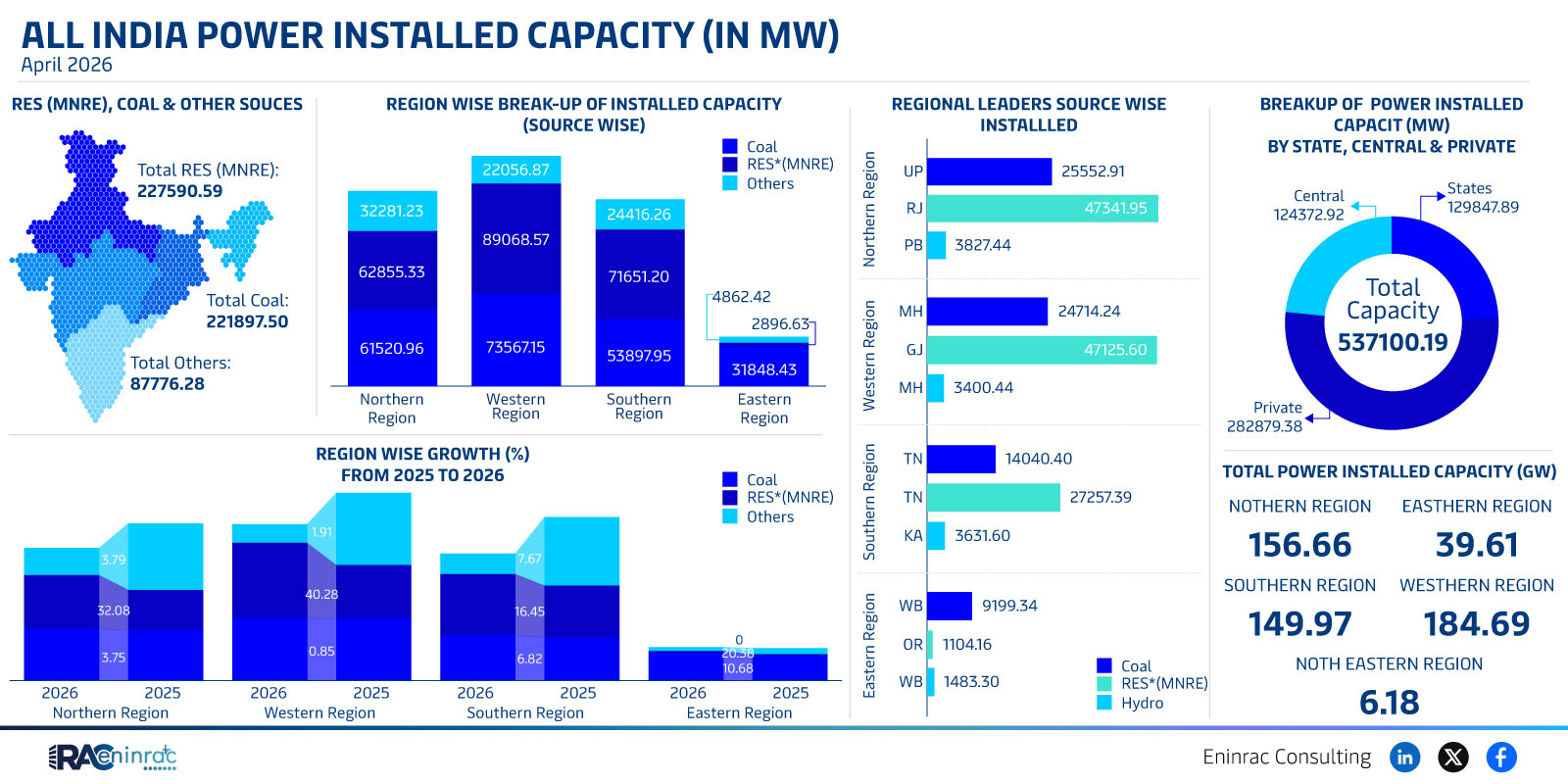
India's power sector continues to expand rapidly, and the latest April 2026 data provides a clear snapshot of installed capacity across regions and fuel sources. Understanding this information is crucial for investors, policymakers, and industry analysts who track growth trends, regional performance, and the balance between renewable and coal‑based generation.
What Does the Data Reveal About This Topic?
The data shows that total installed capacity reached approximately 7.36 GW in April 2026, with renewable energy (RES) contributing a significant share while coal‑based capacity remains a major component. The regional breakdown highlights the Northern region as the leader, followed by Western, Southern, and Eastern zones.
Regional Capacity Comparison and Growth Trends
When comparing regions, the Northern zone recorded the highest installed capacity at 3,631.60 MW, outpacing the Western region’s 2,879.38 MW and the Southern region’s 1,919.34 MW. The Eastern region lagged with just 1,104.16 MW. Growth from 2025 to 2026 added roughly 4,040.40 MW nationwide, indicating a robust expansion driven primarily by renewable projects and selective coal additions.
Impact on Sectors and Industries
These capacity shifts affect multiple stakeholders. Renewable developers benefit from policy incentives and rising demand, while coal operators face pressure to modernize or diversify. Grid operators must manage increased variability, prompting investments in transmission and storage. Financial markets view the growth as a signal for infrastructure funding, and state governments adjust planning to align with national targets.
Key Takeaways
- National installed capacity reached about 7.36 GW in April 2026.
- Renewable energy accounts for a large portion of new capacity, supporting India’s clean energy goals.
- The Northern region leads with over 3.6 GW, followed by Western and Southern zones.
- Growth of 4,040.40 MW from 2025 to 2026 underscores accelerated sector expansion.
- Coal capacity remains significant but is growing slower than renewables.
- Regional disparities highlight opportunities for targeted investment and policy support.
FAQs
What was India's total installed power capacity in April 2026?
Approximately 7.36 gigawatts (GW) across all regions and sources.
Which region has the highest installed capacity?
The Northern region, with about 3,631.60 megawatts (MW).
How much did capacity grow from 2025 to 2026?
Growth added roughly 4,040.40 MW nationwide.
What share of the new capacity is renewable?
Renewable sources contributed the majority of the new installations, reflecting policy focus on clean energy.
Why are regional differences important?
They guide investors and policymakers in allocating resources, improving grid reliability, and meeting regional demand.