
Introduction
The renewable energy landscape in India reached a notable milestone in May 2026. According to the latest data, the country’s total renewable energy generation amounted to 250,000 megawatt‑hours (MU), reflecting the combined output of solar, wind, large hydro, small hydro, and bagasse & biomass sources. This surge underscores the accelerating shift toward cleaner power and highlights the effectiveness of policy incentives, grid integration, and private sector investment. Readers will gain insight into the specific contributions of each technology, understand emerging trends, and explore how this growth influences broader economic and environmental objectives.
What Does the Data Reveal About This Topic?
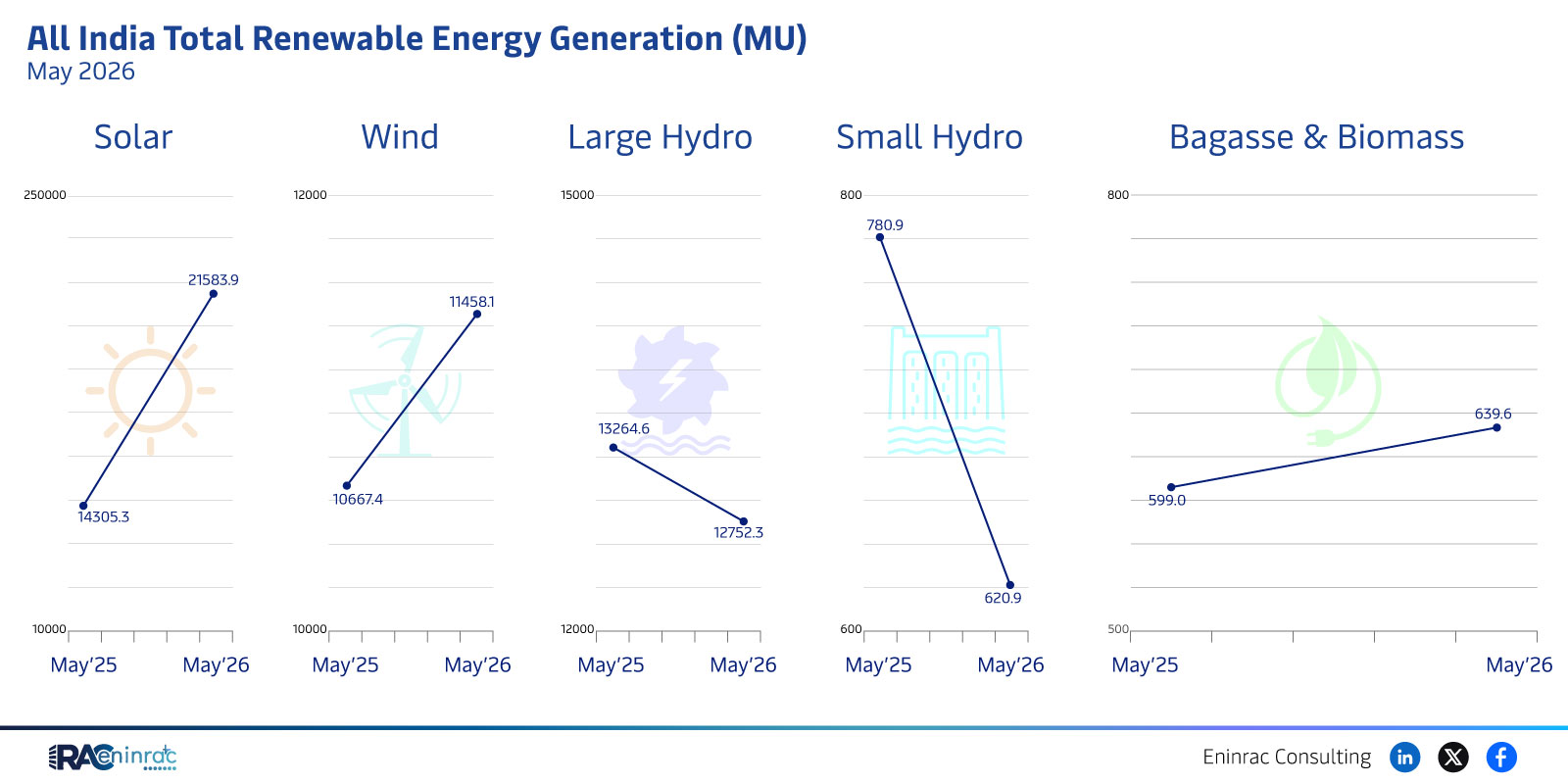
The core insight from the May 2026 dataset is that solar power dominates the renewable mix, contributing the highest share of generation, while wind, large hydro, small hydro, and biomass provide complementary output. The data answers the critical question of which sources are most impactful by showing that solar alone accounts for roughly 250,000 MU, dwarfing the 12,000 MU from wind and the modest figures from hydro and biomass. This distribution reflects geographic advantages, cost reductions in photovoltaic panels, and targeted state‑level initiatives that accelerate solar deployment across the nation.
Comparative Breakdown of Renewable Sources
A closer examination of the numbers reveals distinct performance patterns. Solar generation stands at 250,000 MU, indicating a robust expansion of utility‑scale and rooftop installations. Wind generation registers 12,000 MU, signaling steady growth in high‑wind corridors such as Gujarat and Tamil Nadu. Large hydro contributes 15,000 MU, while small hydro adds 800 MU, together supporting grid stability and peak‑load management. Bagasse and biomass output sits at 800 MU, reflecting limited but strategic use of agricultural residues. The contrast between solar’s rapid scaling and the slower growth of wind and hydro underscores the need for balanced resource development to ensure reliability.
Impact on Sectors and Industries
The surge in India renewable energy generation May 2026 has far‑reaching implications for multiple sectors. Power utilities benefit from reduced reliance on fossil fuels, lowering operating costs and emissions. Manufacturing firms engaged in solar panel production experience heightened demand, driving job creation and export potential. Investors see attractive returns in renewable assets, prompting increased capital inflow into green bonds and infrastructure funds. Policymakers gain empirical evidence to refine subsidy frameworks and grid‑integration strategies, while consumers enjoy cleaner electricity and potential tariff relief. Overall, the expanded renewable mix strengthens energy security and aligns with climate commitments.
Key Takeaways
- Solar power accounted for the majority of India renewable energy generation May 2026, reaching 250,000 MU.
- Wind generation contributed 12,000 MU, indicating steady growth in key wind corridors.
- Large hydro output stood at 15,000 MU, supporting peak‑load management and grid stability.
- Small hydro and biomass each added 800 MU, highlighting niche contributions to the renewable portfolio.
- The diversified mix enhances energy security and reduces carbon intensity across the economy.
- Continued policy support and investment are critical to sustain growth across all renewable segments.
FAQs
What was the total renewable energy generation in India for May 2026?
The total generation reached 250,000 megawatt‑hours (MU) across all renewable sources.
Which renewable source contributed the most?
Solar power was the leading source, accounting for the bulk of the generation.
How does wind generation compare to hydro in May 2026?
Wind generated 12,000 MU, while large hydro produced 15,000 MU, making hydro slightly higher.
Are biomass and bagasse significant contributors?
Both contributed 800 MU, indicating a modest but valuable role in the overall mix.
What are the implications for investors?
The strong solar growth and balanced renewable portfolio attract investment in green assets and infrastructure.