
Introduction
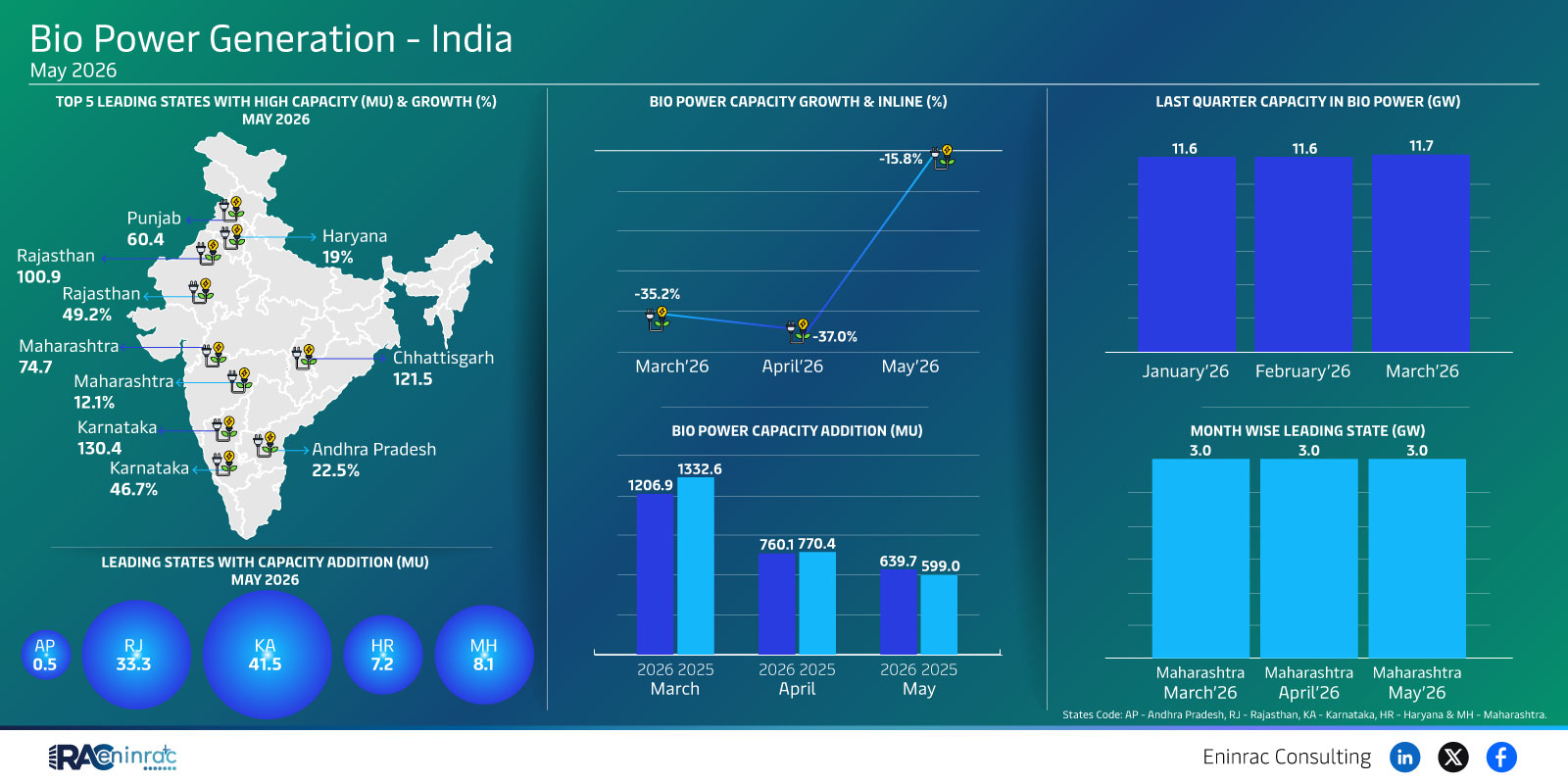
The May 2026 bio power report for India presents a clear snapshot of how biomass‑based electricity is expanding across the country. It highlights the top states by installed capacity, recent capacity additions, and month‑wise trends that shape the renewable energy landscape. Readers will learn which regions lead the bio power capacity race, how growth rates compare, and what these figures mean for investors, policymakers, and the broader energy market.
What Does the Data Reveal About This Topic?
Does the latest data show a shift in bio power capacity towards specific Indian states? The numbers indicate that Punjab, with 60.4 MU, remains a strong performer, while Maharashtra dominates overall capacity addition, contributing over 120 MU in the recent quarter. Karnataka and Andhra Pradesh also record significant growth, confirming that bio power capacity is not confined to a single region but spreading across diverse states.
State‑wise Capacity and Growth Highlights
Examining the state‑wise figures, Punjab leads with 60.4 MU of bio power capacity, followed closely by Haryana and Rajasthan. Maharashtra stands out with a massive 121.5 MU addition, pushing its total beyond 130 MU. Karnataka adds 130.4 MU, and Andhra Pradesh contributes 46.7 MU to the national pool. Monthly data for March, April and May 2026 show Maharashtra consistently topping the addition chart, reflecting strong state policies and private sector investment in bio power projects.
Impact on Sectors and Industries
The rising bio power capacity influences several key sectors. Renewable energy developers gain confidence to launch new biomass plants, while equipment manufacturers see increased demand for boilers and turbines. Financial institutions are presented with new lending opportunities tied to bio power projects, and state governments can leverage the growth to meet climate commitments. Consumers benefit indirectly through a cleaner energy mix that reduces reliance on fossil fuels.
Key Takeaways
- Punjab remains a top performer with 60.4 MU of bio power capacity.
- Maharashtra adds the largest quarterly capacity, exceeding 120 MU.
- Karnataka and Andhra Pradesh show strong growth, each adding over 40 MU.
- Month‑wise data for March‑May 2026 highlight Maharashtra’s consistent leadership.
- Increasing capacity drives investment in biomass technology and supporting infrastructure.
- Expanded bio power capacity supports India’s renewable energy goals and climate targets.
FAQs
Which Indian state has the highest bio power capacity in May 2026?
Maharashtra leads with the highest cumulative bio power capacity, driven by substantial additions in the latest quarter.
How much capacity did Punjab contribute?
Punjab contributed 60.4 MU, placing it among the top three states in bio power capacity.
What are the major trends in bio power growth for 2026?
The trend shows rapid capacity additions in Maharashtra, Karnataka, and Andhra Pradesh, with monthly data indicating sustained growth from March to May.
Why is bio power capacity important for India?
Increasing bio power capacity diversifies the renewable mix, reduces carbon emissions, and supports rural development through biomass utilization.
How can investors benefit from this data?
Investors can target high‑growth states such as Maharashtra and Karnataka for project financing, equipment supply, and long‑term power purchase agreements.