
Introduction
Small hydro power generation India is a critical component of the nation's renewable energy mix. As of August 2026, the sector shows steady growth, with several states adding significant capacity. This article interprets the latest capacity figures, highlights the leading states, explains growth trends, and discusses the broader impact on energy markets, policymakers, and investors.
What Does the Data Reveal About This Topic?
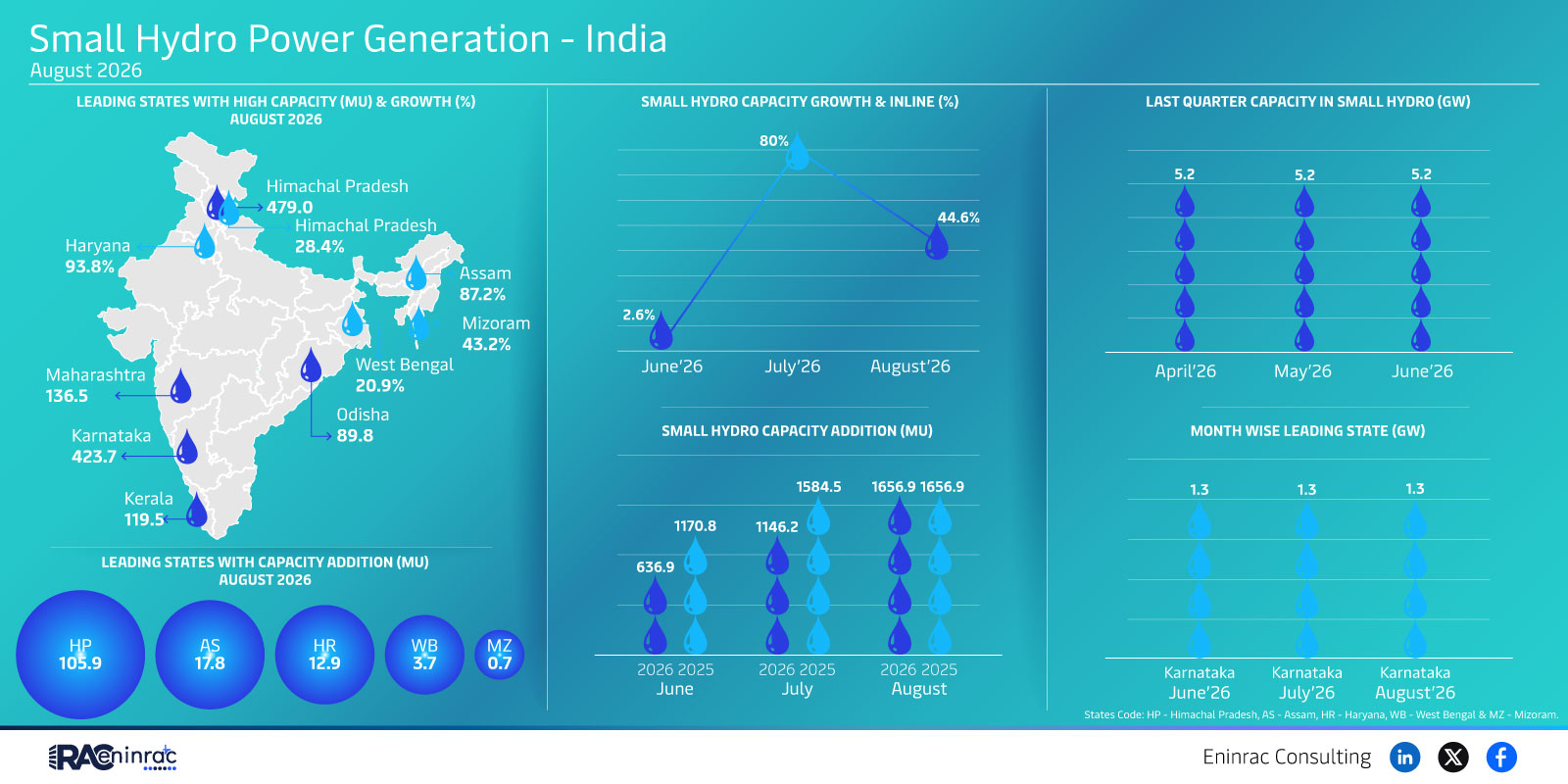
The data answers a key question: which states are driving small hydro expansion and how fast is the overall capacity growing? Himachal Pradesh, Assam, Mizoram, West Bengal, Odisha, Maharashtra and Karnataka appear as top performers. Capacity addition rose from 1,584.5 MW in June to 1,656.9 MW by August, reflecting a 44.6 % growth rate across the sector.
State‑Level Capacity Trends and Comparative Insights
Examining the state‑wise numbers shows stark contrasts. Karnataka leads every month in gigawatts of newly commissioned small hydro, while Maharashtra records the highest absolute capacity at roughly 1,265 MW. Himachal Pradesh, despite a smaller footprint, maintains a high growth percentage, signaling untapped potential in the hilly regions. Assam (87.2 MW) and Mizoram (43.2 MW) contribute modest but steady additions, whereas West Bengal (20.9 MW) and Odisha (89.8 MW) lag behind in absolute terms but still participate in the national push.
Impact on Sectors and Industries
These capacity shifts influence multiple stakeholders. Renewable energy investors gain confidence from the consistent 44.6 % growth, prompting more financing for small hydro projects. Grid operators must adapt to increased intermittent hydro input, requiring upgrades in transmission and distribution infrastructure. Policymakers can leverage the data to target subsidies and incentives toward high‑growth states like Himachal Pradesh and Karnataka, while industrial users benefit from more reliable, low‑carbon electricity sources.
Key Takeaways
- Karnataka remains the monthly leader in small hydro capacity addition.
- Maharashtra holds the largest total installed small hydro capacity.
- Overall sector growth stands at 44.6 % between June and August 2026.
- Himachal Pradesh shows the highest growth percentage despite lower absolute capacity.
- Assam, Mizoram, West Bengal and Odisha contribute modest but growing capacity.
- Strong growth supports renewable investment, grid upgrades, and policy focus on small hydro.
FAQs
Which state added the most small hydro capacity in August 2026?
Karnataka topped the list, delivering the highest gigawatt additions for that month.
What is the overall growth rate for small hydro in India this quarter?
The sector experienced a 44.6 % increase in capacity from June to August 2026.
How does small hydro growth affect renewable energy targets?
Accelerated small hydro adds clean generation, helping India meet its 2030 renewable goals.
Are there policy incentives for high‑growth states?
Yes, many state and central schemes provide subsidies and tax benefits to encourage further small hydro development.
What challenges accompany rapid small hydro expansion?
Grid integration, financing, and environmental clearances are primary challenges that need coordinated solutions.