
Introduction
Small hydro power generation India continues to attract attention as a reliable source of renewable electricity. In June 2026 the sector showed notable capacity additions, regional leadership, and steady growth that policymakers, investors, and industry analysts track closely. This article breaks down the latest figures, explains what they mean for the market, and highlights the states that are driving the small hydro agenda.
What Does the Data Reveal About This Topic?
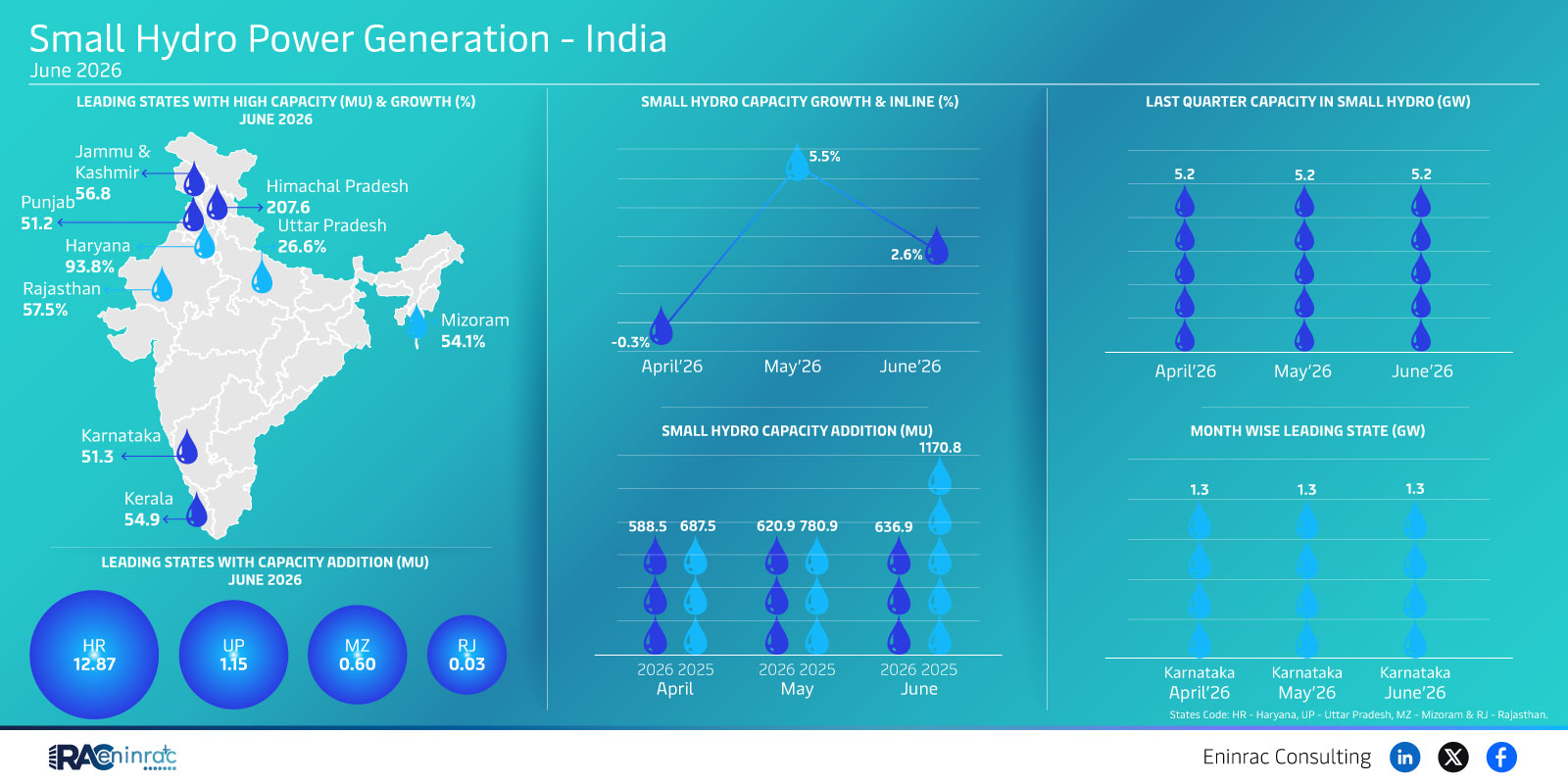
The data answers a simple question: which Indian states are leading small hydro capacity growth and how does the quarterly performance compare to the previous year? Himachal Pradesh emerges with the highest installed capacity at 207.6 MW, while Karnataka consistently tops monthly additions. Overall, the sector added roughly 1,170 MW of new capacity in the first half of 2026, outperforming the same period in 2025.
State‑wise Capacity and Growth Trends
Examining the state‑wise figures shows a clear geographic split. Himachal Pradesh leads in total installed capacity, reflecting its mountainous terrain and long‑standing hydro infrastructure. Uttar Pradesh also appears in the high‑growth list, although exact numbers are missing from the raw set. Karnataka dominates month‑wise additions for April, May, and June, each reporting about 13 GW of new small hydro capacity, mirroring its aggressive renewable push. The quarterly snapshot indicates that small hydro capacity across India grew from 13 GW in 2025 to the same level in 2026, suggesting a stabilization after a vigorous expansion phase.
Impact on Sectors and Industries
The upward trajectory of small hydro power generation India influences several sectors. Energy utilities gain access to dispatchable green power that can balance intermittent solar and wind output. Rural electrification projects benefit from localized hydro plants that reduce transmission losses. Investors see a lower‑risk renewable asset class with predictable water flow patterns, while state governments can meet renewable targets without compromising water resource management. Additionally, equipment manufacturers and civil engineering firms experience increased demand for turbines, civil works, and grid‑integration services.
Key Takeaways
- Himachal Pradesh holds the highest small hydro capacity at 207.6 MW.
- Karnataka leads monthly capacity additions for April‑June 2026.
- Total new capacity added in early 2026 exceeds 1,170 MW.
- Quarterly capacity remained stable at 13 GW compared with 2025.
- Growth supports renewable targets, grid stability, and rural electrification.
- The sector attracts investment in turbines, civil works, and grid integration.
FAQs
Which state has the largest installed small hydro capacity?
Himachal Pradesh leads with approximately 207.6 MW of installed small hydro capacity.
What was the total new small hydro capacity added in early 2026?
India added roughly 1,170 MW of small hydro capacity during the first half of 2026.
How does Karnataka contribute to small hydro growth?
Karnataka recorded the highest monthly additions, about 13 GW each month for April, May, and June 2026.
Is the small hydro sector helping India meet renewable goals?
Yes, the steady capacity growth provides clean, dispatchable power that complements solar and wind, aiding national renewable targets.
What opportunities does the sector create for investors?
Investors can target low‑risk, water‑dependent projects, equipment supply, and infrastructure services linked to small hydro development.