
Introduction
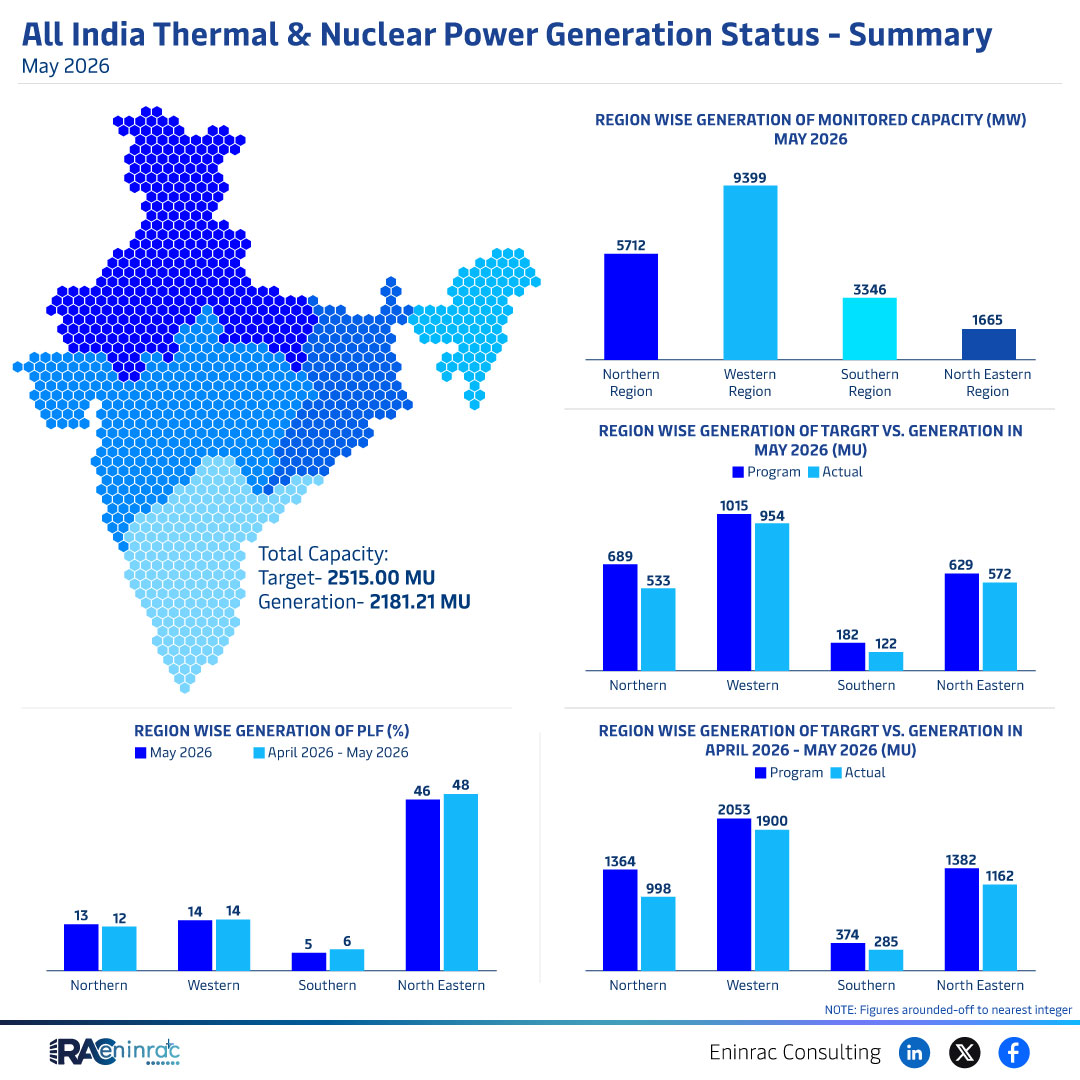
The May 2026 report on India thermal and nuclear power generation provides a snapshot of the nation’s electricity output at a pivotal moment. With a total generation target of 2,515 million units (MU) and an actual production of 2,181.21 MU, the data highlights how close the country is to meeting its energy goals. Readers will learn about regional performance, compare target versus actual figures, and understand the broader implications for the power sector, investors, and policymakers.
What Does the Data Reveal About This Topic?
Does India’s thermal and nuclear power generation meet its May 2026 target? The answer is nuanced: while overall generation stands at 2,181 MU, it falls short of the 2,515 MU target, indicating a shortfall of roughly 334 MU. The shortfall varies by region, with the northern and western zones contributing the most to the gap, whereas the southern and north‑eastern zones show relatively better alignment with targets.
Regional Performance Comparison
When the numbers are broken down by region, distinct patterns emerge. The northern region, traditionally a large consumer of thermal power, generated 1,665 MU of monitored capacity, yet its contribution to the target remains below expectation. The western region posted 3346 MU of PLF (plant load factor) but still lags behind its projected output. Southern and north‑eastern zones, though smaller in absolute terms, demonstrate higher efficiency ratios, suggesting better utilization of existing assets. These disparities point to uneven infrastructure development, differing fuel supply chains, and variable policy implementation across the country.
Impact on Sectors and Industries
The gap between target and actual generation influences multiple stakeholders. Utilities face pressure to ramp up plant availability and invest in upgrades, while independent power producers assess the viability of expanding thermal or nuclear portfolios. Investors monitor the shortfall as a signal of potential risk but also an opportunity for funding modernization projects. Policymakers must balance short‑term supply constraints with long‑term decarbonization goals, ensuring that thermal and nuclear assets operate efficiently while renewable capacity scales up.
Key Takeaways
- Overall generation of 2,181 MU is below the 2,515 MU target.
- Northern region shows the largest shortfall among all zones.
- Western region’s PLF is high but still does not meet its target.
- Southern and north‑eastern regions exhibit better efficiency ratios.
- Shortfall highlights infrastructure and fuel supply challenges.
- Policymakers need to address regional imbalances to meet national goals.
FAQs
What was the total power generation target for May 2026?
The target was set at 2,515 million units (MU) for thermal and nuclear sources combined.
How much power was actually generated in May 2026?
India generated 2,181.21 MU, which is about 334 MU below the target.
Which region performed closest to its generation target?
The southern and north‑eastern regions showed the smallest gaps between target and actual generation.
Why is there a shortfall in the northern region?
Factors include aging plant infrastructure, fuel supply constraints, and slower adoption of efficiency upgrades.
What does this data mean for future energy planning?
Stakeholders must focus on balancing regional disparities, investing in plant upgrades, and integrating renewable sources to close the generation gap.