
Introduction
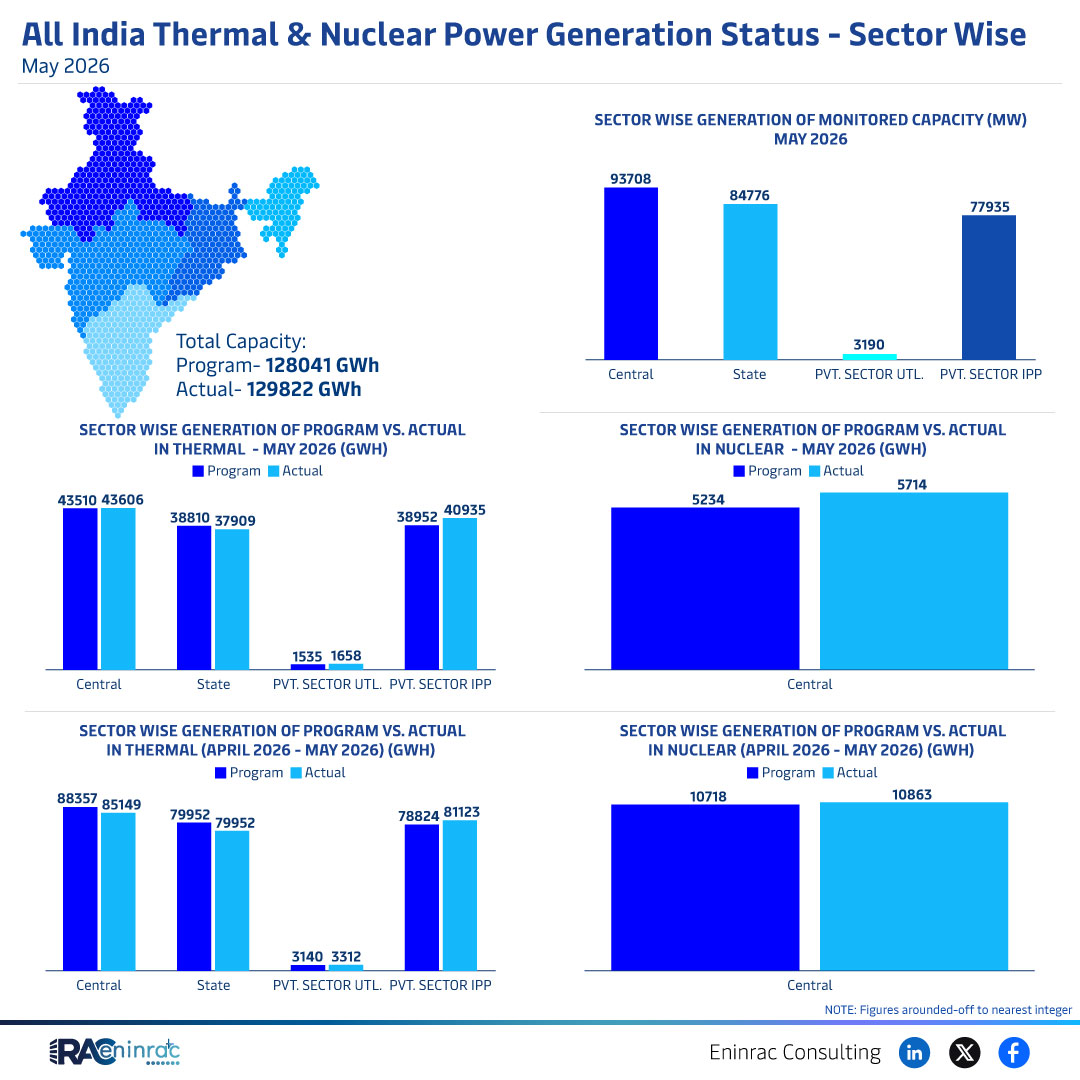
India's power sector released its May 2026 generation figures, showing a combined program capacity of 128,041 GWh and an actual output of 129,822 GWh. The data separates thermal and nuclear contributions, outlines monitored capacity across central, state and private entities, and highlights how the sector performed against its targets. Understanding these numbers helps analysts, policymakers and investors gauge the health of the country's energy mix and plan for future demand.
What Does the Data Reveal About This Topic?
The figures indicate that thermal generation slightly exceeded its program target, delivering 43,606 GWh against a planned 43,510 GWh, while nuclear output fell short of its goal, producing 38,810 GWh compared with a program of 52,340 GWh. Monitored capacity shows a total of 93,708 MW across all categories, with central and state utilities contributing the bulk of the capacity. The data suggests a modest overall growth in electricity generation but also points to challenges in nuclear performance.
Thermal vs Nuclear Generation in May 2026
Thermal plants remain the backbone of India's electricity supply, accounting for over 90% of total generation in May 2026. The program‑to‑actual gap for thermal was a positive 96 GWh, reflecting efficient plant operation and favorable fuel availability. In contrast, nuclear power, though a critical clean‑energy source, experienced a shortfall of more than 13,000 GWh against its program target. Capacity monitoring shows 31,902 MW for nuclear, but the lower actual generation underscores the need for improved reactor availability and fuel supply logistics.
Impact on Sectors and Industries
The slight excess in thermal generation supports industrial users that depend on reliable baseload power, such as steel, cement and chemicals. It also stabilises electricity prices for residential consumers during peak demand periods. Conversely, the nuclear shortfall highlights a gap in low‑carbon electricity, which could affect India's emissions targets and the growth of renewable‑linked industries. Investors may view the robust thermal performance as a signal for continued capacity expansion, while policymakers might prioritize reforms to boost nuclear reliability and integrate more renewable sources.
Key Takeaways
- Thermal generation outperformed its program target by 96 GWh.
- Nuclear generation lagged significantly, missing its program by over 13,000 GWh.
- Total monitored capacity reached 93,708 MW, with central and state utilities leading.
- Actual combined generation (129,822 GWh) exceeded the program forecast (128,041 GWh).
- Thermal dominance continues, supplying more than nine‑tenths of India's power.
- Improving nuclear plant availability is essential for meeting clean‑energy goals.
FAQs
What was India's total power generation in May 2026?
India generated 129,822 GWh of electricity in May 2026, surpassing the program estimate of 128,041 GWh.
Did thermal power meet its generation target?
Yes, thermal plants produced 43,606 GWh, slightly above the planned 43,510 GWh.
How did nuclear generation perform against its goal?
Nuclear output was 38,810 GWh, considerably lower than the 52,340 GWh program target.
Which sector contributed most to monitored capacity?
The central and state utilities together accounted for the majority of the 93,708 MW monitored capacity.
What does the data suggest for future energy policy?
The results underline the need to sustain thermal reliability while accelerating nuclear and renewable improvements to meet clean‑energy commitments.