
Introduction
India’s power sector continues to be a cornerstone of economic growth, and the latest May 2026 figures provide a clear snapshot of how thermal and nuclear plants are performing across the country. The report compares program‑planned generation with actual output for each major region, highlighting where targets are being met, exceeded, or missed. Readers will gain insight into regional strengths, capacity gaps, and the overall health of India’s energy mix.
What Does the Data Reveal About This Topic?
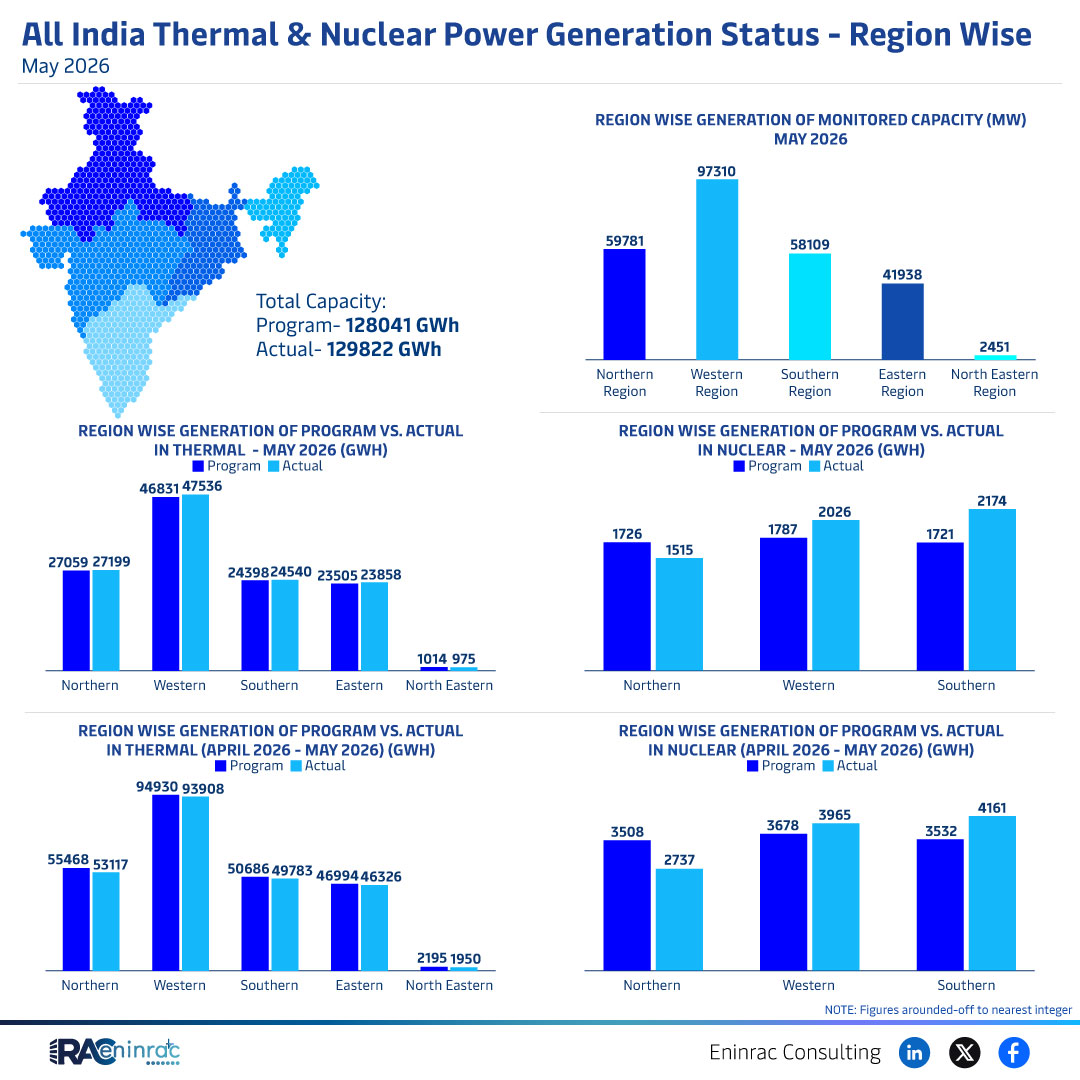
What does the data reveal about India thermal and nuclear power generation? In May 2026 the national program projected a total generation of 128,041 GWh, while actual generation reached 129,822 GWh, indicating a modest surplus. Thermal generation dominates the mix, with the northern region contributing the largest share, whereas nuclear output shows modest growth with slight variations between program and actual figures. The disparity between programmed and real‑world performance offers clues about plant availability, fuel supply, and operational efficiency.
Regional Performance – Thermal vs Nuclear
Examining the region‑wise breakdown uncovers distinct patterns. In the thermal sector, the northern region generated roughly 97,310 GWh of programmed output and achieved around 59,781 GWh actual, suggesting capacity constraints or maintenance issues. The western, southern, eastern and north‑eastern zones reported lower but more balanced figures, with actual generation closely tracking program targets. Nuclear generation displayed a narrower gap; the north delivered 46,831 GWh program versus 47,536 GWh actual, while the eastern and western zones hovered around 21,700 GWh. These numbers illustrate that northern thermal plants face the biggest shortfall, whereas nuclear facilities operate near their planned limits.
Impact on Sectors and Industries
The variations in generation affect multiple sectors. Power‑intensive industries in the north may experience supply volatility, prompting reliance on ancillary sources or demand‑side management. Investors track these trends to assess the risk profile of thermal assets versus the relatively stable nuclear portfolio. Policymakers can use the data to prioritize infrastructure upgrades, fuel logistics, and incentive schemes aimed at closing the program‑actual gap, thereby strengthening energy security and supporting sustainable growth.
Key Takeaways
- The national program forecasted 128,041 GWh, but actual generation exceeded expectations at 129,822 GWh.
- Northern thermal plants showed the largest shortfall between programmed and actual output.
- Western, southern, eastern, and north‑eastern regions closely matched their thermal generation targets.
- Nuclear generation across all regions remained near program levels, indicating high operational reliability.
- The modest surplus in overall generation suggests improved plant availability and fuel supply management.
- Policymakers should focus on capacity upgrades in the north to reduce thermal generation gaps.
FAQs
Why did actual generation exceed the program target in May 2026?
Better plant availability, efficient fuel use, and temporary demand spikes pushed actual output slightly above the programmed forecast.
Which region contributed the most thermal power in May 2026?
The northern region had the highest thermal generation, despite falling short of its programmed target.
How does nuclear generation performance compare to thermal generation?
Nuclear output stayed close to program levels across regions, showing higher reliability than the more variable thermal sector.
What factors can cause a gap between programmed and actual generation?
Maintenance outages, fuel supply disruptions, weather‑related plant shutdowns, and unexpected demand changes can all create differences.
How can the data inform future energy policy in India?
Policymakers can target investment in under‑performing thermal zones, promote nuclear stability, and refine forecasting models for better resource planning.