
Introduction
The on‑river pumped storage project capacity landscape in India is evolving rapidly as of June 2026. Pumped storage plants act as large‑scale batteries, storing excess renewable energy and releasing it during peak demand. Recent data highlights projects across three key states—West Bengal, Madhya Pradesh and Tamil Nadu—each at different stages such as concurred, under examination, and under survey or investigation. Understanding these statuses helps investors, policymakers and energy professionals gauge future generation potential and grid reliability. This article analyses the available capacities, examines regional trends and discusses broader industry implications.
What Does the Data Reveal About This Topic?
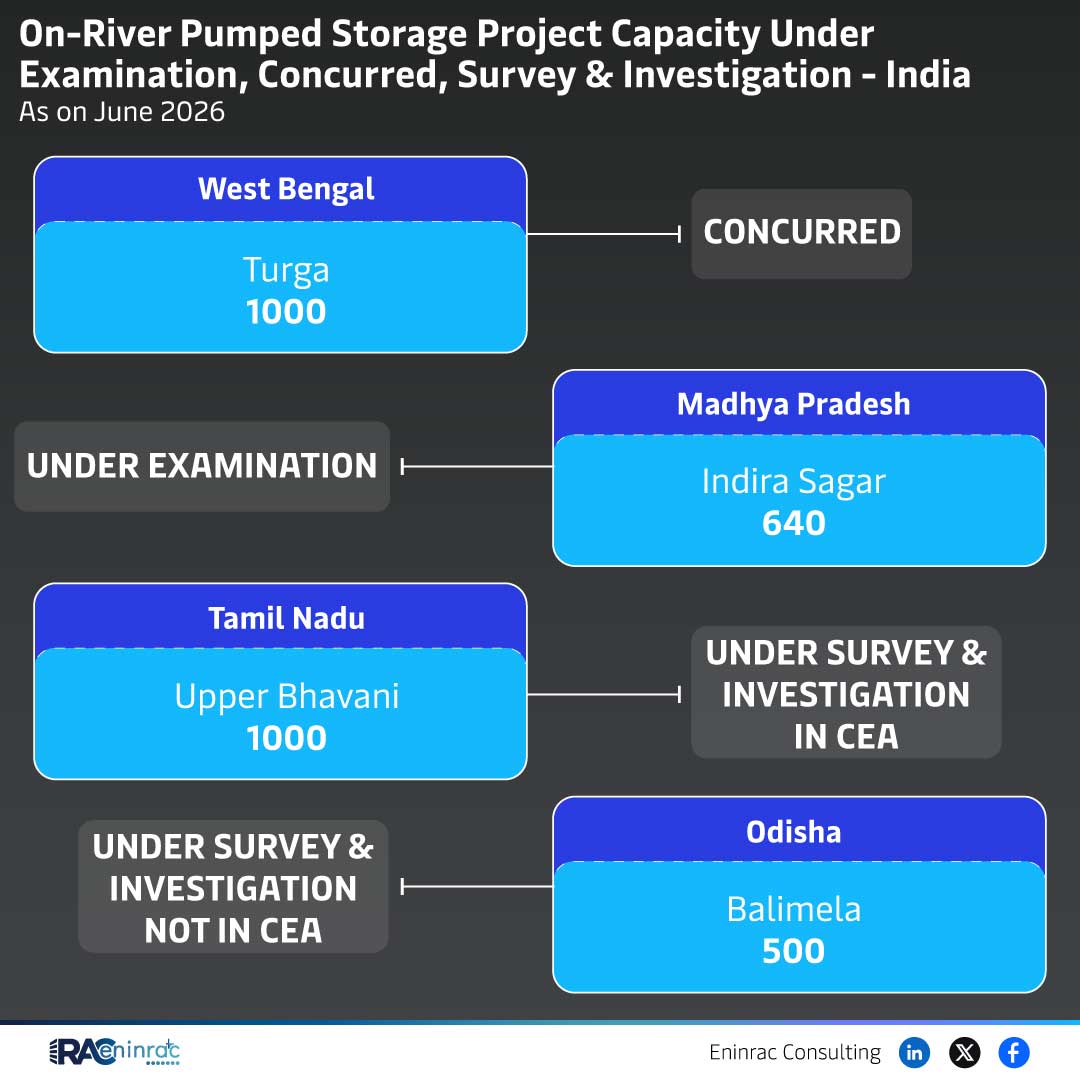
The data indicates that West Bengal’s Turga project has achieved a concurred status with a reported capacity of 1,000 MW, making it the largest single on‑river pumped storage facility among the listed sites. Madhya Pradesh’s Indira Sagar is still under examination and is slated at 640 MW, suggesting a moderate but still pending contribution to the national storage mix. Tamil Nadu hosts two projects—Upper Bhavani under survey and Balimela under investigation—though capacities are not disclosed, reflecting early‑stage assessments that could later add significant capacity.
Regional Status Comparison of Pumped Storage Projects
When comparing the three states, West Bengal leads both in project approval and declared capacity, positioning it as a priority region for grid‑balancing initiatives. Madhya Pradesh, with its 640 MW under‑examination project, shows a middle‑ground scenario where regulatory clearance and technical feasibility are still being evaluated. Tamil Nadu’s projects are in the preliminary phases of survey and investigation, indicating that detailed feasibility studies and environmental clearances are pending before any capacity can be confirmed. This tiered progression—from concurred to examination to survey—highlights the varied pace of pumped storage development across India.
Impact on Sectors and Industries
Pumped storage directly supports the power generation sector by providing flexible, dispatchable energy that complements intermittent renewable sources such as wind and solar. The confirmed 1,000 MW at Turga will enhance grid stability in the eastern corridor, attract investment in transmission upgrades, and create jobs in construction and operations. The pending 640 MW in Madhya Pradesh could stimulate regional manufacturing of turbines and associated components, while the surveys in Tamil Nadu may eventually open opportunities for land‑use planning, environmental consulting, and local community engagement. Overall, increased pumped storage capacity reduces reliance on fossil‑fuel peaking plants, lowers carbon intensity, and improves market confidence for renewable projects.
Key Takeaways
- West Bengal’s Turga project is the only concurred on‑river pumped storage plant with a reported 1,000 MW capacity.
- Madhya Pradesh’s Indira Sagar is under examination and could contribute 640 MW once approved.
- Tamil Nadu hosts two early‑stage projects, Upper Bhavani and Balimela, currently in survey and investigation phases.
- The status hierarchy (concurred → examination → survey/investigation) reflects differing regulatory and technical milestones across states.
- Confirmed capacities will boost grid reliability, attract ancillary industry investments, and support renewable energy integration.
- Continued monitoring of project progress is essential for accurate forecasting of India’s pumped storage potential.
FAQs
What is on‑river pumped storage?
On‑river pumped storage uses a river‑connected reservoir to store water at higher elevation during low demand and generate electricity by releasing it through turbines during peak demand.
Why is Turga’s 1,000 MW capacity significant?
It represents the largest confirmed on‑river pumped storage capacity in India, providing a substantial boost to eastern grid stability and renewable integration.
When can Madhya Pradesh’s Indira Sagar project become operational?
Operational dates depend on the outcome of the examination phase; if approved, construction could begin within the next 2‑3 years.
What are the next steps for Tamil Nadu’s projects?
Both Upper Bhavani and Balimela must complete detailed surveys, environmental clearances and feasibility studies before capacity estimates are released.
How does pumped storage affect carbon emissions?
By storing renewable energy and reducing the need for fossil‑fuel peaking plants, pumped storage helps lower overall carbon emissions in the power sector.