
Introduction
India is rapidly expanding its on‑river pumped storage capacity to strengthen grid stability and support renewable integration. As of June 2026, three major projects are under construction across Andhra Pradesh, Karnataka and Tamil Nadu, collectively adding 3,850 MW of flexible storage. This article explains the significance of these projects, compares their capacities, and explores the broader impact on the power sector, investors and policy makers.
What Does the Data Reveal About This Topic?
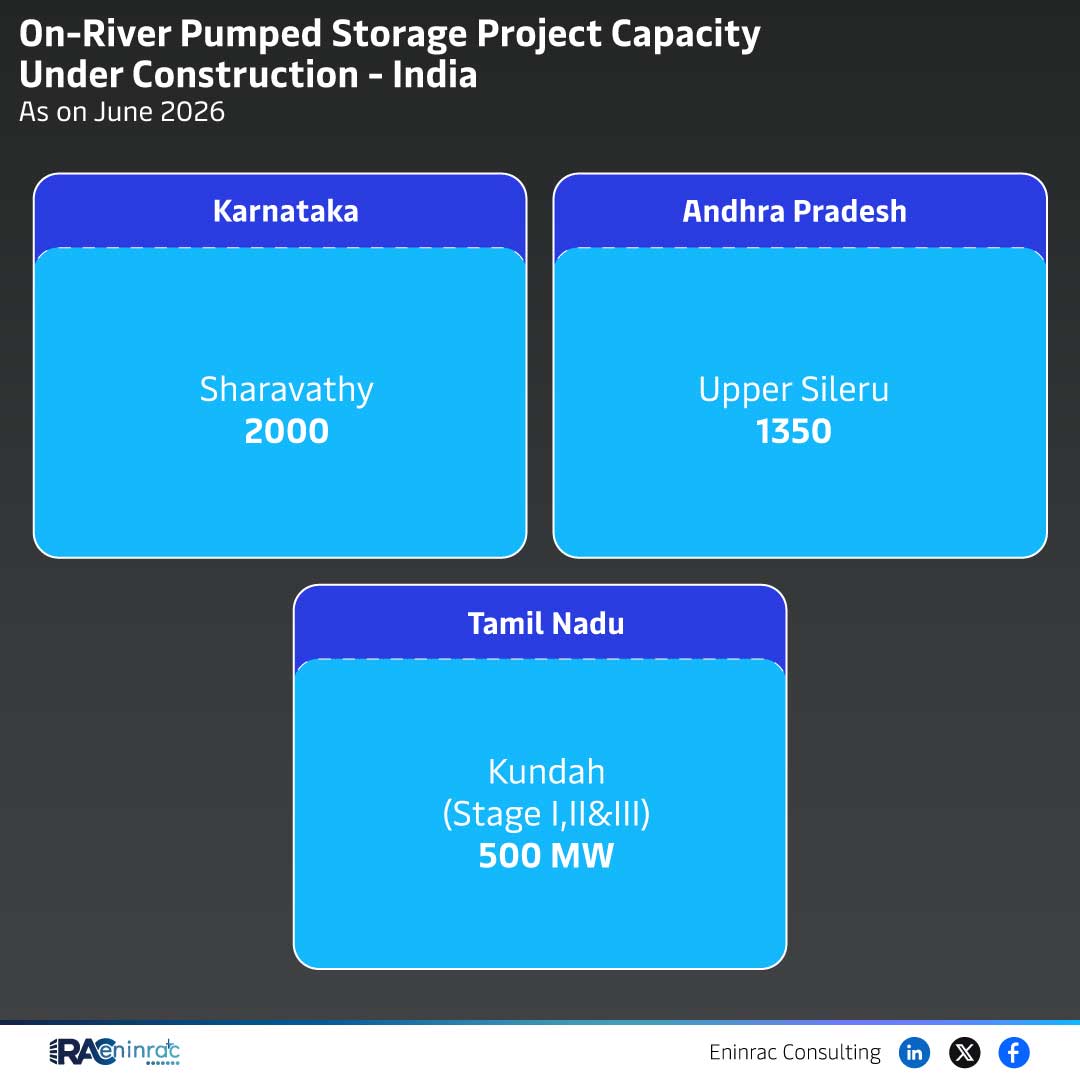
The data shows that Karnataka leads with the Sharavathy project at 2,000 MW, followed closely by Upper Sileru in Andhra Pradesh at 1,350 MW, while Tamil Nadu’s Kundah project contributes a smaller but strategic 500 MW. The question is: how do these state‑wise capacities shape India’s overall storage roadmap? The answer lies in the geographic distribution, resource availability and the role each project plays in balancing intermittent renewable generation.
State‑wise Capacity Comparison and Project Highlights
Karnataka’s Sharavathy project, positioned on the Sharavathy River, is designed to deliver the highest single‑site capacity, reflecting the state’s strong hydropower heritage. Upper Sileru in Andhra Pradesh leverages the existing Sileru basin, providing a substantial 1,350 MW that will enhance supply reliability in the eastern grid. Tamil Nadu’s Kundah Stage I, I1 & III, though smaller at 500 MW, is crucial for the southern power pool, offering rapid response during peak demand. Together, these projects illustrate a balanced approach, with larger installations in resource‑rich regions and targeted projects in high‑demand zones.
Impact on Sectors and Industries
The surge in on‑river pumped storage influences several sectors. For utilities, the new capacity offers grid‑scale storage, enabling smoother integration of solar and wind farms and reducing curtailment. Investors gain confidence from clear government backing and the long‑term revenue streams associated with storage assets. Policymakers can rely on these projects to meet renewable targets while maintaining system reliability. Additionally, equipment manufacturers and construction firms benefit from increased demand for turbines, pumps, and civil engineering services, stimulating local economies across the three states.
Key Takeaways
- Karnataka hosts the largest on‑river pumped storage project at 2,000 MW.
- Andhra Pradesh contributes a significant 1,350 MW through Upper Sileru.
- Tamil Nadu’s Kundah adds 500 MW, supporting southern grid stability.
- Combined capacity of 3,850 MW strengthens India’s renewable integration.
- Projects are under construction as of June 2026, indicating fast‑track development.
- Enhanced storage capacity benefits utilities, investors, policymakers and regional economies.
FAQs
What is on‑river pumped storage?
It is a form of hydroelectric energy storage where water is pumped to a higher elevation during low demand and released to generate power during peak demand, using the river’s natural flow.
Why are these projects important for India’s grid?
They provide flexible, large‑scale storage that smooths fluctuations from solar and wind, reduces curtailment, and improves overall reliability.
When will the projects become operational?
Each project follows its own timeline, but most are expected to reach commercial operation between 2028 and 2030.
How does capacity differ between the states?
Karnataka leads with 2,000 MW, Andhra Pradesh follows with 1,350 MW, and Tamil Nadu contributes 500 MW, reflecting regional resource availability and demand.
What are the economic benefits of these projects?
They generate jobs in construction and manufacturing, attract investment, and support ancillary industries such as turbine production and civil engineering.