
Introduction
India’s on‑river pumped storage sector is rapidly maturing, offering flexible electricity generation that balances intermittent renewable sources. As of June 2026, several operational projects across Gujarat, Telangana, Maharashtra, Uttarakhand and Tamil Nadu showcase a diverse mix of capacities. This article examines the state‑wise capacity figures, compares project sizes, and explains why these figures matter to investors, policymakers and energy planners.
What Does the Data Reveal About This Topic?
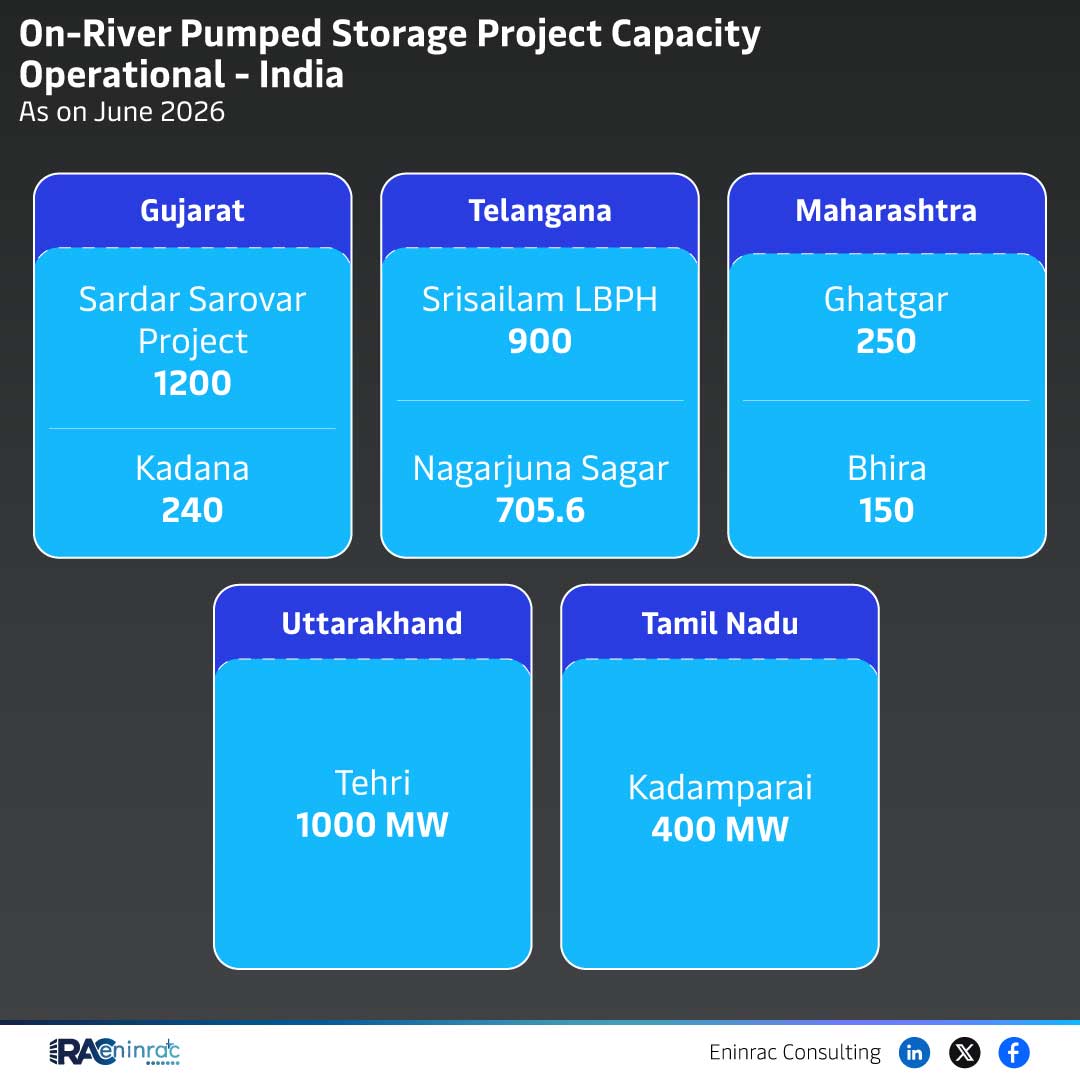
The data highlights that Gujarat leads with the largest on‑river pumped storage capacity, followed by Maharashtra and Tamil Nadu. Projects such as Sardar Sarovar (900 MW) and Kadana (240 MW) dominate the Gujarat portfolio, while Tehri in Uttarakhand contributes a substantial 1,000 MW. The spread of capacities indicates regional water resource availability and differing state priorities for grid stability.
Regional Capacity Comparison
Gujarat hosts Sardar Sarovar (900 MW), Kadana (240 MW) and Bhira (150 MW), providing a combined 1,290 MW of on‑river pumped storage. Maharashtra’s projects, including Srisailam (250 MW) and LBPH (1,200 MW), total 1,450 MW, surpassing Gujarat’s aggregate. Telangana contributes 250 MW via Srisailam, while Uttarakhand’s Tehri adds a massive 1,000 MW, making it the single largest project. Tamil Nadu’s Kadamparai (400 MW) rounds out the southern contribution. The variations reflect geographic water flow patterns and state‑level investment strategies.
Impact on Sectors and Industries
On‑river pumped storage enhances grid reliability, reduces reliance on fossil‑fuel peaker plants, and supports the integration of solar and wind power. Investors gain exposure to assets with long operational lifespans and predictable revenue streams. Policymakers can leverage these projects to meet renewable targets and improve water resource management. For equipment manufacturers, the growing capacity numbers signal rising demand for turbines, pumps and control systems.
Key Takeaways
- Gujarat and Maharashtra together account for over two‑thirds of India’s on‑river pumped storage capacity.
- Tehri in Uttarakhand is the single largest project at 1,000 MW.
- State‑wise capacity reflects water‑resource availability and regional energy policies.
- On‑river pumped storage supports renewable integration and grid stability.
- Investors view these projects as long‑term, low‑risk assets.
- Equipment suppliers benefit from expanding turbine and pump markets.
FAQs
What is on‑river pumped storage?
It is a hydro‑electric system that uses river water to pump water to an upper reservoir during low demand and generates power when released.
Which Indian state has the highest capacity?
Uttarakhand’s Tehri project, at 1,000 MW, holds the highest single‑site capacity.
How does pumped storage help renewable energy?
It stores excess solar or wind power and releases it during peak demand, smoothing variability.
Are there plans for new on‑river projects?
State governments have announced feasibility studies for additional sites, especially in water‑rich regions.
What are the investment risks?
Risks include water flow variability, regulatory changes, and construction cost overruns, though long‑term contracts mitigate many concerns.