
Introduction
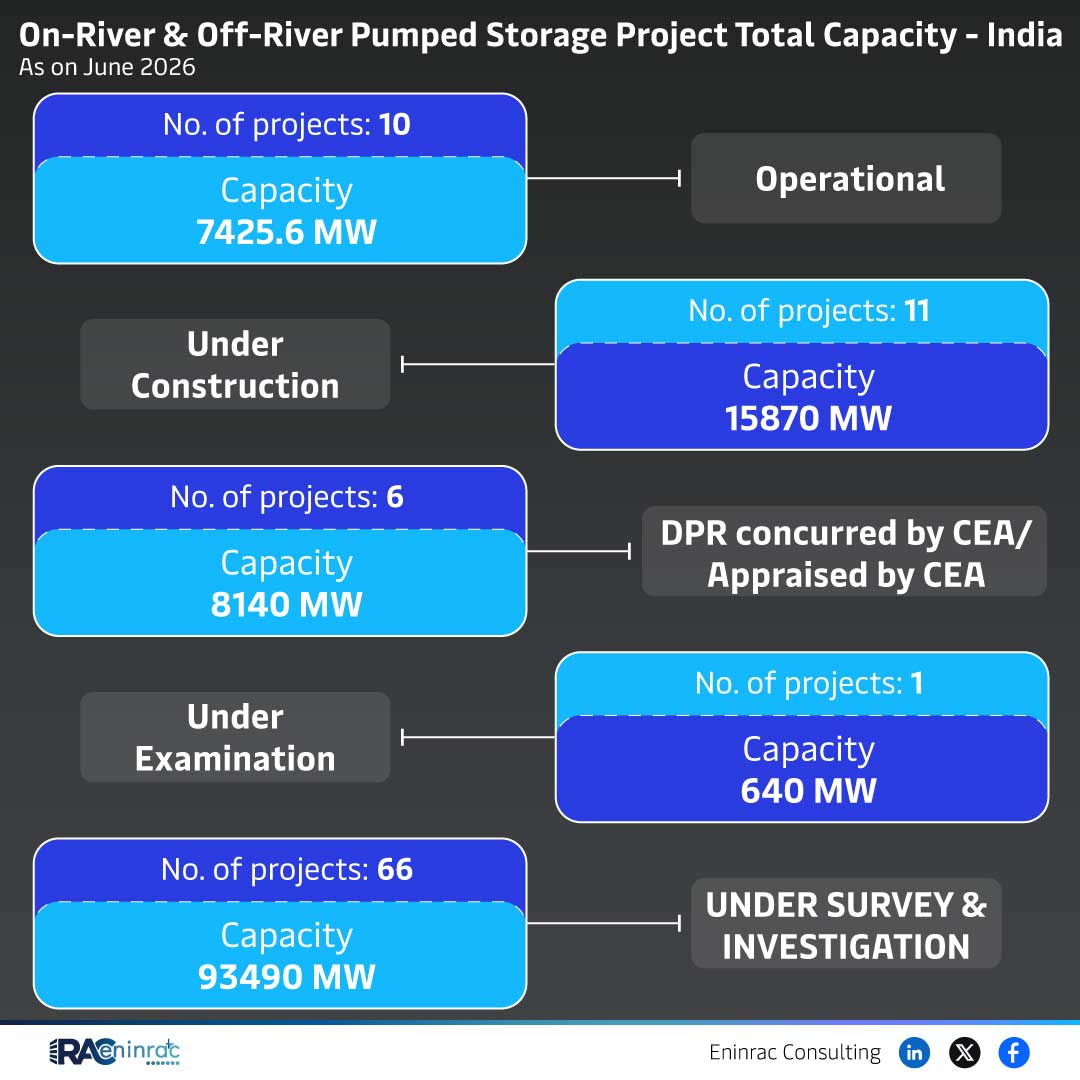
India is rapidly expanding its pumped storage capacity, a critical component of the nation’s renewable energy mix. As of June 2026, the country tracks ten on‑river and off‑river pumped storage projects that are already operational, delivering a combined 7,425.6 MW to the grid. In addition, eleven projects under construction contribute another 15,870 MW, while several pipeline initiatives—ranging from detailed project reports approved by the CEA to those still under survey—push the total potential capacity well beyond 110 GW. This article breaks down the latest figures, explains what they mean for India’s energy future, and highlights the opportunities and challenges facing investors, policymakers, and utilities.
What Does the Data Reveal About This Topic?
The data shows a steeply layered development pipeline. Operational capacity stands at 7,425.6 MW across ten projects, but the bulk of new capacity—15,870 MW from eleven construction projects—remains to be commissioned. An additional 8,140 MW from six projects with approved DPRs and 640 MW from one project under examination are awaiting further clearance. The largest segment, 93,490 MW, belongs to sixty‑six projects still in survey and investigation phases, indicating a massive untapped reservoir of storage potential. In short, India’s pumped storage portfolio is still in its infancy, yet it has the scale to transform grid stability.
Stage‑wise Capacity Distribution of Pumped Storage Projects
When the figures are grouped by project stage, clear trends emerge. Operational projects represent roughly 6 % of the total reported capacity, highlighting the early stage of deployment. Under‑construction projects account for about 13 % and are poised to boost the grid in the near term. Projects with approved detailed project reports add another 5 %, while those under examination contribute less than 1 %. The overwhelming majority—about 76 %—are still in survey or investigation, underscoring a substantial pipeline that could reshape India’s renewable storage landscape once approvals are secured.
Impact on Sectors and Industries
The expanding pumped storage portfolio influences multiple sectors. For utilities, additional storage offers a reliable buffer that smooths intermittent solar and wind generation, reducing reliance on fossil‑fuel peaker plants. Investors see a growing market for financing large‑scale hydro‑electric infrastructure, while equipment manufacturers benefit from demand for turbines, pumps, and control systems. Policymakers gain a strategic tool for meeting renewable‑energy targets and enhancing grid resilience. Finally, consumers stand to benefit from lower electricity volatility and potentially reduced tariffs as the system becomes more efficient.
Key Takeaways
- India currently operates ten pumped storage projects delivering 7,425.6 MW.
- Eleven projects under construction will add 15,870 MW of capacity.
- Six DPR‑approved projects contribute an additional 8,140 MW.
- One project under examination adds 640 MW to the pipeline.
- Sixty‑six survey‑stage projects represent a massive 93,490 MW potential.
- The total projected pumped storage capacity exceeds 114 GW, signaling huge growth prospects.
FAQs
What is pumped storage and why is it important for India?
Pumped storage is a form of hydro‑electric energy storage that moves water between reservoirs at different elevations to generate electricity on demand, providing grid stability and supporting renewable integration.
How much pumped storage capacity is currently operational in India?
As of June 2026, ten on‑river and off‑river pumped storage projects are operational, delivering a combined capacity of 7,425.6 MW.
When will the under‑construction projects become operational?
The eleven projects under construction are expected to be commissioned over the next five to eight years, gradually adding 15,870 MW to the grid.
What challenges do the surveyed projects face?
Surveyed projects often encounter land‑acquisition issues, environmental clearances, financing constraints, and the need for detailed feasibility studies before moving to construction.
How does pumped storage support renewable energy goals?
By storing excess generation from solar and wind and releasing it during peak demand, pumped storage helps balance supply and demand, reducing curtailment and enabling higher renewable penetration.