
Introduction
India wind power generation continues to accelerate as the country pushes renewable targets for 2026. The latest April 2026 data highlights the capacity installed across key states, growth trends, and tender outcomes. Readers will discover which states lead in megawatt additions, how quarterly figures compare to previous years, and what the implications are for investors, policymakers, and the energy market.
What Does the Data Reveal About This Topic?
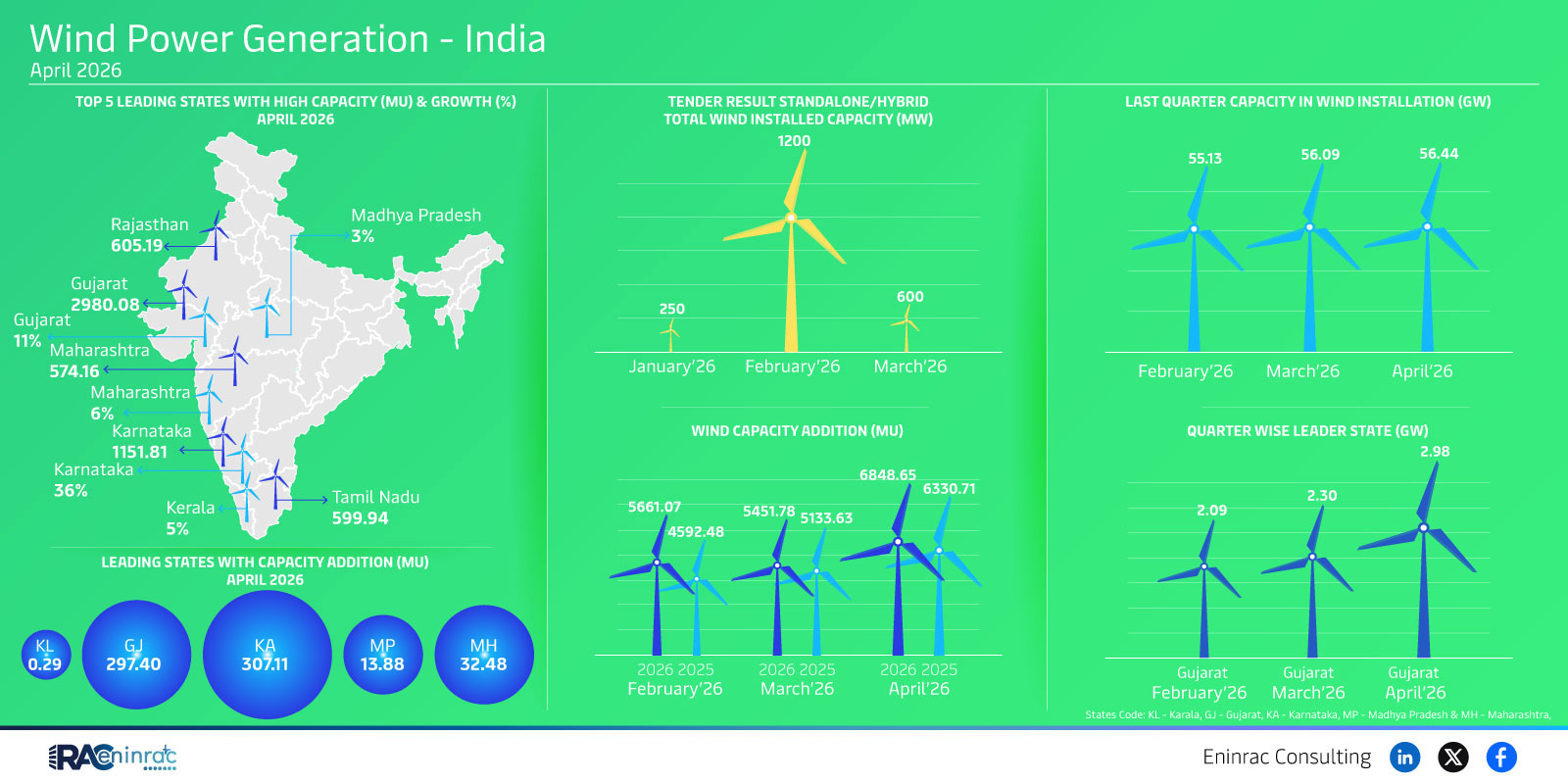
The data shows that Gujarat remains the dominant player with a reported 2,980.08 MW of new capacity, while Karnataka, Tamil Tamil Nadu, Maharashtra, Madhya Pradesh and Rajasthan also contribute significant additions. Quarterly capacity grew from 5.51 GW in the last quarter to a cumulative 5.64 GW by April, indicating steady momentum. The question is: which states are adding the most wind power and how does this shape the national renewable mix?
State-wise Capacity Growth and Tender Results
Analyzing the April 2026 snapshot, Gujarat leads with the highest capacity addition (approximately 2,980 MW), followed by Karnataka (1,151.81 MW) and Tamil Nadu (599.94 MW). Maharashtra (574.16 MW) and Madhya Pradesh (605.19 MW) also show robust growth. Rajasthan’s figure appears as 3 MW in a separate line, suggesting a smaller but emerging presence. The quarter‑wise leader for new installations is Gujarat, maintaining its top rank from 2025 to 2026. Tender results indicate a mix of standalone and hybrid projects, reflecting a shift toward integrated renewable solutions.
Impact on Sectors and Industries
Increased wind capacity influences several sectors. Power generators gain access to lower‑cost green energy, reducing reliance on fossil fuels. Manufacturing of turbines and components sees higher demand, spurring job creation in engineering hubs. Financial institutions are allocating more capital to wind projects, while state governments benefit from revenue and grid stability. For consumers, expanded wind generation can lead to lower electricity tariffs and cleaner air, supporting public health and sustainability goals.
Key Takeaways
- Gujarat dominates wind capacity additions in April 2026.
- Karnataka and Tamil Nadu are strong secondary contributors.
- Quarterly wind installation rose from 5.51 GW to 5.64 GW.
- Tender activity shows a blend of standalone and hybrid projects.
- Growth supports India’s renewable targets and grid diversification.
- Sectoral impacts include manufacturing, finance, and consumer pricing.
FAQs
Which state added the most wind capacity in April 2026?
Gujarat added the most, with roughly 2,980 MW of new wind capacity.
How does the April 2026 growth compare to the previous quarter?
The total installed wind capacity increased from 5.51 GW to 5.64 GW, showing steady quarterly growth.
What types of projects are reflected in the tender results?
The tender results include both standalone wind farms and hybrid projects that combine wind with solar or storage.
Why is wind power important for India’s energy mix?
Wind power reduces carbon emissions, diversifies the grid, and helps meet the nation’s renewable energy commitments.
What are the implications for investors?
Strong state‑wise capacity additions and supportive policies make wind projects attractive for long‑term investment.