
Introduction
India’s wind power generation sector entered August 2026 with a clear hierarchy of state performance and a continued upward trajectory in installed capacity. The data highlights which states are driving growth, how much new capacity was added during the last quarter, and why these trends matter for investors, policymakers and the broader clean‑energy transition. Readers will learn about Gujarat’s dominant position, the overall national capacity reaching gigawatt levels, and the implications for future energy planning. The data also reflects policy incentives, turbine technology upgrades, and grid‑integration challenges that shape the sector’s momentum. By examining state rankings and monthly trends, stakeholders can gauge future capacity pipelines and regional investment attractiveness.
What Does the Data Reveal About This Topic?
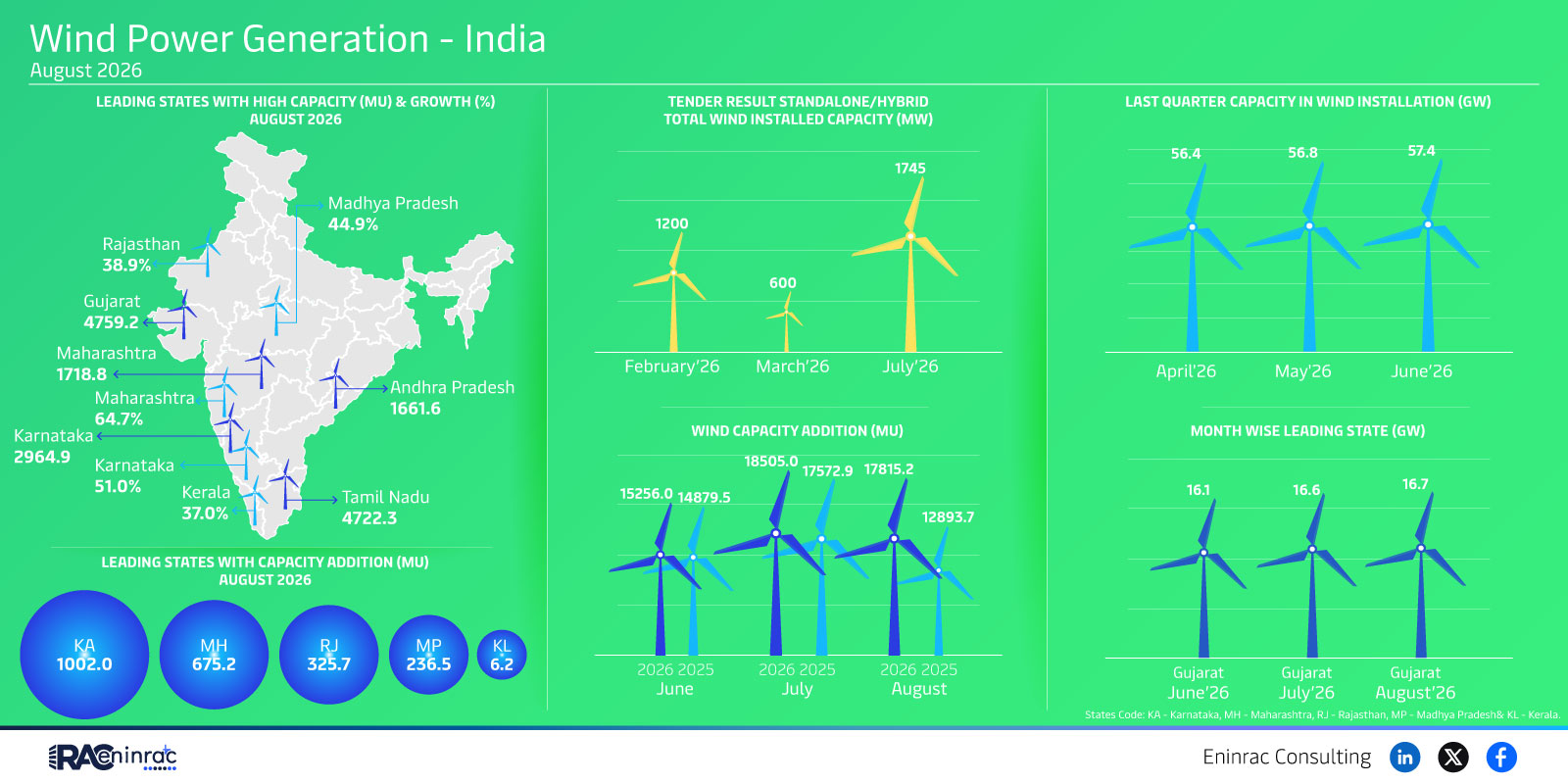
Does the August 2026 snapshot show a concentrated leadership or a balanced spread of wind power generation across India? The figures indicate that Gujarat remains the top contributor with approximately 4,759 MW of capacity, while other large states such as Karnataka (2,964 MW) and Tamil Nadu (4,722 MW) also hold significant shares. The total wind‑installed capacity approaches 57 GW, and month‑by‑month additions in June, July and August point to steady growth rather than a sudden surge. Furthermore, the modest growth in Rajasthan and Madhya Pradesh suggests emerging opportunities in regions traditionally less associated with wind resources. These insights help allocate development funds more efficiently.
State‑wise Capacity Trends in August 2026
When comparing state performances, Gujarat consistently topped the month‑wise leading state list for June, July and August, confirming its role as the primary wind hub. Karnataka and Tamil Nadu followed closely, each reporting capacity figures above 2,900 MW. Madhya Pradesh, Rajasthan, Maharashtra and Andhra Pradesh contributed smaller but noteworthy amounts, ranging from 38 MW to 1,718 MW. The capacity addition data shows that the most substantial new installations occurred in the second half of the year, with quarterly growth rates hovering around 0.6 GW per month, indicating a healthy pipeline of projects.
Impact on Sectors and Industries
The expanding wind power generation landscape influences multiple sectors. For the energy market, higher wind capacity reduces reliance on fossil fuels and supports India’s renewable‑energy targets. Investors see a clearer risk‑adjusted return profile as capacity additions become more predictable. Policymakers can align state‑level incentives with the observed growth patterns, targeting under‑performing regions while consolidating support in high‑output states. Equipment manufacturers, construction firms and grid operators also benefit from the steady demand for turbines, transmission upgrades and maintenance services.
Key Takeaways
- Gujarat leads with 4,759 MW, maintaining its top‑state status.
- Total national wind capacity nears 57 GW, marking a significant milestone.
- Quarterly additions average around 0.6 GW per month, showing consistent growth.
- Karnataka and Tamil Nadu are the second‑largest contributors.
- June‑August 2026 data shows Gujarat as month‑wise leader.
- Growth supports renewable targets and creates opportunities across the supply chain.
FAQs
Which Indian state had the highest wind power capacity in August 2026?
Gujarat, with approximately 4,759 MW of installed wind capacity.
What is the total wind‑installed capacity in India as of August 2026?
About 57 GW nationwide.
How much new wind capacity was added during the last quarter?
Roughly 0.6 GW per month, totaling around 1.8 GW for the quarter.
Which states are close competitors to Gujarat?
Karnataka and Tamil Nadu, each with capacities above 2,900 MW.
Why does wind power growth matter for investors?
Steady capacity additions lower risk and improve returns on renewable energy investments.