
Introduction
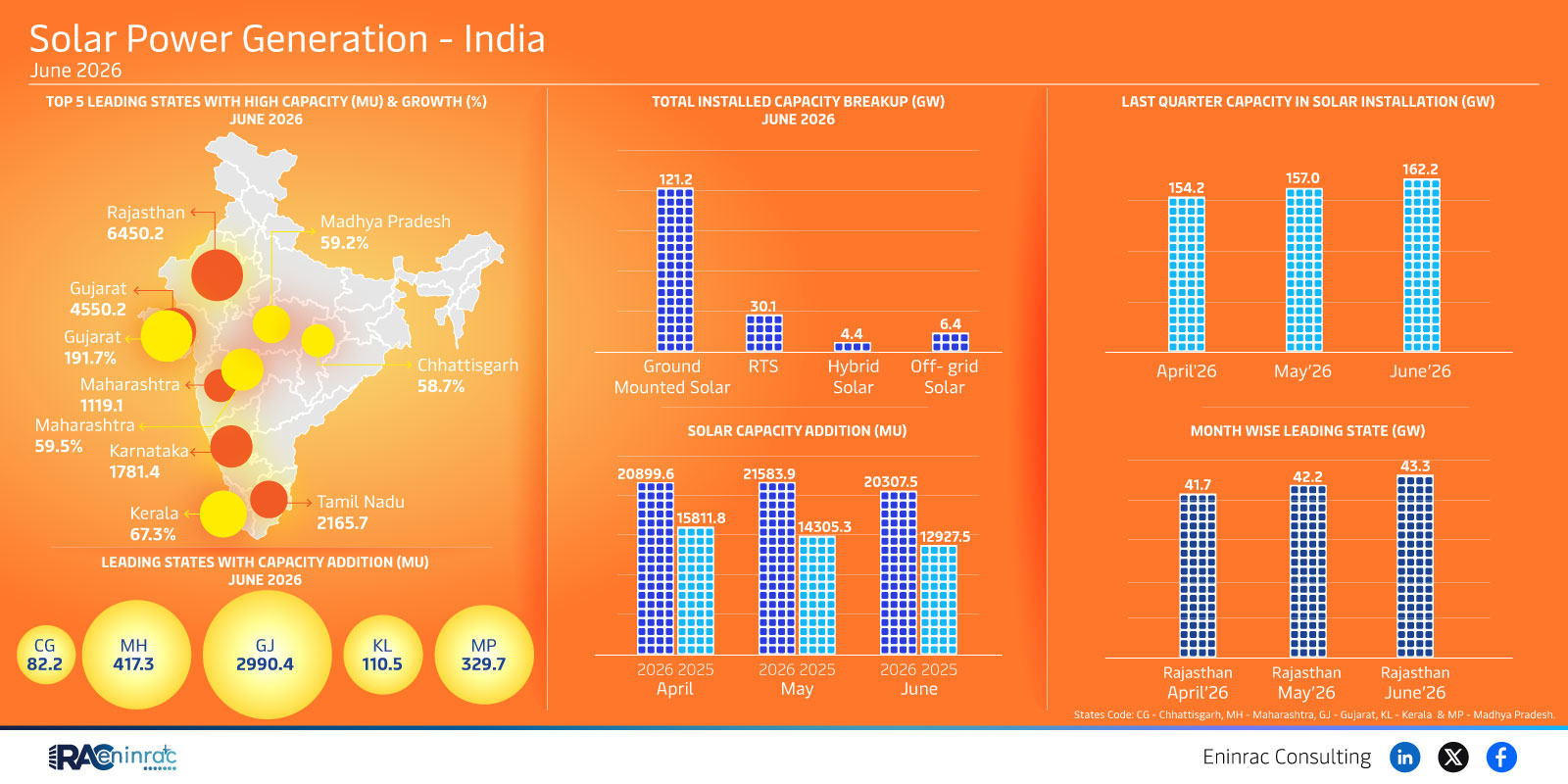
Solar power generation India has entered a decisive phase in 2026, with state‑level capacity additions accelerating faster than ever. The data released for June 2026 shows how Tamil Nadu leads with 2,165.7 MW of new capacity, while Rajasthan remains a consistent performer in monthly growth. Readers will understand the top‑performing states, the magnitude of capacity additions, and the broader implications for the renewable energy market.
What Does the Data Reveal About This Topic?
The June 2026 dataset highlights five leading states with the highest installed capacity (in megawatts) and the fastest growth rates. Tamil Nadu tops the list with 2,165.7 MW, followed by Rajasthan, Maharashtra, Gujarat and Chhattisgarh. Monthly capacity addition figures show a total of 162.2 GW installed across the country in the last quarter, indicating a surge in solar projects and a strong policy push. The question is: why are these states outperforming others, and what does their momentum signal for future expansion?
Statewise Solar Capacity Additions – June 2026 Snapshot
Comparing the numbers reveals clear regional trends. Tamil Nadu’s 2,165.7 MW surge reflects aggressive state policies, abundant land and high solar irradiance. Rajasthan, noted in month‑wise tables for April, May and June, records consistent additions that keep it at the top of the monthly ranking chart. Maharashtra and Gujarat show solid mid‑range growth, benefitting from industrial demand and grid‑integration incentives. Chhattisgarh, though smaller, exhibits rapid percentage growth, suggesting untapped potential. The overall installed capacity breakup of 20.383 GW for the quarter underscores a nationwide shift toward utility‑scale solar farms.
Impact on Sectors and Industries
The rapid expansion of solar power generation India reshapes several industries. Energy utilities gain access to cleaner, cheaper generation, reducing reliance on fossil fuels. Equipment manufacturers experience heightened demand for PV modules, inverters and mounting structures. Financial investors see attractive returns as government subsidies and green financing increase. Policymakers are compelled to upgrade transmission infrastructure to handle intermittent solar output, while consumers benefit from lower electricity tariffs and increased energy security.
Key Takeaways
- Tamil Nadu leads June 2026 with 2,165.7 MW new capacity.
- Rajasthan dominates month‑wise additions across April‑June.
- Total quarter‑long solar installation reached 162.2 GW.
- Five states account for the majority of capacity growth.
- Policy incentives and grid upgrades drive rapid expansion.
- Investors view solar as a high‑growth renewable segment.
FAQs
Which state added the most solar capacity in June 2026?
Tamil Nadu recorded the highest addition, contributing 2,165.7 MW of new solar capacity.
How much total solar capacity was installed in the last quarter?
The country installed approximately 162.2 GW of solar capacity during the last quarter.
What drives Rajasthan’s consistent monthly growth?
Rajasthan benefits from high solar irradiance, supportive state policies and ongoing large‑scale project pipelines.
Are there any emerging states showing rapid solar growth?
Chhattisgarh, despite a smaller absolute figure, shows rapid percentage growth, indicating emerging potential.
How does this growth affect renewable energy investors?
Strong capacity additions improve project pipelines, reduce risk and enhance returns for investors in solar assets.