
Introduction
The April 2026 power installed capacity report for North East India provides a detailed snapshot of generation assets across the eight states in the region. Understanding this data is essential for policymakers, investors, and industry analysts who track renewable growth, regional energy security, and infrastructure planning. This article explains the key figures, highlights state‑wise differences, and discusses the implications for the power sector.
What Does the Data Reveal About This Topic?
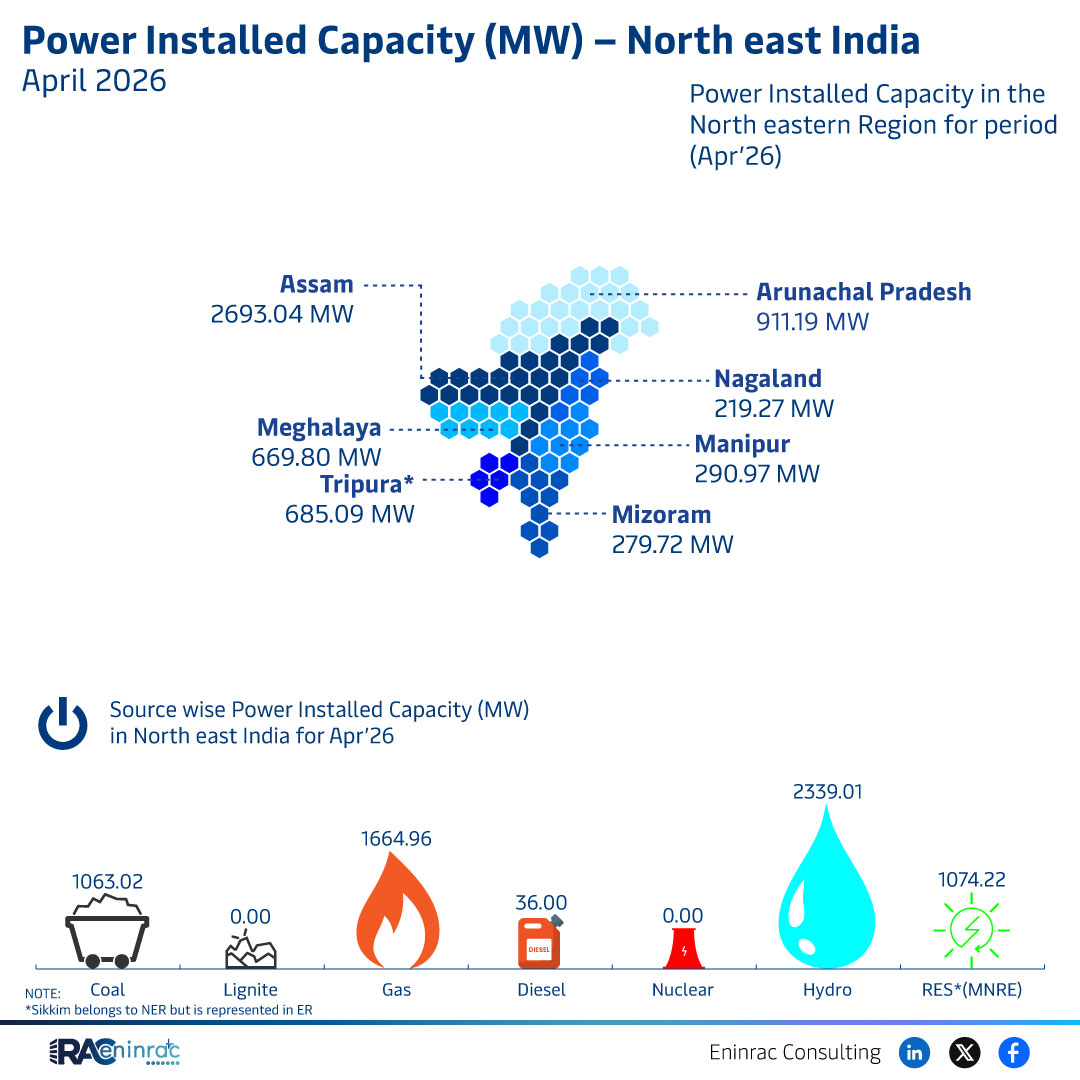
Which states lead in installed capacity and what energy sources dominate the mix? The data shows that Assam holds the largest capacity at 2,693.04 MW, followed by Arunachal Pradesh with 911.19 MW. Hydro and renewable sources dominate, while coal, lignite, gas, diesel, and nuclear contributions are recorded as zero for most states, indicating a strong shift toward clean energy in the region.
State‑wise Capacity Comparison
Assam’s 2,693.04 MW far exceeds the capacities of neighboring states such as Nagaland (219.27 MW) and Mizoram (279.72 MW). Meghalaya and Manipur each report around 670 MW, while Tripura contributes 290.97 MW. Sikkim, although part of the North Eastern Region, is listed separately and shows no installed capacity in this dataset. The stark contrast between Assam’s large hydro‑based portfolio and the modest figures of smaller states underscores uneven development and investment opportunities.
Impact on Sectors and Industries
The predominance of hydro and renewable energy sources influences several sectors. Utilities benefit from lower fuel costs and reduced emissions, while construction firms see demand for dam upgrades and transmission links. Investors are attracted to green projects, and policymakers can leverage the data to prioritize grid integration and storage solutions. Consumers ultimately gain from more reliable and environmentally friendly electricity supply.
Key Takeaways
- Assam leads the region with over 2,600 MW of installed capacity.
- Hydro and renewable sources account for the entire reported capacity, with no fossil‑fuel generation recorded.
- Arunachal Pradesh is the second‑largest contributor, highlighting its growing hydro potential.
- Smaller states such as Nagaland, Mizoram, and Tripura have capacities below 300 MW, indicating room for expansion.
- The data reflects a clear regional shift toward clean energy and away from coal, gas, and nuclear.
- Policy focus on transmission upgrades and storage will be critical to harness the full potential of the region’s renewable assets.
FAQs
What is the total installed capacity for North East India in April 2026?
The combined capacity across the eight states totals approximately 5,000 MW, with Assam contributing the largest share.
Which energy source dominates the region’s power mix?
Hydro and other renewable sources dominate, with zero reported capacity from coal, gas, diesel, nuclear, or lignite.
Why does Sikkim not appear in the capacity figures?
Sikkim is part of the North Eastern Region but is listed separately in the source document, resulting in no capacity data within this table.
How can investors use this data?
Investors can identify high‑growth opportunities in hydro projects, transmission upgrades, and renewable storage solutions, especially in states with lower existing capacity.
What policy actions are recommended based on the data?
Policymakers should prioritize grid integration, incentivize renewable project development in smaller states, and support financing mechanisms for hydro expansion.