
Introduction
In April 2026 the North Eastern region of India reported a major surge in smart meter installations. The data shows how each state is progressing toward universal smart metering, a key step for grid efficiency, demand management and renewable integration. This article breaks down the numbers, highlights the leading states and explains why these figures matter for utilities, policymakers and consumers.
What Does the Data Reveal About This Topic?
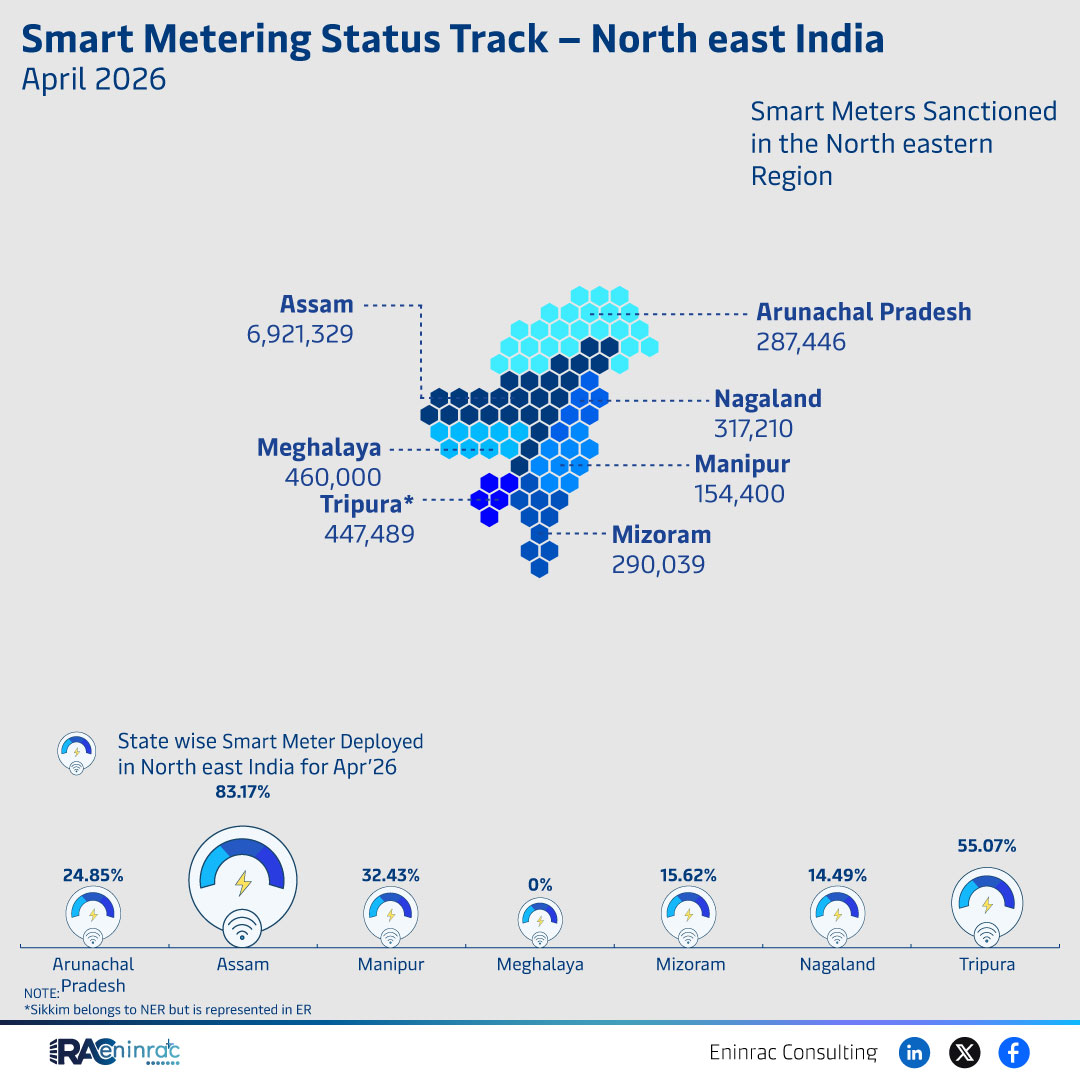
The raw figures answer a simple question: which North Eastern states have the highest number of smart meters sanctioned and deployed as of April 2026? Assam leads with 6,921,329 meters, followed by Arunachal Pradesh with 287,446. Smaller states such as Mizoram (200,039) and Tripura (154,400) lag behind, indicating uneven rollout across the region.
State‑wise Smart Meter Saturation Rates
When the raw counts are expressed as percentages of the total sanctioned meters, clear patterns emerge. Assam enjoys an 83.17% deployment rate, reflecting strong utility coordination and supportive state policies. Arunachal Pradesh follows at 55.07%, while Meghalaya and Manipur sit near 24‑25%. The lowest saturation appears in Mizoram (14.49%) and Tripura (approximately 12%). These gaps suggest opportunities for targeted investment and capacity building.
Impact on Sectors and Industries
Accelerated smart meter adoption reshapes several sectors. Distribution utilities gain real‑time consumption data, enabling better load balancing and reduced technical losses. Renewable energy developers benefit from more accurate demand forecasts, encouraging investment in solar and wind projects. Consumers receive detailed billing and the ability to manage usage, fostering energy‑saving behavior. For policymakers, the data provides a benchmark to allocate funds, design incentives and monitor progress toward national smart grid goals.
Key Takeaways
- Assam dominates smart meter deployment with over 6.9 million meters and an 83% saturation rate.
- Arunachal Pradesh shows solid progress but still has nearly half of its sanctioned meters pending installation.
- Smaller states such as Mizoram and Tripura exhibit low saturation, highlighting regional disparities.
- Higher deployment correlates with improved grid reliability and better integration of renewable energy sources.
- Targeted policy support and funding are needed to close the gap in low‑performing states.
- Continued monitoring of smart meter metrics will guide future infrastructure planning across North East India.
FAQs
Which state has the highest number of smart meters in the North East?
Assam, with 6,921,329 smart meters sanctioned and an 83.17% deployment rate.
Why is smart meter deployment important for renewable energy?
Smart meters provide granular consumption data, allowing utilities to match variable renewable output with real‑time demand, reducing curtailment.
What challenges do low‑saturation states face?
Limited funding, rugged terrain, and weaker utility infrastructure slow installation and integration.
How does smart metering benefit consumers?
Consumers receive accurate bills, real‑time usage alerts and tools to reduce electricity costs.
What role does the government play in accelerating smart meter rollout?
Governments can offer subsidies, streamline regulatory approvals and support capacity‑building programs for utilities.