
Introduction
April 2026 marks a pivotal moment for smart metering in North India. State utilities and regulators have released the latest deployment figures, showing how many smart meters have been sanctioned, installed and are operational across the region. Understanding these numbers helps policymakers, investors and consumers gauge progress toward a more efficient, data‑driven electricity grid.
What Does the Data Reveal About This Topic?
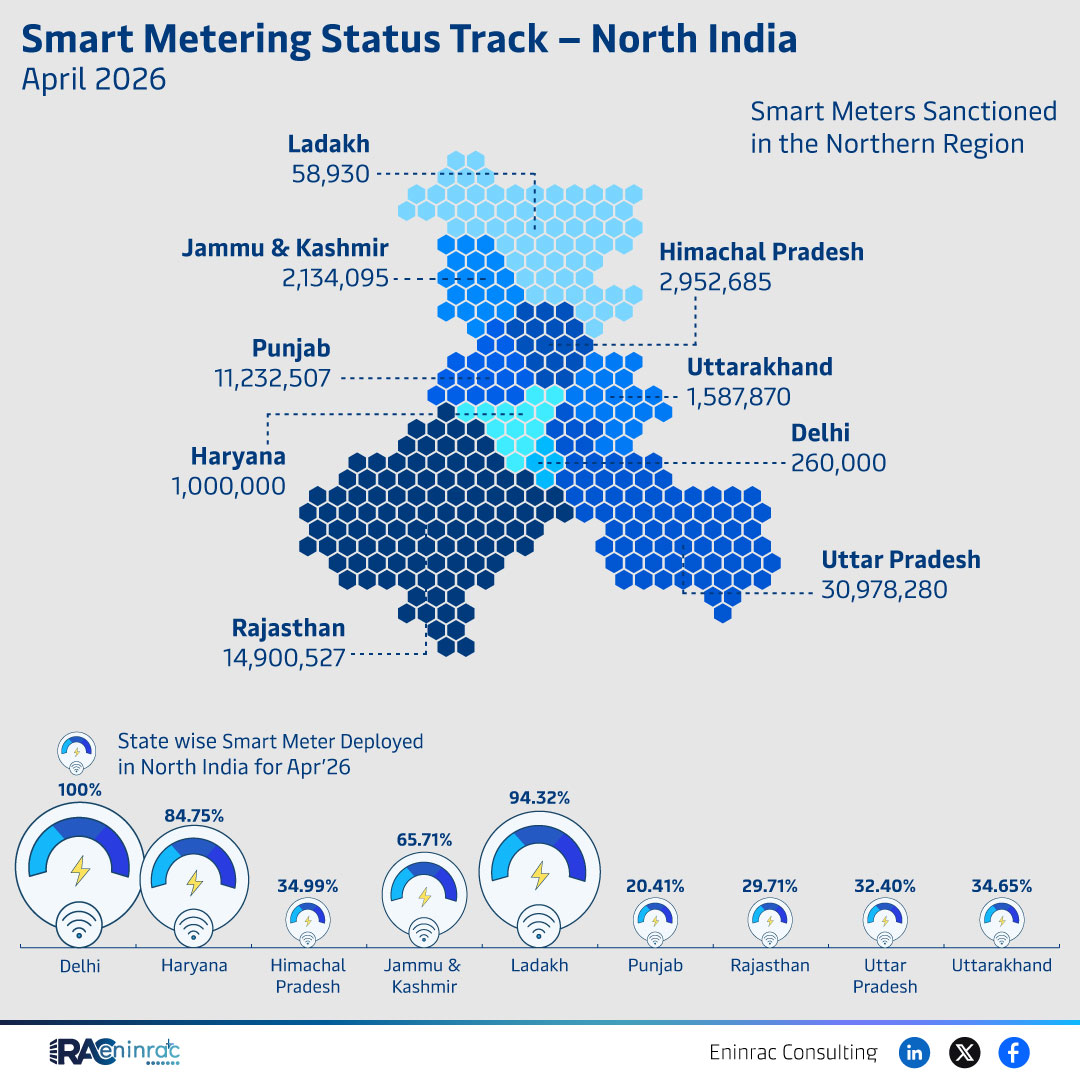
The data answers a key question: which North Indian states are leading smart meter adoption and where does the gap remain? Overall, the region shows strong growth, but disparities persist. Uttar Pradesh tops the list with over 30 million meters, while smaller states such as Himachal Pradesh report under three million.
State‑wise Smart Meter Comparison
When the numbers are compared side by side, Uttar Pradesh’s 30,978,280 meters dwarf the 2,134,095 sanctioned in Himachal Pradesh and the 14,900,527 in Rajasthan. Punjab and Haryana show moderate progress with roughly 1.2 million and 260,000 meters respectively. Ladakh, despite its remote terrain, has a modest 58,930 meters sanctioned, highlighting logistical challenges. The percentage of total sanctioned meters that are actually deployed varies, with states like Delhi and Jammu & Kashmir reporting higher deployment ratios than the larger, more populous states.
Impact on Sectors and Industries
Smart meter rollout influences several sectors. Utilities gain real‑time consumption data, enabling demand‑side management and reducing losses. Equipment manufacturers see increased orders for meters, communication modules and analytics platforms. Financial institutions find new investment opportunities in grid modernization projects. For consumers, accurate billing and the ability to monitor usage in real time promote energy‑saving behavior.
Key Takeaways
- Uttar Pradesh leads North India with nearly 31 million smart meters, accounting for the bulk of regional deployment.
- Rajasthan and Punjab show solid mid‑range adoption, while Himachal Pradesh and Ladakh lag behind.
- Overall deployment percentages suggest that many sanctioned meters remain to be installed, indicating room for accelerated rollout.
- Smart meters are driving operational efficiency for utilities and creating market demand for technology providers.
- Consumers benefit from transparent billing and the ability to manage energy use through smart‑meter data.
- Policymakers must address logistical and funding challenges in remote states to achieve uniform coverage.
FAQs
Which state has the highest number of smart meters in North India?
Uttar Pradesh, with over 30 million meters installed as of April 2026.
Why does Ladakh have fewer smart meters?
Remote geography, harsh climate and limited grid infrastructure make large‑scale installation more difficult.
How do smart meters benefit consumers?
They provide accurate billing, real‑time usage data and enable users to adjust consumption to lower costs.
What challenges remain for full smart meter coverage?
Key challenges include funding gaps, supply chain constraints, and the need for robust communication networks in rural areas.
Are there investment opportunities in smart meter projects?
Yes, the growing demand for meters, data analytics and communication services creates attractive prospects for investors and technology firms.