
Introduction
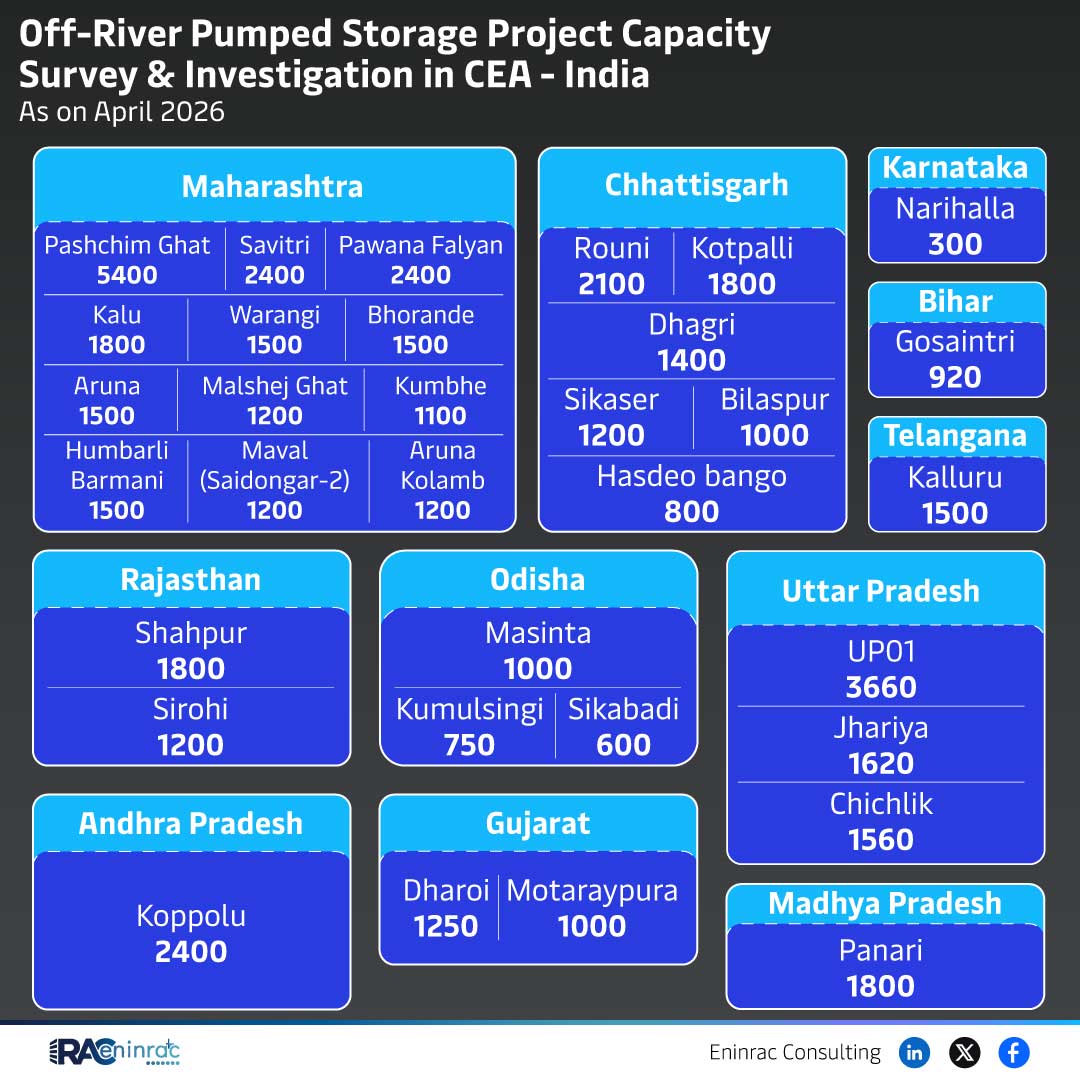
This page presents a concise analysis of off‑river pumped storage project capacities reported up to April 2026. Pumped storage is a critical component of India’s renewable energy mix, providing grid stability and peak‑load management. Readers will discover the major projects, regional distribution, and the implications for energy planning.
What Does the Data Reveal About This Topic?
The data shows that several states host multiple pumped storage sites with capacities ranging from 600 MW to 2,400 MW. The highest individual capacity recorded is 2,400 MW, while the most common size falls between 1,200 MW and 1,500 MW. This indicates a strong focus on medium‑to‑large scale installations across the country.
Regional Capacity Distribution Highlights
When comparing states, Madhya Pradesh and Telangana each list projects of 2,400 MW, suggesting a strategic emphasis on high‑capacity storage in central and southern regions. Rajasthan, Uttar Pradesh and Bihar feature capacities between 750 MW and 1,800 MW, reflecting a balanced approach to regional grid support. Smaller projects of 600 MW appear in Sirohi and other locations, indicating targeted support for localized demand spikes.
Impact on Sectors and Industries
Off‑river pumped storage influences several sectors. Power generators gain flexibility to store excess renewable output, reducing curtailment. Transmission operators benefit from smoother load curves, lowering the need for costly upgrades. Investors see lower risk profiles for renewable portfolios, while policymakers can meet renewable targets without compromising reliability. Consumers ultimately enjoy more stable electricity prices and fewer outages.
Key Takeaways
- India hosts a diverse range of pumped storage capacities from 600 MW to 2,400 MW.
- Madhya Pradesh and Telangana lead with the largest single‑project capacities.
- Medium‑scale projects (1,200‑1,500 MW) dominate the landscape, indicating a preference for balanced investment.
- Regional distribution supports grid stability across both high‑demand and remote areas.
- Off‑river pumped storage enhances renewable integration and reduces reliance on fossil‑fuel peaking plants.
- Stakeholders across generation, transmission and policy benefit from the flexibility offered by these projects.
FAQs
What is off‑river pumped storage?
It is a type of hydroelectric energy storage where water is pumped to an elevated reservoir during low demand and released to generate power during peak demand.
Why are capacities listed in megawatts (MW)?
Megawatts measure the maximum power output a storage facility can deliver to the grid at any moment.
Which Indian states have the highest pumped storage capacity?
Madhya Pradesh and Telangana each report projects of 2,400 MW, the highest capacities in the dataset.
How does pumped storage support renewable energy goals?
It stores excess solar or wind generation for later use, reducing curtailment and enabling a higher share of renewables in the energy mix.
Can off‑river pumped storage be expanded in the future?
Yes, the technology is scalable and can be added to existing reservoirs or new sites, offering flexibility for future grid needs.