
Introduction
India’s on‑river pumped storage projects are gaining momentum as the country strives to balance growing electricity demand with renewable integration. As of April 2026, several key projects are under construction across Karnataka, Andhra Pradesh, and Tamil Nadu, each contributing significant megawatt capacity to the national grid. This article examines the latest capacity figures, compares regional contributions, and explains why these developments matter for energy security, grid stability, and investment opportunities.
What Does the Data Reveal About This Topic?
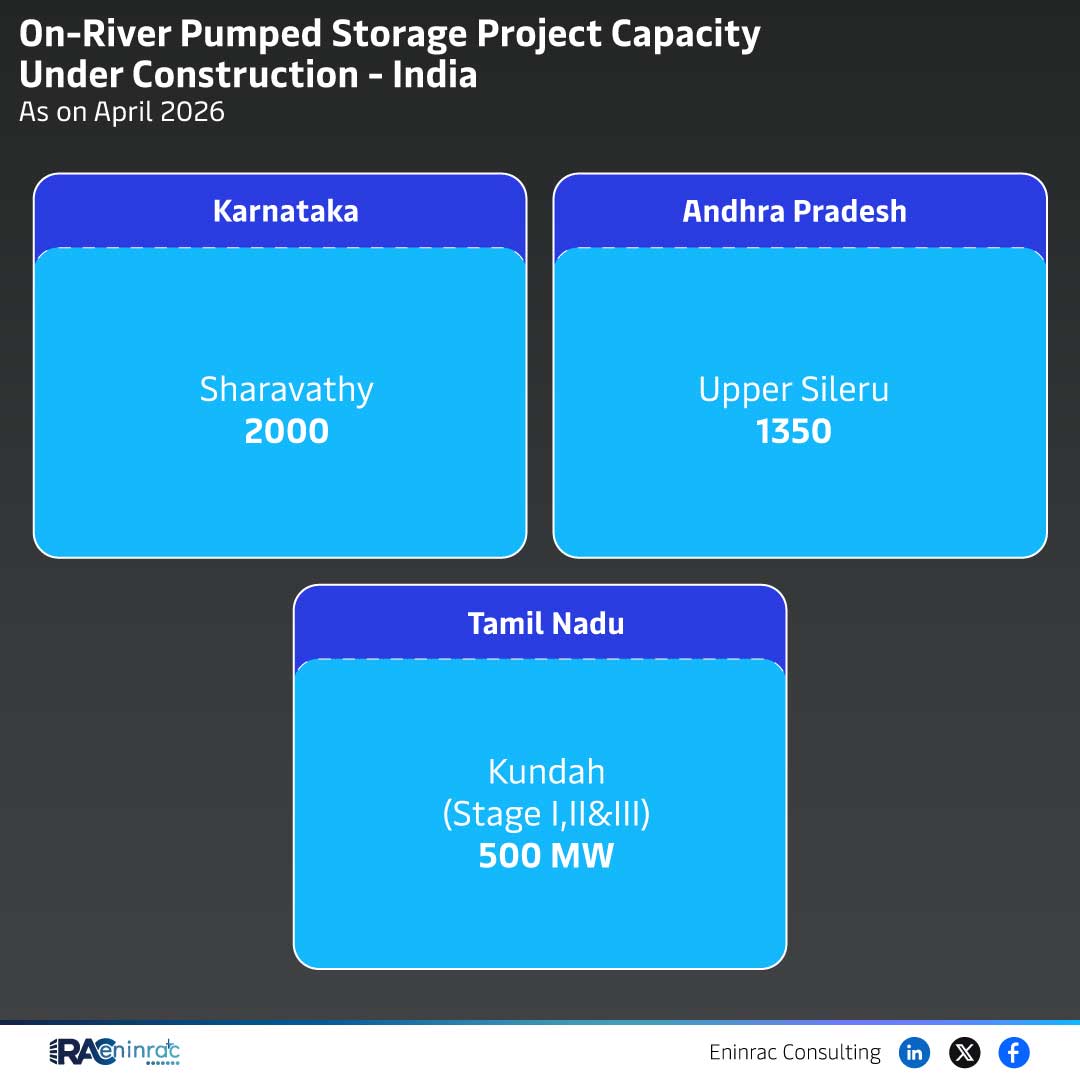
The raw data shows that the Sharavathy project in Karnataka adds 2,000 MW, the Upper Sileru project in Andhra Pradesh contributes 1,350 MW, and the Kundah project (Stages I, II & III) in Tamil Nadu is also under construction, though its exact capacity is not listed. The insight is clear: Karnataka leads with the largest single‑project capacity, while Andhra Pradesh follows, highlighting a regional focus on leveraging river corridors for pumped storage.
Regional Capacity Comparison
When comparing the three states, Karnataka’s Sharavathy stands out with a 2,000 MW capacity, making it the most ambitious on‑river pumped storage effort in the country. Andhra Pradesh’s Upper Sileru, at 1,350 MW, represents a substantial but smaller contribution. Tamil Nadu’s Kundah project, spread across three stages, suggests a phased approach that may eventually rival the other two, but current data does not specify its total output. This distribution indicates that southern India is becoming a hub for pumped storage, driven by favorable topography, river flow, and state policies supporting renewable integration.
Impact on Sectors and Industries
On‑river pumped storage directly supports the power generation sector by providing large-scale, fast‑response energy storage that can absorb excess renewable generation and release power during peak demand. For the transmission sector, these projects reduce the need for costly grid upgrades by smoothing load fluctuations. Investors see lower risk profiles because pumped storage offers long‑term, predictable revenue streams. Policymakers benefit from a tool that helps meet national renewable targets while ensuring grid reliability. Consumers ultimately gain from more stable electricity prices and reduced reliance on fossil‑fuel peaking plants.
Key Takeaways
- Karnataka’s Sharavathy project leads with 2,000 MW capacity, the highest among listed on‑river pumped storage projects.
- Andhra Pradesh contributes 1,350 MW through the Upper Sileru project, reinforcing the state’s role in energy storage.
- Tamil Nadu’s multi‑stage Kundah project indicates a phased expansion strategy, though total capacity remains undisclosed.
- Southern India is emerging as a concentrated region for pumped storage development due to suitable river sites and supportive policies.
- Pumped storage enhances grid stability, supports renewable integration, and offers attractive investment opportunities.
- These projects help India progress toward its renewable energy and climate goals while providing reliable power to consumers.
FAQs
What is on‑river pumped storage?
On‑river pumped storage uses a river’s natural flow to move water between two reservoirs at different elevations, storing energy during low demand and generating power when needed.
Why is Karnataka’s Sharavathy project significant?
With a planned 2,000 MW capacity, Sharavathy will be one of the largest pumped storage facilities in India, boosting regional grid flexibility and renewable integration.
How does pumped storage support renewable energy?
It stores excess solar or wind power generated during off‑peak periods and releases it during peak demand, smoothing variability and reducing curtailment.
What are the expected benefits for consumers?
Consumers can expect more stable electricity prices, fewer outages, and reduced reliance on expensive fossil‑fuel peaking plants.
When are these projects expected to be operational?
All listed projects are under construction as of April 2026, with commissioning timelines varying by state and project stage, typically ranging from 2027 to 2030.