
Introduction
The Government of India’s PM E-DRIVE scheme is a flagship initiative aimed at accelerating the adoption of electric vehicles (EVs) across the country. By allocating substantial funds to specific EV segments, the programme seeks to reduce carbon emissions, lower dependence on fossil fuels, and stimulate domestic manufacturing. This article examines the latest scheme outlay data released up to 19 March 2026, explains what the numbers mean, and outlines the implications for stakeholders in the EV ecosystem.
What Does the Data Reveal About This Topic?
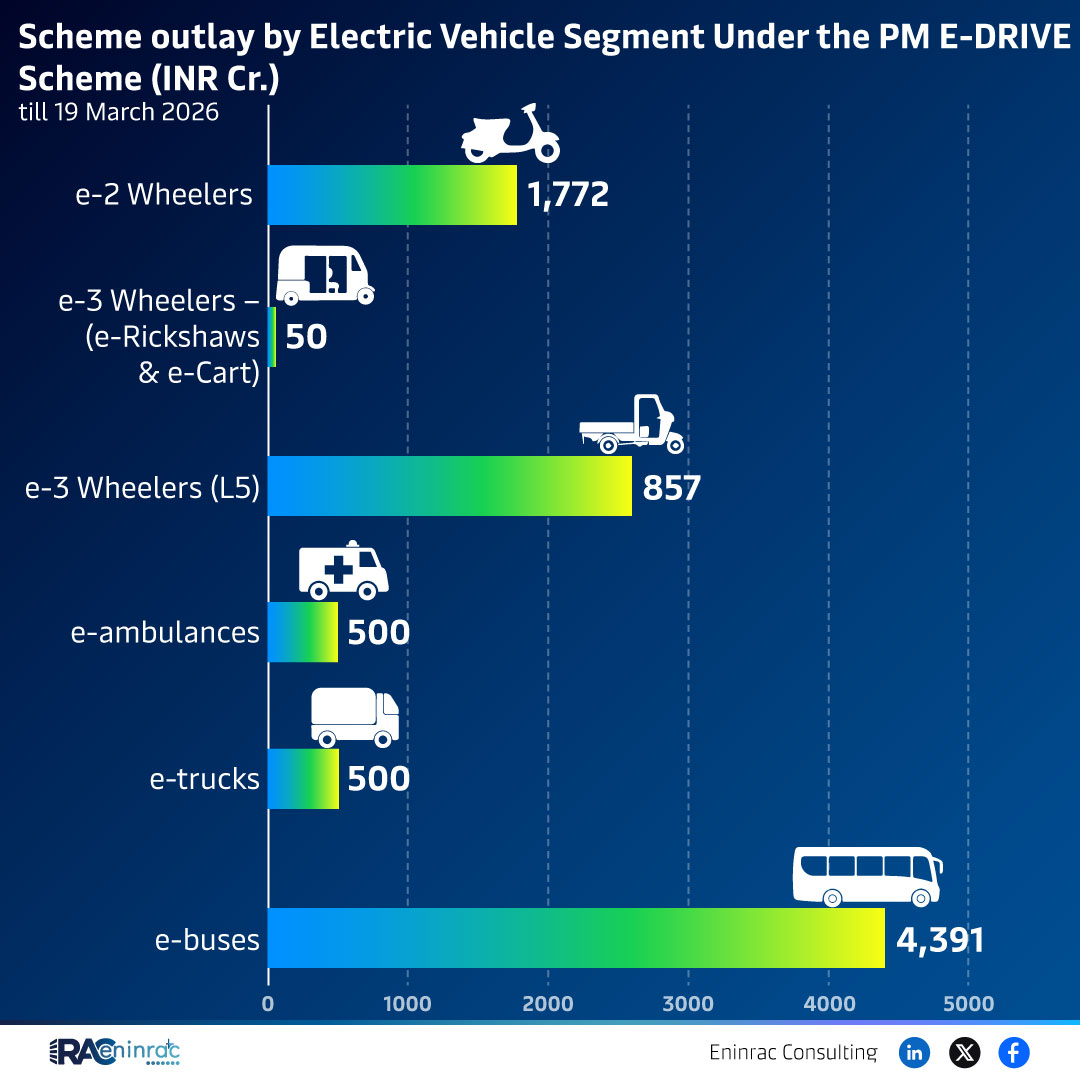
How much funding has the PM E-DRIVE scheme earmarked for each EV category, and why does the allocation differ? The data shows INR 1,000 crore for e‑2 wheelers, INR 2,000 crore for e‑3 wheelers serving e‑rickshaws and e‑carts, INR 3,000 crore for premium L5 e‑3 wheelers, and INR 4,000 crore for e‑ambulances. The tiered distribution reflects the government’s priority on higher‑value, passenger‑focused electric vehicles that can deliver larger emissions reductions and promote advanced technology development.
Funding Distribution Across EV Segments
When comparing the four categories, e‑ambulances receive the highest allocation at INR 4,000 crore, underscoring the policy focus on critical services that benefit directly from zero‑emission mobility. L5 e‑3 wheelers, positioned as more sophisticated three‑wheelers with enhanced safety and comfort, are allocated INR 3,000 crore, indicating a push towards upscale urban transport solutions. The e‑rickshaw and e‑cart segment receives INR 2,000 crore, supporting the most common low‑cost EVs used in informal transport and last‑mile logistics. Finally, e‑2 wheelers, primarily electric bicycles and scooters, are allotted INR 1,000 crore, reflecting a baseline support level aimed at encouraging personal mobility while balancing budget constraints.
Impact on Sectors and Industries
These funding allocations have far‑reaching effects on multiple sectors. The automotive manufacturing industry will see increased demand for electric powertrains, battery packs, and lightweight chassis components, prompting investments in domestic supply chains. Service providers such as charging infrastructure operators will benefit from higher vehicle penetration, especially in the e‑ambulance and L5 segments that require reliable, rapid‑charge stations. Investors are likely to view the scheme as a risk‑mitigating signal, attracting capital towards EV start‑ups and green finance instruments. Policymakers can leverage the data to fine‑tune subsidies, tax incentives, and regulatory standards that align with the funding priorities. Consumers, particularly fleet owners and public service providers, will gain access to subsidised vehicles, reducing operating costs and improving service quality.
Key Takeaways
- PM E-DRIVE allocates a total of INR 10,000 crore across four EV categories by March 2026.
- E‑ambulances receive the largest share, highlighting emphasis on essential public services.
- L5 e‑3 wheelers are positioned as premium urban transport, supported by significant funding.
- E‑rickshaws and e‑carts get moderate funding to boost low‑cost mobility and logistics.
- E‑2 wheelers receive the smallest allocation, reflecting a baseline support strategy.
- The tiered funding approach aims to balance environmental impact, technology advancement, and market readiness.
FAQs
What is the total outlay of the PM E-DRIVE scheme up to March 2026?
The scheme totals INR 10,000 crore across all EV segments.
Why do e‑ambulances receive the highest funding?
Because they provide critical emergency services where zero‑emission mobility offers clear public‑health and operational benefits.
How does the funding affect battery manufacturers?
Increased vehicle purchases drive demand for batteries, encouraging domestic production and technology upgrades.
Will private investors benefit from this scheme?
Yes, the clear government commitment reduces investment risk and opens opportunities in EV manufacturing, charging infrastructure, and related services.
When can manufacturers expect to receive the allocated funds?
Funds are released in phases aligned with project milestones and compliance with scheme guidelines, typically within the fiscal year following approval.