
Introduction
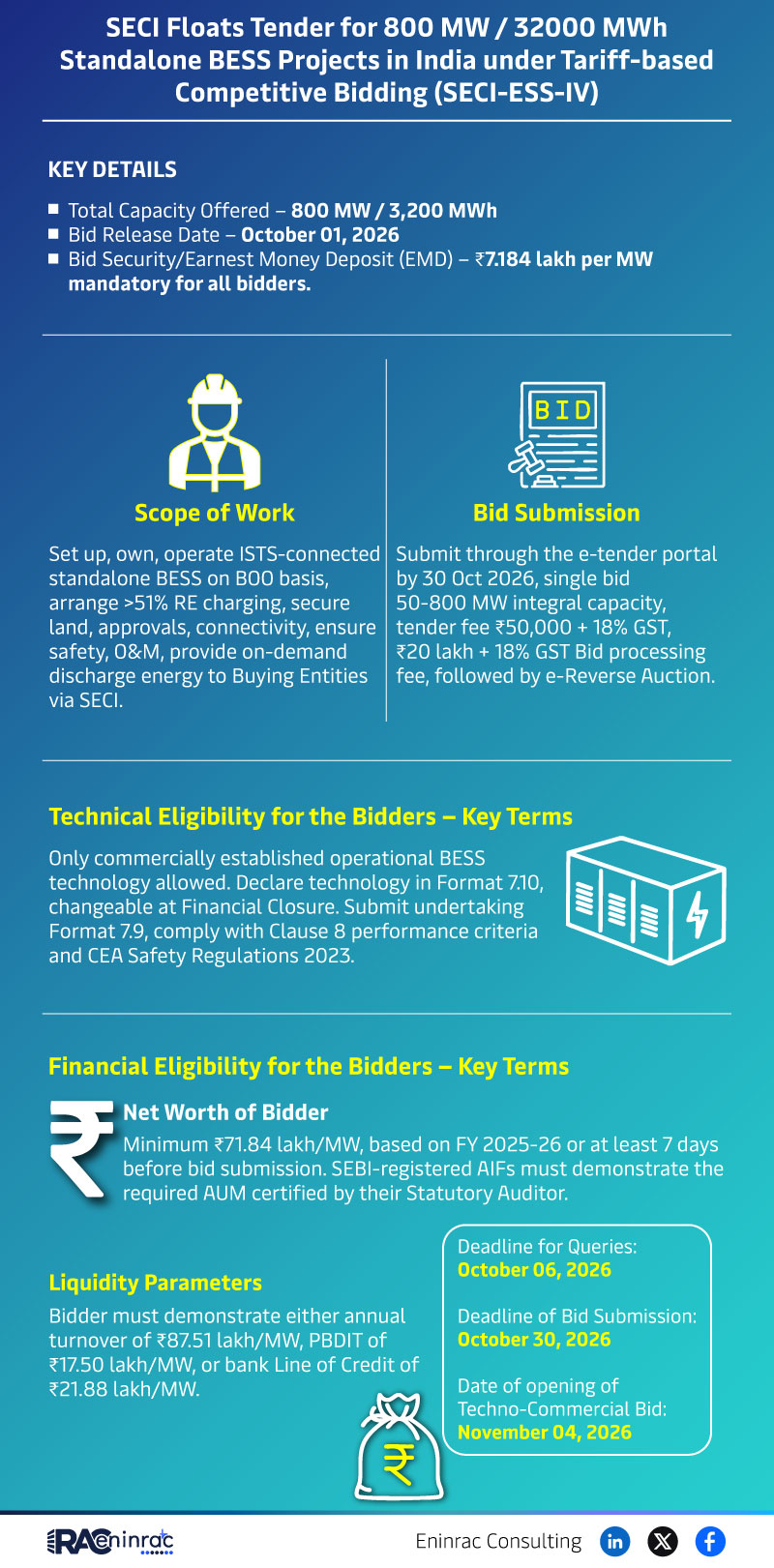
On October 1 2026 the Solar Energy Corporation of India (SECI) launched a major tender for standalone battery energy storage system (BESS) projects totaling 800 MW of power and 3,200 MWh of energy storage. The tender is part of SECI’s ESS‑IV competitive bidding round and targets commercial developers who can deliver grid‑connected storage on a build‑own‑operate (BOO) basis. Participants must arrange 51 percent renewable energy charging, secure land and connectivity, and provide on‑demand discharge to buying entities. Understanding the key dates, financial requirements and technical eligibility is essential for any bidder aiming to capture a share of this growing market.
What Does the Data Reveal About This Topic?
The data shows that SECI is offering a total capacity of 800 MW with an energy storage requirement of 3,200 MWh, meaning each megawatt must be paired with four megawatt‑hours of battery capacity. Bid security is set at 27.184 lakh rupees per megawatt, and the bid submission deadline is October 30 2026 after a reverse auction phase. Financial eligibility demands a net‑worth of at least 271.84 lakh per megawatt, plus either a turnover of 87.51 lakh per megawatt, PBDIT of 217.50 lakh per megawatt or a bank line of credit of 221.88 lakh per megawatt. Technical eligibility restricts bidders to commercially established BESS technologies and requires submission of specific formats at financial closure.
Key Tender Specifications and Eligibility Criteria
The scope of work requires the successful bidder to set up, own and operate an ISTS‑connected standalone BESS on a BOO basis, arrange at least 51 percent renewable energy charging, obtain land clearances, ensure grid connectivity and maintain safety standards throughout operation. Bids must be submitted through the SECI e‑tender portal by 30 October 2026 with a single bid ranging from 50 MW to 800 MW. The tender fee is Rs 50,000 plus 18 percent GST, and an additional processing fee of Rs 20 lakh plus GST is payable before the reverse auction begins. Technically, only proven commercial BESS technologies are accepted; bidders must declare the technology in Format 7.10 and sign an undertaking in Format 7.9. Financially, bidders need a minimum net‑worth of 271.84 lakh per megawatt, and must meet one of the liquidity parameters—annual turnover, PBDIT or bank line of credit—specified in the tender document.
Impact on Sectors and Industries
The introduction of 800 MW of standalone BESS capacity is set to strengthen India’s renewable integration, provide ancillary services to the grid and reduce reliance on fossil‑fuel peaking plants. Power generators can leverage stored energy to smooth intermittency of solar and wind assets, while distribution companies gain a flexible resource for peak shaving and reliability improvement. Investors see a clear revenue stream through the on‑demand discharge model, and policymakers acquire an actionable tool to meet national storage targets. The tender also creates demand for land acquisition, engineering services, battery manufacturers and O&M specialists, stimulating employment across the clean‑energy ecosystem.
Key Takeaways
- 800 MW (3,200 MWh) standalone BESS capacity offered
- Bid security set at Rs 27.184 lakh per MW
- Financial eligibility requires net‑worth of 271.84 lakh per MW
- Technical eligibility limited to commercially proven BESS technologies
- Submission deadline and reverse auction conclude by 30 Oct 2026
- BOO model mandates 51 percent renewable energy charging
FAQs
What is the total capacity and energy storage size of the SECI BESS tender?
The tender offers 800 MW of power capacity paired with 3,200 MWh of battery storage.
When must bids be submitted and what is the fee structure?
Bids are due by 30 October 2026. A tender fee of Rs 50,000 plus 18 percent GST and a processing fee of Rs 20 lakh plus GST are required before the reverse auction.
What are the financial eligibility criteria for bidders?
Bidders need a net‑worth of at least 271.84 lakh per MW and must meet either turnover, PBDIT or bank line of credit thresholds as defined in the tender.
Which technical requirements must a BESS project meet?
Only commercially established BESS technologies are accepted, with technology declaration in Format 7.10 and an undertaking in Format 7.9 at financial closure.
How does the BOO model affect renewable energy charging?
The BOO model obliges the developer to ensure at least 51 percent of the stored energy comes from renewable sources, aligning the project with clean‑energy goals.