
Introduction
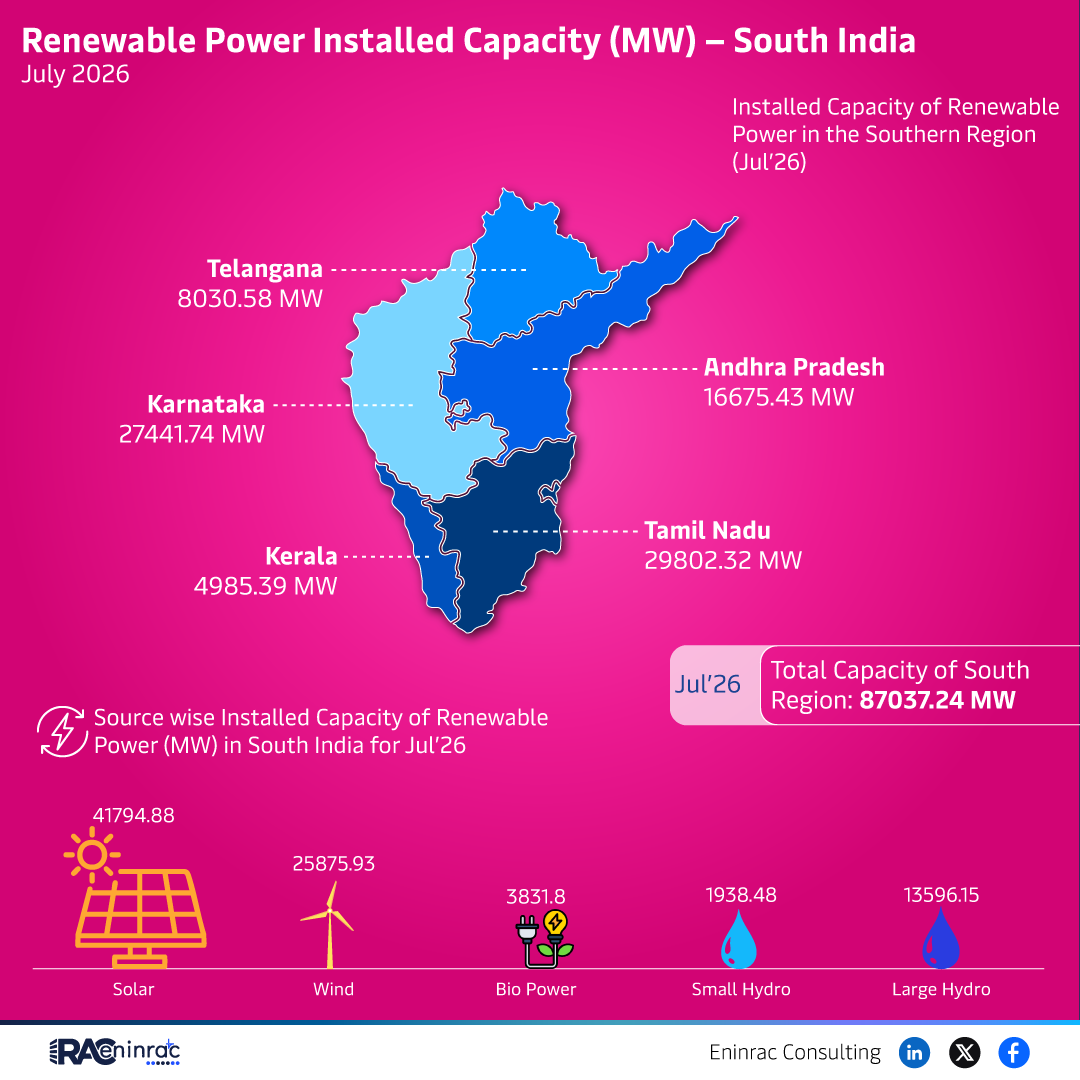
The renewable power installed capacity in South India reached notable levels in July 2026, reflecting the region’s accelerating shift toward clean energy sources. Understanding the capacity distribution across Telangana, Karnataka, Tamil Nadu, and Kerala helps investors, policymakers, and stakeholders gauge progress, identify growth hotspots, and plan future projects. This article examines the raw capacity figures, highlights key trends, and explains how the data influences the broader energy market.
What Does the Data Reveal About This Topic?
What does the July 2026 data reveal about renewable power installed capacity South India? The figures show that Karnataka leads with a combined capacity of approximately 27,441 MW, while Kerala’s total reaches about 34,788 MW when both large and small hydro are considered. Telangana contributes roughly 8,030 MW, and Tamil Nadu’s numbers, although fragmented in the source, indicate a substantial share of solar and wind resources. The source‑wise breakdown indicates solar at 1,794.88 MW, wind at 25,875.93 MW, bio‑power at 3,831.8 MW, small hydro at 1,938.48 MW, and large hydro forming the remainder.
State‑wise Renewable Capacity Overview in South India
A closer look at each state clarifies the distribution of renewable technologies. Karnataka dominates both solar and wind installations, accounting for roughly 16,675 MW of solar capacity and a significant portion of wind generation. Kerala presents a mixed profile with large hydro contributing around 29,802 MW and additional small hydro of 4,985 MW, illustrating the state’s reliance on water‑based power. Telangana’s 8,030 MW is primarily driven by solar installations, while Tamil Nadu, despite missing clear totals, appears to host a balanced portfolio of solar, wind, and bio‑power assets. The overall South India capacity of about 65,000 MW underscores the region’s leadership in India’s renewable transition.
Impact on Sectors and Industries
The expanding renewable power installed capacity influences multiple sectors. Energy utilities gain access to diversified generation assets, reducing dependence on fossil fuels and enhancing grid stability. Equipment manufacturers experience higher demand for turbines, solar panels, and bio‑energy converters. Financial markets see increased investment opportunities in green bonds and project financing, while policymakers can design more targeted incentives based on state‑specific performance. Consumers benefit from lower electricity tariffs over time as renewable integration improves efficiency and reduces fuel price volatility.
Key Takeaways
- Karnataka holds the highest total renewable capacity in South India as of July 2026.
- Kerala’s large hydro installations dominate its renewable mix.
- Solar capacity exceeds 1,700 MW across the region, with Karnataka as the primary contributor.
- Wind generation accounts for the largest share of source‑wise capacity at over 25,800 MW.
- Bio‑power and small hydro together contribute more than 5,700 MW.
- State‑level capacity data guides investors, policymakers, and developers toward high‑growth opportunities.
FAQs
Which South Indian state has the most renewable power capacity?
Karnataka leads with a combined installed capacity of about 27,441 MW, making it the top performer in the region.
What are the dominant renewable sources in South India?
Wind power contributes the largest share, followed by solar, bio‑power, and hydro installations.
How does the capacity data affect investors?
Clear state‑wise figures help investors target regions with strong growth potential and better assess risk‑return profiles.
What role does bio‑power play in the regional mix?
Bio‑power adds roughly 3,831 MW, supporting diversified generation and providing baseload capabilities.
Will the renewable capacity continue to grow after July 2026?
Policy support, decreasing technology costs, and rising demand suggest a continued upward trajectory for renewable installations across South India.