
Introduction
The July 2026 West India energy power requirement data provides a snapshot of how much electricity was needed across key states in the western region of India during the April‑July 2026 period. Understanding this demand is essential for utilities, policymakers, investors, and analysts because it influences generation planning, grid stability, and future infrastructure investments. This article breaks down the statewise MU (million units) figures, compares demand against supply, and highlights the implications for the power sector and related industries.
What Does the Data Reveal About This Topic?
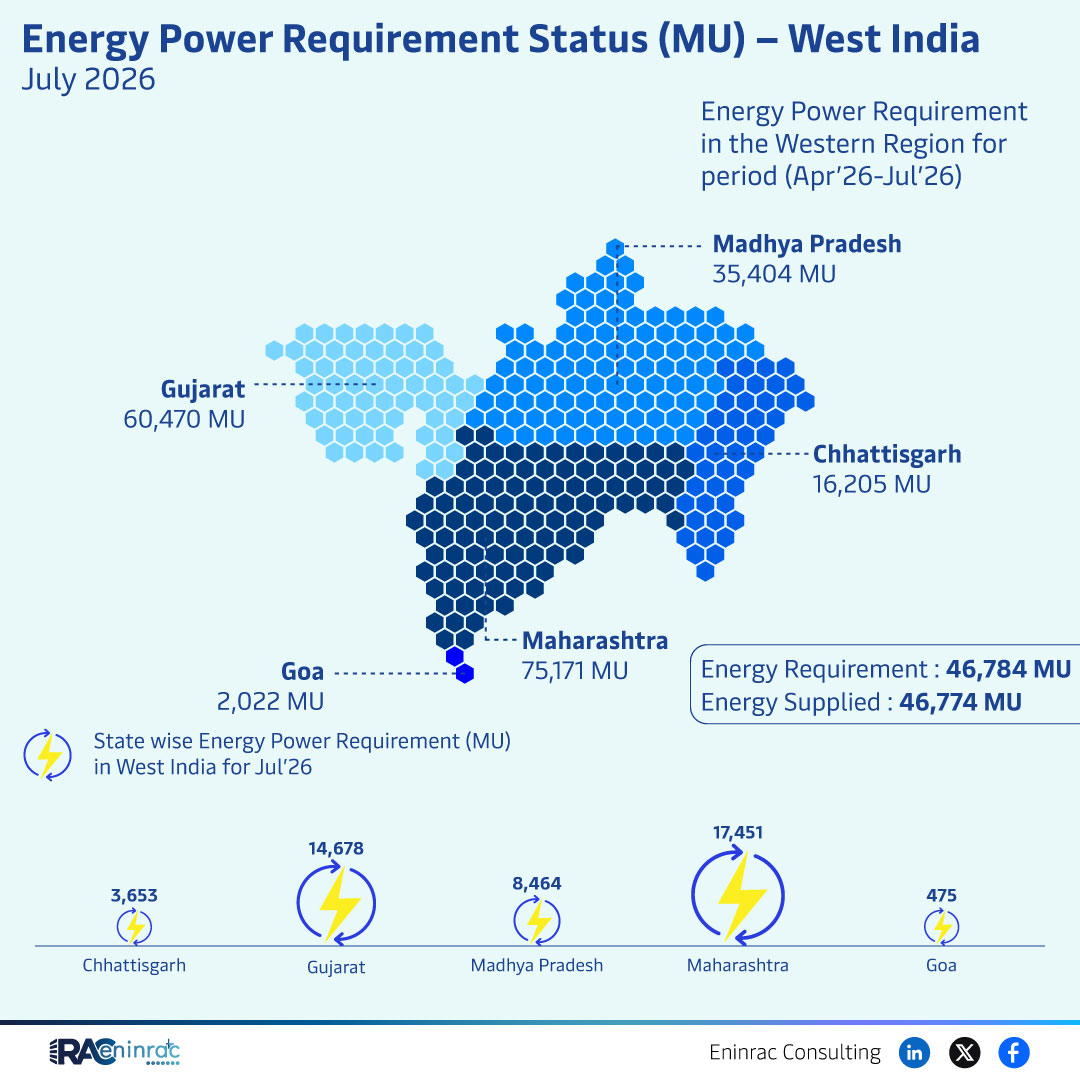
Does the July 2026 data show a balanced power market in West India? The numbers indicate that total energy requirement reached 46,784 MU while the supplied amount was 46,774 MU, leaving a marginal shortfall of just 10 MU. This near‑equilibrium suggests that the region managed to meet most of its demand, but the tight margin also points to potential stress points in high‑growth states where demand outpaces supply.
Statewise Energy Demand in West India for July 2026
When we look at the statewise breakdown, Gujarat leads with a demand of 60,470 MU, followed by Maharashtra at 75,171 MU, and Chhattisgarh at 16,205 MU. Goa’s demand is not explicitly listed, but the overall regional requirement totals 46,784 MU. The figures show a clear concentration of demand in the industrial and commercial hubs of Gujarat and Maharashtra, while smaller states exhibit comparatively lower consumption. This disparity reflects economic activity, industrial density, and population distribution across the western belt.
Impact on Sectors and Industries
The West India energy power requirement July 2026 influences several sectors. Power generators must align capacity additions with the high demand in Gujarat and Maharashtra, prompting investments in thermal, renewable, and hybrid plants. Transmission and distribution companies face the challenge of delivering reliable supply to densely populated corridors, which may drive upgrades to grid infrastructure. Industries such as manufacturing, IT services, and agriculture depend on stable electricity, so any shortfall could affect production output and profitability. Policymakers can use these insights to prioritize subsidies, fuel allocation, and renewable integration to sustain growth.
Key Takeaways
- Gujarat and Maharashtra dominate the West India electricity demand.
- Total regional requirement of 46,784 MU was nearly met by supply.
- A marginal shortfall of 10 MU highlights tight market conditions.
- High demand states may need accelerated generation capacity.
- Infrastructure upgrades are critical for reliable distribution.
- Data supports informed policy and investment decisions.
FAQs
What was the total energy requirement for West India in July 2026?
The region required 46,784 MU during the April‑July 2026 period.
How much electricity was actually supplied?
Supply reached 46,774 MU, leaving a shortfall of just 10 MU.
Which state had the highest demand?
Maharashtra recorded the highest demand at 75,171 MU.
Why is the shortfall of 10 MU important?
Even a small shortfall can signal pressure on the grid and highlight the need for additional capacity or reserves.
How can this data help investors?
Investors can identify high‑growth markets, assess risk, and target generation or transmission projects where demand outpaces supply.