
Introduction
The Power Management Scheme (PMSG) aims to extend reliable electricity services to underserved households. As of June 2026, the scheme has recorded the number of households benefitted across several Eastern Indian states and union territories. Understanding this data helps policymakers, analysts, and the public gauge progress, allocate resources, and identify regions that require further attention. This article breaks down the latest figures, compares state performance, and discusses the broader impact on energy access and development.
What Does the Data Reveal About This Topic?
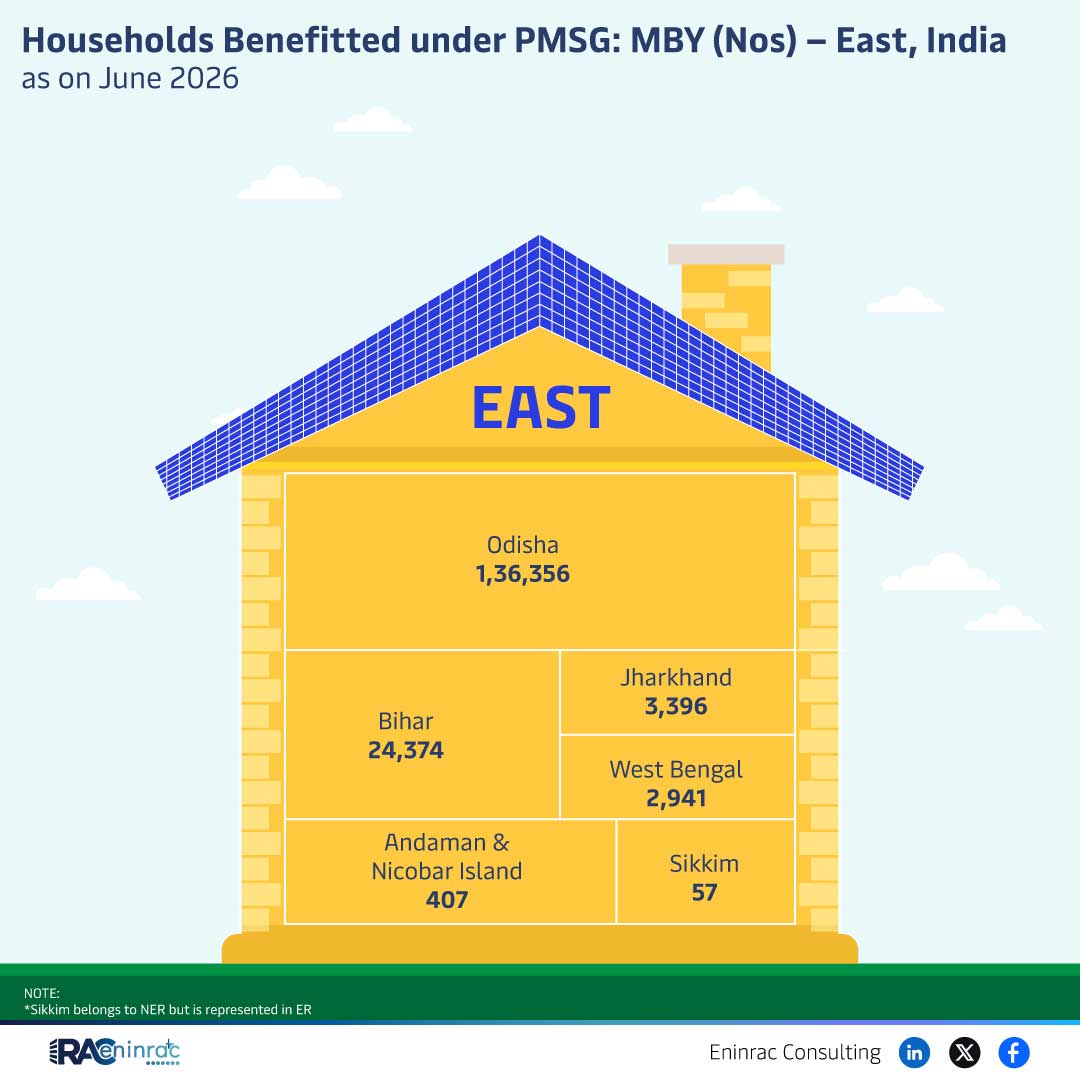
Does the June 2026 snapshot show uneven progress among Eastern states? The numbers indicate that Odisha leads with over 136,000 households connected, while smaller states such as Sikkim account for just a few hundred. Bihar, Jharkhand, West Bengal and the Andaman & Nicobar Islands also feature, each reflecting different scales of implementation. The disparity highlights both successful outreach and lingering gaps in electrification.
Statewise Comparison of PMSG Benefitted Households
When the figures are placed side by side, Odisha’s 136,356 households dominate the eastern region’s total. Bihar follows with 24,374 households, showing a moderate pace relative to its population size. Jharkhand contributes 3,396 households, and West Bengal adds 2,941 households, suggesting slower rollout in these areas. The remote union territory of Andaman & Nicobar Islands records a minimal count, while Sikkim registers 407 households, reflecting geographic challenges and smaller populations.
Impact on Sectors and Industries
Improved electricity access under PMSG influences multiple sectors. Rural agriculture benefits from reliable power for irrigation and processing, encouraging higher yields and value‑added products. Small‑scale manufacturing and cottage industries experience increased productivity, attracting modest investments. The service sector, especially education and health, sees enhanced outcomes as schools and clinics receive stable power. For investors, these trends signal emerging markets for renewable energy solutions and smart grid technologies.
Key Takeaways
- Odisha leads Eastern India with 136,356 households benefitted under PMSG.
- Bihar records the second‑largest figure at 24,374 households.
- Jharkhand and West Bengal each have less than 4,000 households connected.
- Sikkim’s 407 households demonstrate progress despite its mountainous terrain.
- Andaman & Nicobar Islands show the lowest count, highlighting logistical hurdles.
- The data underscores the need for targeted interventions in lagging states.
FAQs
What is the Power Management Scheme (PMSG)?
PMSG is a government initiative designed to expand reliable electricity supply to underserved rural and remote households across India.
Why does Odisha have the highest number of benefitted households?
Odisha’s extensive implementation programs, supportive state policies, and higher baseline demand have accelerated connections under PMSG.
How does household electrification affect local economies?
Access to electricity boosts agricultural productivity, enables small businesses, improves education outcomes, and attracts investment in renewable technologies.
What challenges remain for states like West Bengal and Jharkhand?
Issues include fragmented infrastructure, funding constraints, and terrain‑related difficulties that slow the pace of new connections.
Can private investors participate in PMSG projects?
Yes, the scheme encourages public‑private partnerships, especially for renewable energy integration, smart meters, and grid modernization.