
Introduction
The Power Minigrid Support Scheme (PMSG) has been a cornerstone of rural electrification in Northeast India. As of June 2026, the scheme reports substantial household coverage across the region. This article examines the latest beneficiary numbers, highlights state‑wise performance, and explains why these figures matter for policymakers, investors, and communities.
What Does the Data Reveal About This Topic?
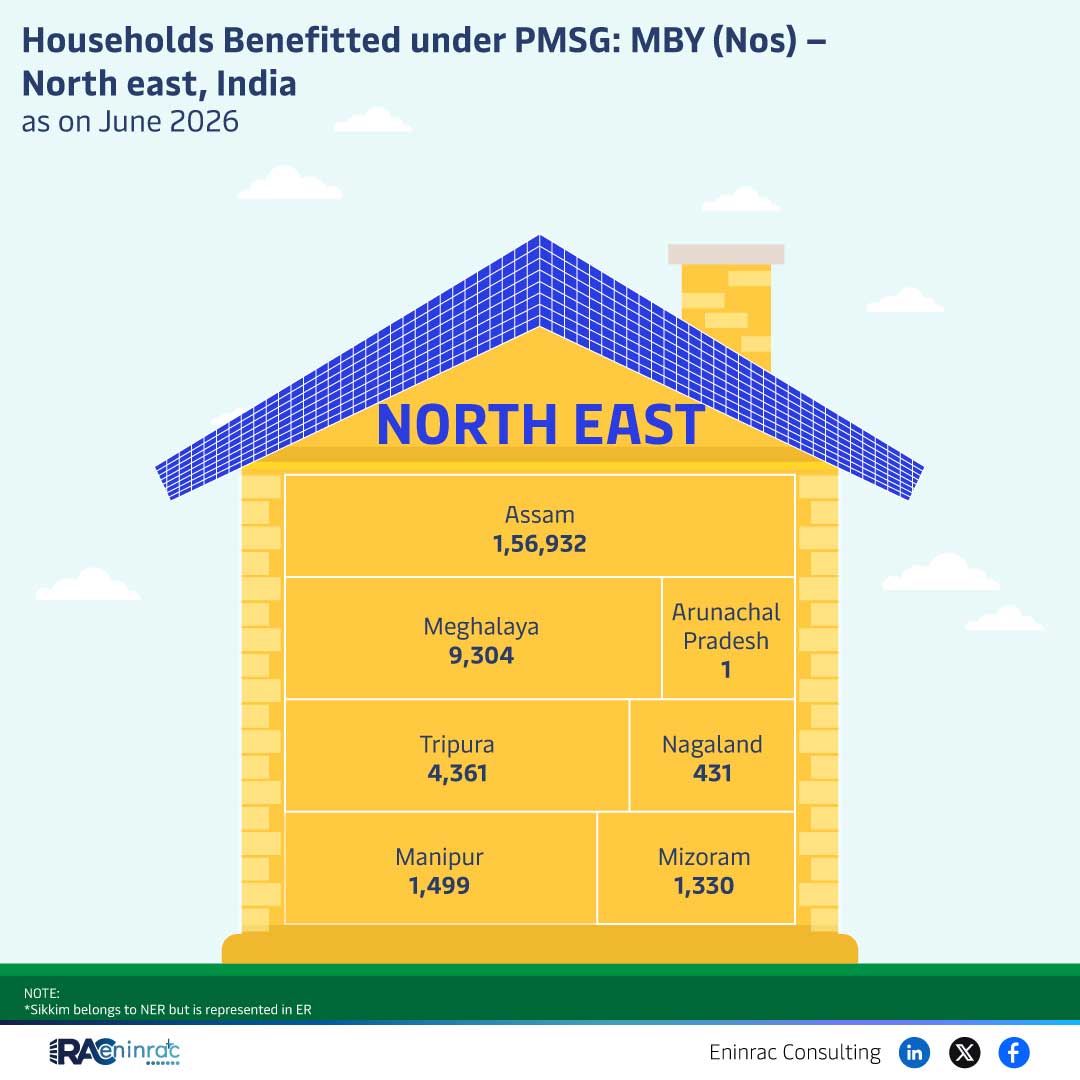
The data shows that Assam leads with 156,932 households connected under PMSG, while smaller states such as Tripura and Nagaland together account for 4,792 beneficiaries. Manipur and Mizoram report 1,499 and 1,330 households respectively. The uneven distribution points to varying implementation speeds and local demand, raising questions about resource allocation and project readiness.
Regional Breakdown of PMSG Household Reach
Assam’s high figure reflects aggressive rollout of mini‑grids and strong state‑level coordination. In contrast, Arunachal and Meghalaya lack published numbers, suggesting delays or reporting gaps. Tripura and Nagaland together add just under 5,000 households, indicating early‑stage projects or limited terrain accessibility. Manipur and Mizoram contribute modest yet significant numbers, showing steady progress despite logistical challenges in hilly terrain.
Impact on Sectors and Industries
Expanded electricity access drives growth in agriculture, small‑scale manufacturing, and digital services. Rural entrepreneurs can power equipment, schools gain reliable lighting, and health centers improve service delivery. For investors, the data signals emerging markets for renewable energy assets and grid‑extension services. Policymakers can use the numbers to prioritize funding, streamline approvals, and address gaps in states with low coverage.
Key Takeaways
- Assam dominates PMSG household beneficiaries with over 156,000 connections.
- Tripura, Nagaland, Manipur, and Mizoram together contribute roughly 7,600 households.
- Arunachal and Meghalaya lack clear data, indicating possible implementation delays.
- Geographic and infrastructural challenges affect rollout speed in hilly states.
- Improved electrification boosts rural economies, education, and health outcomes.
- Targeted policy support is needed to close the gap in underserved states.
FAQs
What is the PMSG scheme?
PMSG stands for Power Minigrid Support Scheme, a government initiative to provide affordable electricity to unserved rural households through mini‑grid projects.
Why does Assam have the highest number of beneficiaries?
Assam benefits from flatter terrain, stronger administrative capacity, and earlier project approvals, enabling rapid deployment of mini‑grids.
Are there plans to release data for Arunachal and Meghalaya?
State governments are expected to publish updated figures by the end of 2026 as reporting mechanisms improve.
How does increased electrification affect local economies?
Reliable power enables new businesses, improves agricultural productivity, and supports digital education and health services, fostering overall economic growth.
What can investors learn from this data?
Investors can identify high‑growth states like Assam for renewable projects while recognizing opportunities in underserved regions awaiting further development.