
Introduction
The latest PMSG (Power Management Scheme for Growth) report released for June 2026 presents a detailed picture of how many households across North India have received benefits under the programme. By aggregating state‑level figures, the data highlights that almost seven hundred thousand families in Uttar Pradesh alone are now connected, while other states such as Rajasthan, Haryana, and Delhi show varied levels of coverage. Understanding these numbers is crucial for policymakers, energy analysts, and investors because they reflect the reach of government‑driven electrification and subsidy initiatives. This article breaks down the state‑wise distribution, examines the underlying trends, and discusses the broader implications for the power sector and regional development.
What Does the Data Reveal About This Topic?
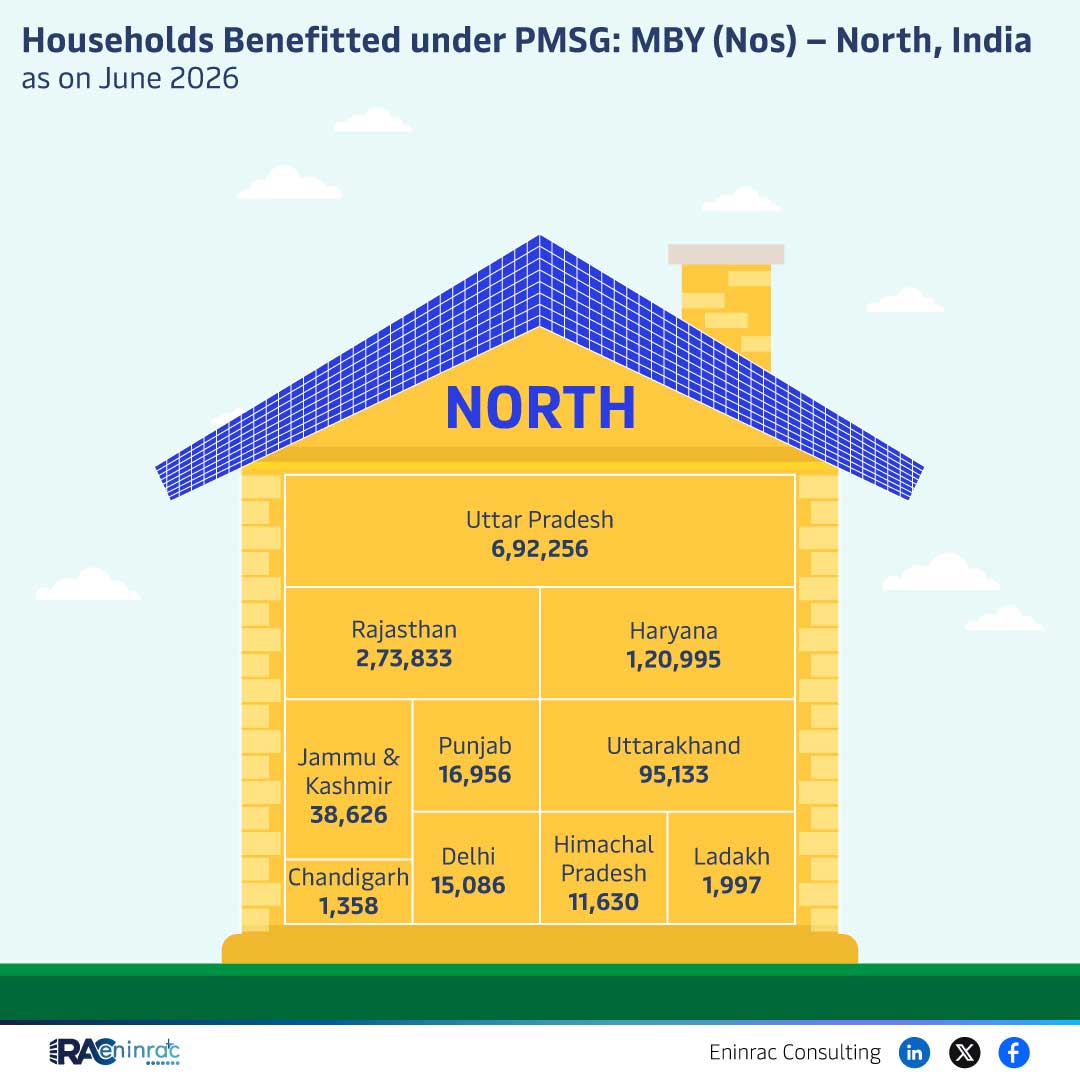
What does the data actually tell us about the penetration of the PMSG scheme in the northern region? The figures reveal a stark concentration of beneficiaries in Uttar Pradesh, which accounts for more than two‑thirds of the total households reported for the North. Rajasthan and Haryana follow with roughly three hundred thousand and one hundred thousand families respectively, indicating a moderate rollout beyond the leader state. In contrast, union territories such as Delhi and smaller hill states like Himachal Pradesh register only a few thousand households each, showing that the scheme’s implementation varies widely depending on local infrastructure and policy focus.
State‑wise Household Coverage Under PMSG in North India
Looking closely at the state‑wise breakdown, Uttar Pradesh tops the list with 692,256 households benefitted, a figure that dwarfs the next highest state, Rajasthan, at 273,833. Haryana records 120,995 households, while Jammu & Kashmir contributes 16,956 and Kashmir an additional 38,626, reflecting the scheme’s reach into both plains and mountainous regions. Delhi’s modest 1,358 households and Himachal Pradesh’s 11,630 demonstrate the challenges of extending grid connectivity in densely populated urban cores and rugged terrains. The overall pattern suggests that larger, agrarian states with extensive rural populations have been the primary focus of the PMSG rollout, whereas smaller or more urbanized jurisdictions lag behind.
Impact on Sectors and Industries
The variation in household coverage under PMSG has direct consequences for several sectors. In the power generation and distribution arena, higher beneficiary numbers drive demand for new substations, transformers, and renewable integration projects. Rural electrification boosts agricultural productivity, enabling the use of electric irrigation pumps and cold‑storage facilities, which in turn stimulates agribusiness and food‑processing industries. For financial services, the expanded consumer base creates opportunities for micro‑financing and prepaid electricity plans. Policymakers can use the data to target further subsidies, while investors watch the rollout as an indicator of long‑term growth potential in the North Indian energy market.
Key Takeaways
- Uttar Pradesh dominates with over 692 k households.
- Rajasthan and Haryana together exceed 390 k beneficiaries.
- Delhi and Himachal Pradesh show the lowest coverage.
- Total northern region beneficiaries surpass one million.
- Rural states receive the bulk of PMSG benefits.
- Data guides future policy and investment decisions.
FAQs
How many households in Uttar Pradesh are covered by PMSG?
Approximately 692,256 households have benefited in Uttar Pradesh as of June 2026.
Which state has the second‑largest number of PMSG beneficiaries?
Rajasthan follows Uttar Pradesh with about 273,833 households covered.
Why are Delhi’s numbers so low compared to other states?
Delhi’s urban density and existing grid infrastructure limit additional PMSG connections.
What impact does PMSG coverage have on agriculture?
Electrified farms can use electric pumps and storage, raising productivity and income.
How can this data inform future energy policies?
Policymakers can target underserved regions and allocate resources to improve grid expansion.