
Introduction
In June 2026 the Power Management Scheme (PMSG) reported the number of households that received its benefits across the southern states of India. This dataset captures the reach of the programme at a state level, showing how many families have gained access to reliable electricity, subsidies or other assistance. Understanding these figures helps policymakers, investors and citizens gauge the effectiveness of rural electrification efforts and plan future initiatives. Readers will learn which states lead in household coverage, the relative scale of benefitting families, and how the distribution reflects broader energy goals in South India.
What Does the Data Reveal About This Topic?
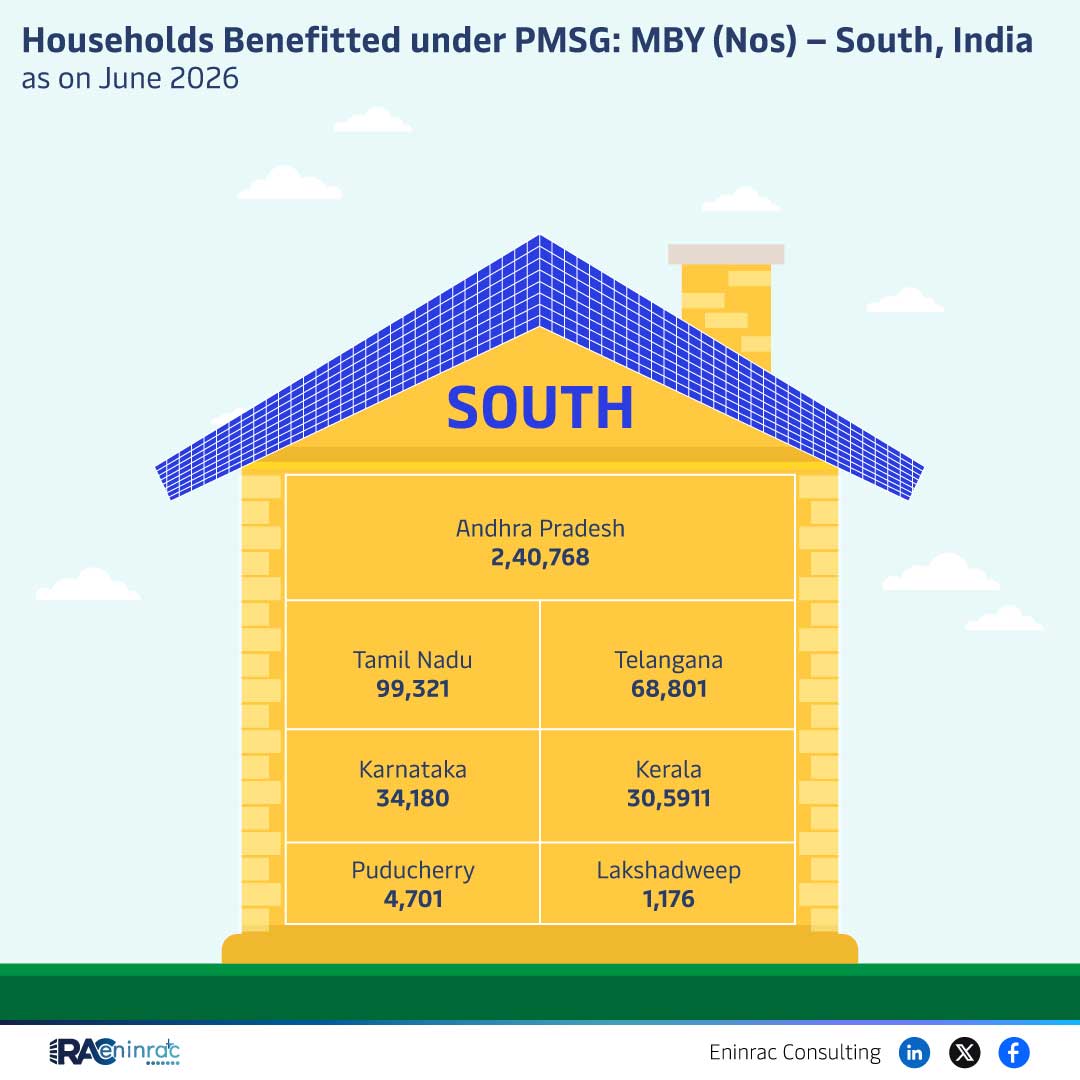
The raw numbers indicate that Andhra Pradesh tops the list with 240,768 households benefitted under PMSG, far exceeding any other southern state. Tamil Nadu reported 99,321 households, while Telangana accounted for 68,801. Karnataka and Kerala follow with 34,180 and 30,591 households respectively. Smaller union territories such as Puducherry and Lakshadweep show modest participation, with 4,701 and 1,176 households respectively. The data underscores a clear concentration of programme impact in larger, more populous states, while also highlighting that even the smallest territories are beginning to engage with the scheme.
Regional Distribution of PMSG Beneficiaries in South India
When the figures are compared side by side, a pronounced gradient emerges from the west coast to the interior. Andhra Pradesh’s lead reflects its aggressive rollout of solar micro‑grids and government‑backed subsidies, which have accelerated household connections. Tamil Nadu’s 99,321 beneficiaries indicate strong urban‑rural integration projects. Telangana’s 68,801 beneficiaries show steady progress in its demand‑side management programmes. Karnataka’s 34,180 and Kerala’s 30,591 suggest that while both states have high renewable penetration, the PMSG outreach remains moderate, possibly due to reliance on alternative schemes. Puducherry and Lakshadweep, despite their limited populations, demonstrate that the PMSG framework can be adapted to island and union territory contexts, delivering benefits to over four thousand and just over a thousand households respectively.
Impact on Sectors and Industries
The distribution of households benefitted under PMSG South India influences several key sectors. The power generation industry gains clearer demand forecasts as more homes transition to reliable supply, encouraging investment in renewable capacity. Distribution utilities can prioritize network upgrades in high‑benefit areas, reducing losses and improving service quality. Financial institutions see new credit opportunities for clean‑energy financing, while manufacturers of solar kits and energy‑efficient appliances anticipate higher market demand. For policymakers, the data offers a benchmark to assess the success of subsidy allocations and to identify lagging regions where additional interventions may be required. Consumers in well‑served states experience lower electricity costs and greater stability, contributing to overall economic development.
Key Takeaways
- Andhra Pradesh leads with over 240 000 households benefitted.
- Tamil Nadu and Telangana together account for more than 160 000 beneficiaries.
- Karnataka and Kerala show moderate but growing participation.
- Union territories still receive measurable benefits despite small populations.
- The data highlights the effectiveness of state‑specific PMSG strategies.
- Broad sectoral impacts include investment, utilities, finance and consumer welfare.
FAQs
What is the PMSG scheme?
PMSG stands for Power Management Scheme, a government‑led initiative that provides electricity subsidies, infrastructure support and technology assistance to households.
Which state has the highest number of benefitted households?
Andhra Pradesh, with 240,768 households recorded as benefitted in June 2026.
How many households benefited in Tamil Nadu?
99,321 households were listed as benefitted under the PMSG programme in Tamil Nadu.
Why is this data important for policymakers?
It reveals regional gaps, effectiveness of interventions, and helps allocate resources to maximize electrification impact.
How frequently are PMSG household figures updated?
The programme releases state‑wise household data on a quarterly basis, with the latest update published in June 2026.